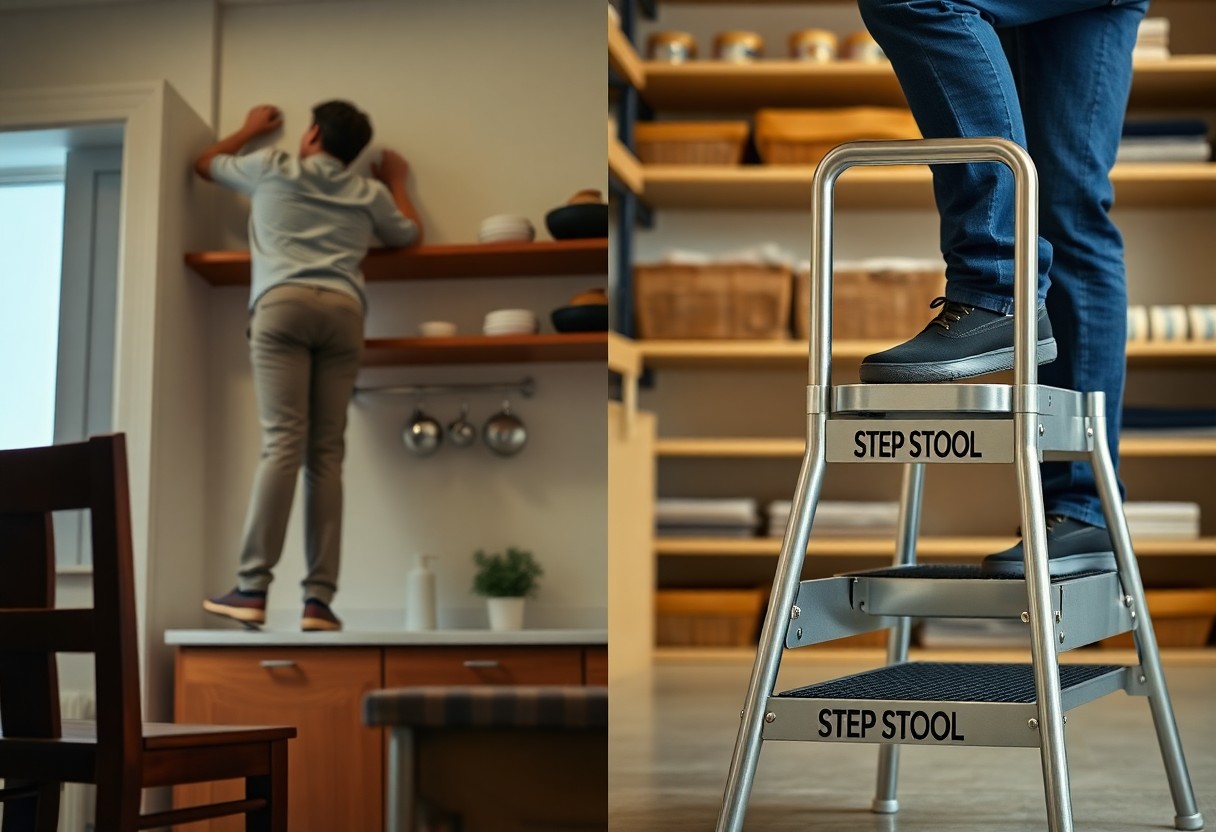
There’s a tempting quick-fix when you need a little height, but if you stand on chairs you risk falls and serious injury; you should instead use a proper, stable step stool rated for your weight to reach safely. Inspect the stool before use, keep three points of contact, and place it on a level surface so you protect yourself and others from avoidable accidents.
Key Takeaways:
- Standing on chairs greatly increases the chance of a fall; use a properly rated step stool or ladder instead.
- Check the step stool for stability, non-slip feet, and weight rating before use, and maintain three points of contact.
- Set the stool on a level surface, clear surrounding hazards, and get assistance rather than overreaching.
The Importance of Using Proper Equipment
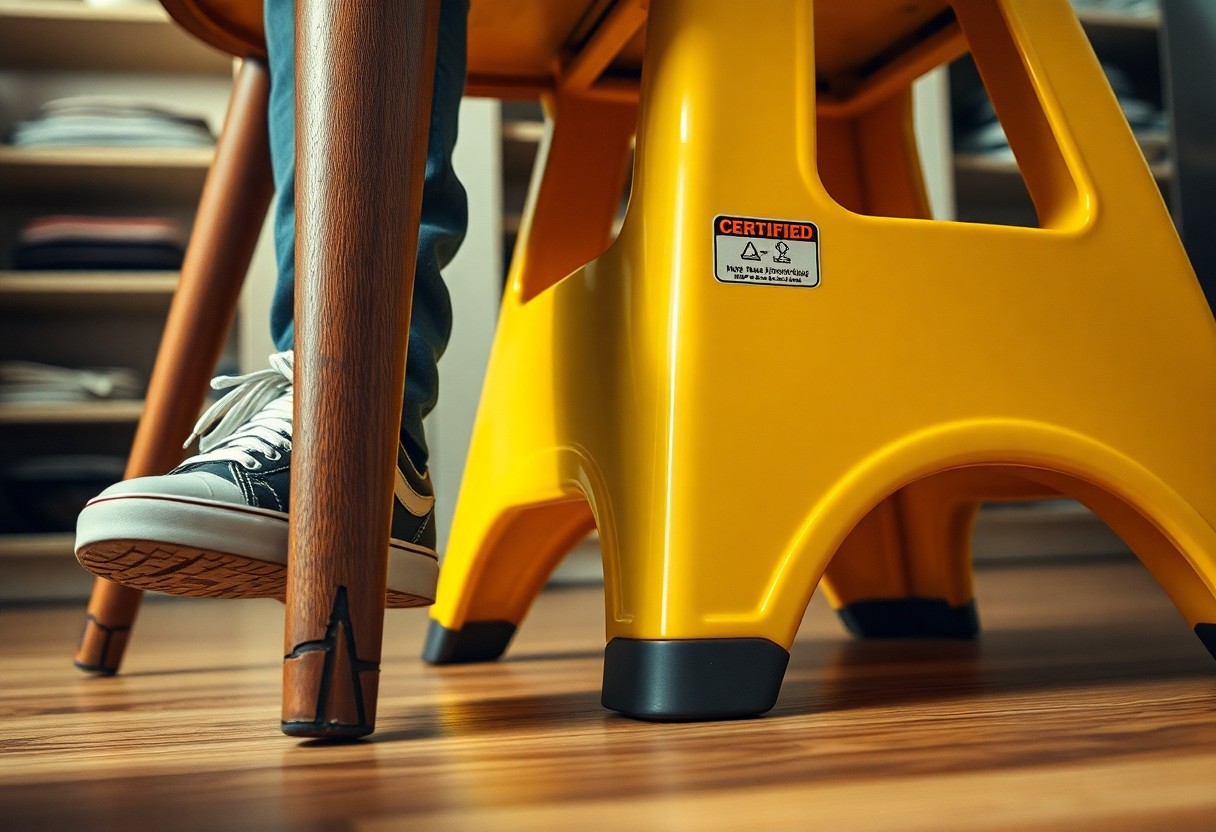
When you swap a chair for the right tool, you reduce risk immediately: a certified step stool gives you a stable base, rated load capacity, and non-slip surfaces, while chairs were never engineered for vertical support. Manufacturers use ratings (Type I 250 lb, Type IA 300 lb, Type IAA 375 lb) so you can match capacity to the task. Choosing equipment with a locking brace, wide footprint, and a platform or handrail transforms a risky reach into a controlled, predictable action.
Risks Associated with Standing on Chairs
Standing on a chair puts you at high risk of tipping, sliding, or collapsing because most chairs have narrow bases, angled legs, or casters not designed for climbing. You expose yourself to falls that commonly cause wrist fractures, sprains, or head injuries when a chair shifts as you reach. Inconsistent seat heights and uneven floors amplify instability, making simple tasks like changing a bulb potentially dangerous.
Benefits of Using Step Stools
Step stools provide a wide base, slip-resistant treads, and locking mechanisms that prevent movement while you work, delivering measurable stability and load capacity for safe overhead tasks. You gain design features-handrails, platforms, guard rails, and rated capacities-that reduce reliance on balance and compensate for uneven footing, making tasks faster and safer than improvising with household furniture.
For practical selection, prioritize a stool with a rated capacity that exceeds your body weight plus tools, a locking spreader or hinge, and rubber feet for floor grip; a two-step aluminum stool typically adds about 12-18 inches of reach per step and keeps your center of gravity over the base. Inspect hinges and treads before each use, avoid soft or sloped surfaces, and store the stool where it stays dry and intact to maintain its safety performance.
Types of Step Stools
Different tasks require different stools: for quick kitchen reaches you might use a compact foldable model (8-12 in), while prolonged garage work benefits from a larger platform or a heavy non-foldable stool (12-30 in). You should prioritize models with rated weight capacities (200-500 lb), non-slip treads, and secure locking mechanisms to reduce tipping and falls; many workshop stools support 350-500 lb for tool-heavy tasks.
- Foldable Step Stools
- Non-Foldable Step Stools
- Platform Step Stools
- Two-Step Stools
- Ladder-Stool Combos
| Type | Typical features |
|---|---|
| Foldable Step Stool | 8-14 in lift, 3-7 lb, folding hinge, compact storage, rubber feet |
| Non-Foldable Step Stool | 12-30 in lift, 12-25 lb, welded frame, wide base, 300-500 lb capacity |
| Platform Step Stool | Large standing surface (≥12×12 in), guard rails, for prolonged tasks |
| Ladder-Stool Combo | Multi-step reach, converts to small ladder, integrated locking mechanisms |
Foldable Step Stools
You’ll appreciate foldable stools for portability: many weigh 3-7 lb and collapse flat for cabinet storage, with typical heights of 8-14 inches and locking hinges to prevent accidental collapse. Manufacturers often use aluminum or reinforced plastic; models with rubber feet and textured treads cut slip risk. Reserve them for quick, low-height tasks rather than sustained standing or uneven surfaces.
Non-Foldable Step Stools
Non-foldable stools deliver a more permanent, rigid platform-you’ll find heights from 12-30 inches and weight ratings of 300-500 lb, often built from steel or hardwood to minimize wobble. Their fixed frames remove hinge points that can fail, and many include wider top steps and anti-tip bases so you can work hands-free with tools.
Because they lack moving joints, these stools provide consistent stability for repetitive tasks; mechanics and tradespeople commonly choose fixed models to reduce setup and inspection time. Examples include units with integrated tool trays or toe guards and platforms of 12×16 inches or larger that let you shift stance without losing balance. Check for clear rated capacity markings, visible reinforcements, and wide bases to lower fall risk.
Recognizing that choosing the right style-foldable for quick, light jobs and non-foldable for heavy or repetitive work-and verifying rated capacity, locking mechanisms, and a stable base will materially reduce your risk of falls.
Guidelines for Safe Step Stool Use
Before you climb, verify the stool’s weight rating and set it on a flat, dry surface: choose models rated for at least 250 lb for household use, fully engage any locks, and keep your center of gravity over the steps. If you’re tempted to use a chair instead, follow Don’t stand on a chair – use a step ladder! Small actions-facing the work and avoiding reaches beyond arm’s length-reduce fall risk significantly.
Inspecting the Step Stool
Before each use you should check legs, hinges, and treads for cracks, bent braces, or loose rivets, confirm non-slip feet and intact tread grip, and read the capacity label-ANSI classifications span roughly 225-375 lb. Give it a quick wobble on a flat floor; any lateral movement, rusted pins, or missing locks means tag it out and replace or repair immediately.
How to Properly Use a Step Stool
Open the stool fully and lock the spreader bar, place it on solid level ground, then step up facing the stool with both feet and maintain three points of contact. Keep your hips inside the rails, avoid reaching past arm’s length-move the stool instead-and never climb while carrying heavy loads; use a tool belt or hoist items up after you’re stable.
If your task requires more than about 24 in of elevation, choose a taller platform or a ladder because stability drops with height; for bulky lifts over 40 lb have a spotter. Also avoid using stools on rugs, thresholds, or uneven surfaces-small shifts in footing are a leading cause of household falls.
Common Mistakes to Avoid
Overreaching While on a Step Stool
Leaning more than about 1 foot (30 cm) past the stool’s edge shifts your center of gravity beyond the base and is the main reason step stools tip. You lose balance faster than you think – a 12-18 inch stool gives only a small safe reach, so if the job puts your shoulders more than a foot forward, get a taller ladder. In many falls the user thought a quick stretch was harmless; it isn’t.
Using Improvised Alternatives
Standing on chairs, boxes, or counters is a frequent shortcut that multiplies risk: chair legs can slip, boxes can collapse, and counters have no footholds or handrails. You probably know someone who fell changing a bulb from a kitchen chair; those incidents often cause sprains, fractures, or head injuries. Do not stand on chairs; use a proper step stool or ladder instead.
Chairs and crates aren’t engineered for standing use – they lack non-slip feet, locking mechanisms, and published load ratings, so you can’t judge safety by feel. Before you improvise, note that most consumer step stools are rated for at least 250 lbs and have wider bases and handholds; choose equipment tall enough so you keep both feet on the step, maintain three points of contact, and can reach without leaning. Inspect for cracks, wobble, or worn tread before every use.
Workplace Safety Regulations
Federal standards for walking-working surfaces (29 CFR 1910.22) and ladders (29 CFR 1910.23) apply directly to choosing a step stool over a chair; inspectors expect stable, rated equipment, regular inspections, and employee training. You must follow those codes at all times, since noncompliance can lead to citations and, more importantly, increased risk of falls-a leading cause of workplace injuries-so replace improvised climbing methods with compliant solutions.
OSHA Guidelines
Under the OSHA walking-working surfaces and ladder rules you need to provide equipment that meets design and maintenance criteria, require employees to use three points of contact, and prohibit standing on non-designated furniture. Employers should train workers on proper selection, inspection, and use of step stools, and ensure inspections occur before use; these rules are enforced during inspections under 29 CFR 1910.22/1910.23.
Employer Responsibilities
You must supply appropriately rated step stools or ladders (match capacity to body weight plus tools; ladder duty ratings run Type III 200 lb to Type IAA 375 lb), enforce use policies, document training, and remove damaged gear from service immediately. Make sure supervisors audit work practices and that employees sign off on understanding safe-use rules.
In practice, inspect equipment before each use and run a formal monthly inspection log with photos for high-use areas; provide initial training and refresher sessions at least annually or when tasks change. Keep written or electronic training and inspection records to demonstrate due diligence during audits, and discipline repeat offenders to maintain a safer work environment.
Encouraging Safe Practices
You should combine clear policies, visible signage, and easy access to approved step stools so workers choose the safe option every time. In one facilities pilot, replacing ad-hoc chairs with approved stools and posting reminders cut stand-on-chair incidents by 60% within six months. Make it simple: store stools near work areas, mark their load capacity, and enforce immediate removal of damaged units to reduce the risk of falls and fractures.
Training and Awareness Programs
Provide short, practical sessions – for example, 15-minute monthly toolbox talks plus quarterly hands-on demos – that show correct stool setup, body positioning, and safe reach limits. You can run scenario drills where staff identify hazards and choose between a stool or alternative methods; tracking competency scores and issuing quick refresher badges after 2 failed observations keeps skills sharp and lowers misuse.
Promoting a Safety Culture
Have supervisors model safe behavior and make near-miss reporting standard practice so you capture hazards before injuries occur; set a measurable target such as reducing chair-stand events by 50% in 12 months. Use peer-based safety champions who conduct weekly spot checks and publicly recognize compliant teams to reinforce the positive, dangerous behaviors you want eliminated.
To expand, assign a safety champion per shift, require monthly stool inspections with a simple checklist, and tag out defective units immediately; ensure each work zone has an approved stool within 10 feet of common reach tasks. Implement a one-click near-miss app and commit to investigation and feedback within 48 hours, so you close the loop and sustain the cultural change that keeps people off chairs.
Summing up
Presently you must treat standing on chairs as an unsafe shortcut; always use a proper step stool rated for your weight, place it on a stable surface, and keep three points of contact. By choosing correct equipment and maintaining safe posture, you lower fall risk and protect yourself and coworkers while completing tasks efficiently.
FAQ
Q: Why is standing on a chair to reach high items dangerous?
A: Chairs are not engineered to be climbing devices; they lack stable footing, locking mechanisms and proper weight distribution. Standing on a chair can cause it to tip, slide or break, resulting in falls, sprains, fractures or head injuries. Even short reaches increase the chance of losing balance or overextending, and nearby people or objects can be struck during a fall.
Q: How do I select and use a proper step stool safely?
A: Choose a step stool rated for your weight with non-slip treads, a wide base and a secure locking hinge or platform. Inspect it before use for cracks, loose parts or worn feet. Place the stool on a flat, clear surface, face the work directly, keep three points of contact (two feet and one hand or two hands and one foot) and avoid leaning or stretching; move the stool as needed instead. Follow the manufacturer’s instructions for height limits and safe use.
Q: What should I do if a step stool is not available or the task seems awkward?
A: Stop and obtain the correct equipment-use a taller step ladder, rolling ladder or mechanical lift for higher or awkward work. Ask a coworker to assist by holding the ladder or handing tools. If equipment is damaged or unavailable, report it and do not improvise with unstable objects; postpone the task until a safe solution is provided. For workplace settings, follow your site’s safe work procedures and permit systems for elevated tasks.