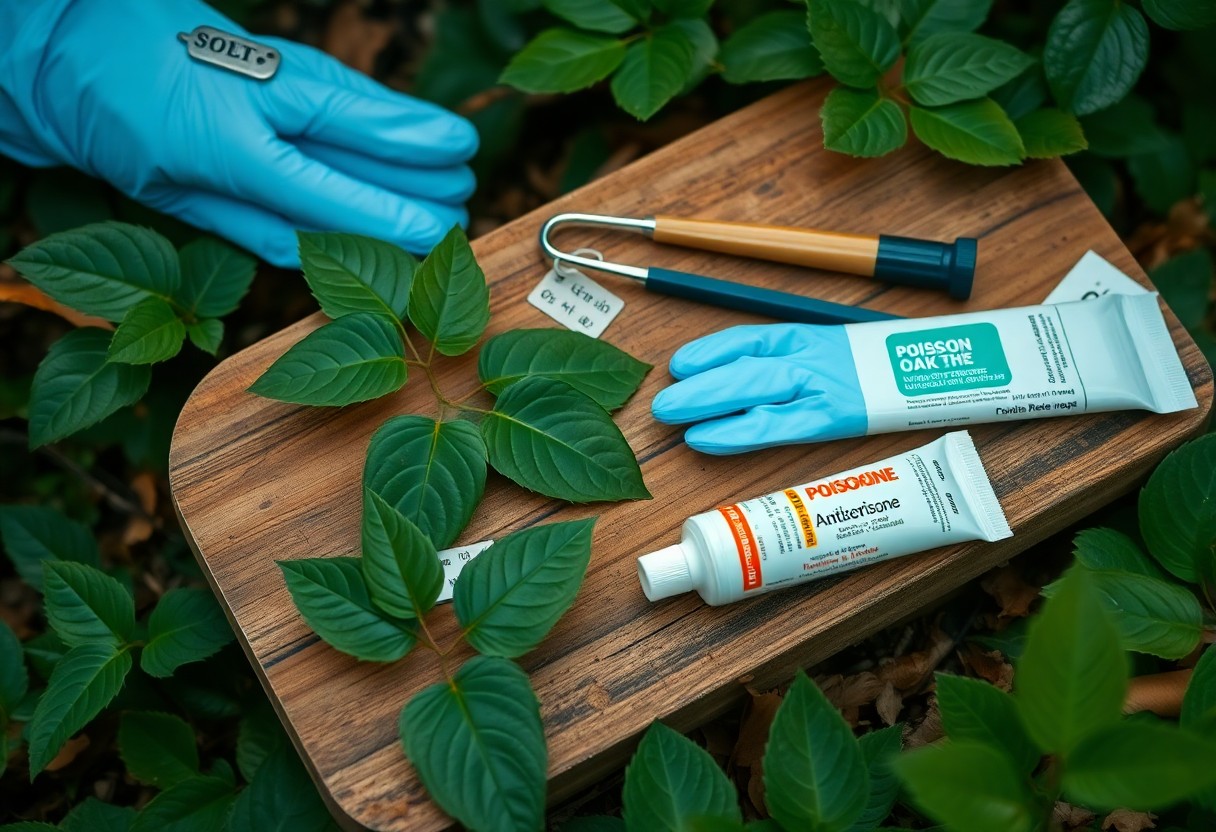
It’s important that you recognize and avoid poison ivy and poison oak because contact with urushiol oil can cause severe allergic reactions. You should learn plant identification, wear protective clothing, and wash exposed skin and gear immediately with soap to remove urushiol. For mild rashes use OTC treatments like calamine or hydrocortisone; seek prompt medical care if you have extensive swelling, facial or airway involvement, or severe pain.
Key Takeaways:
- Identify and avoid: learn the “three-leaf” pattern and know urushiol can spread on clothing, tools, and pets-use gloves, long clothing, and barrier creams when in suspected areas.
- Decontaminate quickly: wash skin, clothing, and gear with soap and water as soon as possible (ideally within 10-15 minutes) to remove urushiol and reduce reaction risk.
- Treat and escalate appropriately: use cool compresses, topical corticosteroids, and oral antihistamines for mild reactions; seek medical care for facial/eye exposure, severe swelling, widespread rash, or signs of infection.
Understanding Poison Ivy and Poison Oak
When you work outdoors, note that the oily resin urushiol causes allergic reactions in about 85% of people and can stay active on gear and clothing for months to years. You should wash exposed skin and contaminated items within 10-15 minutes to lower reaction risk, and treat early with cool compresses or topical corticosteroids; seek care for facial, widespread, or infected rashes.
Identification of Poison Ivy
You can identify poison ivy by the classic “three-leaf” arrangement-three leaflets per petiole-each usually 1-4 inches long, glossy green in summer and red in fall. Vines often have hairy aerial rootlets and the plant appears as vine, shrub, or groundcover across much of North America; contact with any part transfers urushiol, so assume contaminated-looking leaves or vines are hazardous.
Identification of Poison Oak
Distinguish poison oak by its three leaflets that resemble small oak leaves with rounded lobes and irregular margins; leaflets typically measure 1-5 inches and turn orange or red in fall. You’ll find eastern poison oak more shrub-like while western forms climb as vines, and both contain urushiol capable of causing severe dermatitis.
For more detail, note that poison oak’s lobed leaves are usually more deeply rounded than poison ivy’s smoother margins, and young leaves may be shiny or slightly hairy. You should look for dense patches in shaded, moist areas and check stems-poison oak often grows on woody stems or low shrubs; if you see clusters of three lobed leaves on a woody stem, treat it as poison oak and avoid handling without protection.
Symptoms of Exposure
When you touch urushiol, signs typically appear within 12-48 hours, starting as redness and intense itching that can progress to swelling, tiny bumps, and blisters which may ooze for several days; the rash often shows linear streaks where the plant brushed your skin. If the reaction covers large areas, involves the face or genitals, or causes breathing difficulty, seek medical care promptly.
Skin Reactions
You’ll most commonly get an allergic contact dermatitis: red, swollen patches that itch severely and frequently form linear patterns; about 85% of people develop a reaction after sufficient exposure. Blisters usually appear within 12-48 hours and can crust over in 1-3 weeks. Avoid scratching to lower infection risk; localized cases often respond to topical corticosteroids and oral antihistamines.
Other Symptoms
Besides skin changes, you may experience swollen lymph nodes, low-grade fever, or widespread swelling after large exposures, and inhaling smoke from burning plants can trigger coughing, wheeze, or chest tightness. These systemic manifestations are less common but can be serious; for facial swelling, eye involvement, or any difficulty breathing, get emergency care immediately.
Inhalational exposures have led to delayed respiratory distress requiring hospital treatment and airway support in some cases, so monitor symptoms for 24-72 hours after smoke contact. Clinicians often use nebulized bronchodilators and a tapered course of systemic corticosteroids for severe respiratory or extensive cutaneous involvement; antibiotics are reserved for confirmed secondary bacterial infections.
Prevention Strategies
You can sharply reduce risk by learning plant ID, planning routes, and decontaminating gear; urushiol can remain active on clothing for years, so wash gear promptly and rinse skin within 10-15 minutes after exposure. For a practical checklist and field tips, consult Poison Ivy – A Tailgate Safety Talk.
Avoiding Areas with Poisonous Plants
You should steer clear of trail edges, fence lines, and unmowed rights-of-way where poison ivy, poison oak, and poison sumac colonize; spot the “leaves of three” pattern and note seasonal color shifts (green in summer, red or orange in fall). Use maps or local extension alerts, maintain a 3-foot cleared buffer around play areas, and remove seedlings immediately to limit spread.
Protective Clothing and Gear
When you enter infested areas, wear long sleeves, long pants, closed boots, and nitrile or impermeable gloves; tuck pant legs into socks and consider disposable coveralls for heavy brush work. Apply a labeled barrier product like bentoquatam if available, and launder or discard contaminated clothing separately to avoid secondary transfer.
Choose tightly woven fabrics (nylon, polyester, or treated cotton) because they block skin contact; avoid porous leather for tasks that risk sap exposure since it absorbs urushiol and is hard to decontaminate. For gloves, prefer nitrile or rubber and replace them if soaked; remove contaminated clothing by turning items inward, wash fabrics in hot water with detergent, clean tools with rubbing alcohol or a commercial urushiol remover, and launder boots separately. If oil contacts skin, wash with soap and water or a specialized cleanser within 10-15 minutes to substantially lower rash risk, and seek medical care for widespread or severe reactions.
First Aid and Treatment Options
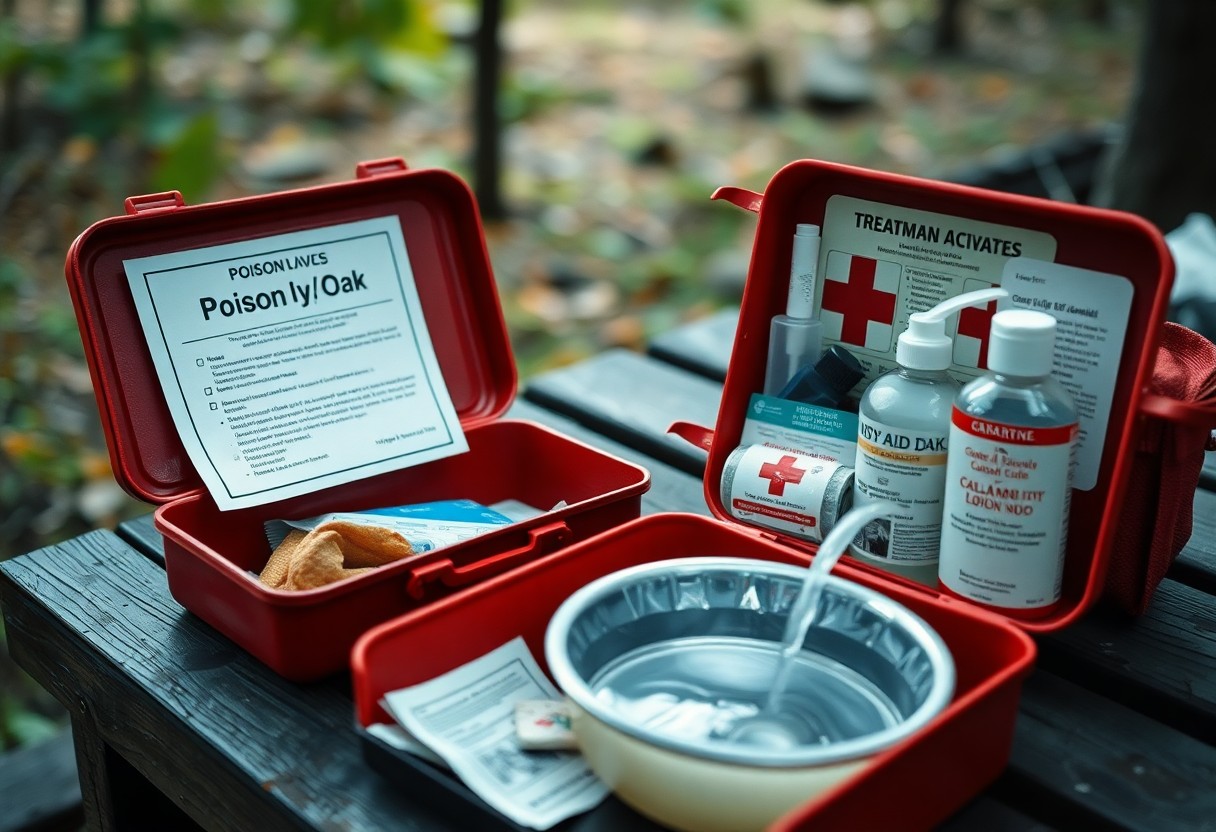
When urushiol reaches your skin, prompt measures and proper treatment limit spread and severity. You should remove contaminated clothing and wash exposed areas, then consider OTC remedies-1% hydrocortisone, calamine, Burow’s solution, and oral antihistamines-to manage itching and inflammation. For widespread involvement or rashes on the face or genitals, seek prescription care because many clinicians use oral corticosteroids for severe reactions; most rashes appear within 12-48 hours and clear in 1-3 weeks.
Immediate Response to Exposure
Immediately strip and isolate contaminated clothing, then wash skin with soap and water or a specialized cleanser (Tecnu or Zanfel) as soon as possible-ideally within 10-30 minutes. You should scrub under nails and launder clothing separately on hot cycle; avoid spreading urushiol by touching other surfaces. If blisters form, leave them intact and apply cool compresses for 15-20 minutes every few hours to reduce swelling and itching.
Over-the-Counter Treatments
Begin with topical 1% hydrocortisone applied up to twice daily for mild inflammation and use calamine lotion or colloidal oatmeal baths to soothe itching. You can take oral antihistamines (cetirizine for daytime, diphenhydramine at night) for symptomatic relief; Burow’s (aluminum acetate) soaks for 15-30 minutes twice daily help dry oozing lesions. Avoid topical anesthetics like benzocaine that may sensitize your skin.
Use OTC steroids only short-term and monitor the area for worsening; do not apply higher‑potency steroids to broken skin. Seek medical attention if the rash involves the eyes, mouth, or genitals, covers large areas, or shows signs of infection (increasing pain, pus, or fever). In many severe cases clinicians prescribe oral corticosteroids, which studies show can shorten recovery when started early.
When to See a Doctor
If you develop swelling of the face or genitals, rash covering more than 20% of your body, or rapidly spreading blisters, seek medical evaluation. Rashes often appear within 12-72 hours; if you have shortness of breath, throat tightness, or fever above 101°F (38.3°C), go to the emergency department. Also see a clinician if home treatment fails after 48-72 hours, the rash involves eyes or hands, or pain and drainage suggest infection.
Severe Reactions
Severe reactions include angioedema, airway compromise, and systemic symptoms like dizziness or fainting; these can develop within minutes to hours. If you experience difficulty breathing, hoarseness, throat swelling, or lightheadedness, call emergency services immediately. Widespread blistering with fever or rapid spread over large areas also warrants urgent care; clinicians may give epinephrine, IV fluids, or hospital monitoring for airway and hemodynamic support.
Complications to Watch For
Watch for secondary bacterial infection, especially if blisters break and you notice increasing pain, spreading redness, warmth, or pus; these signs may appear within 3-5 days. Eye involvement, persistent swelling, or lymphangitis (red streaks) are other dangerous complications. Seek a clinician when you see increasing pain, fever, pus, or red streaks tracking from the rash.
If infection is suspected, clinicians commonly prescribe oral antibiotics such as cephalexin or doxycycline depending on local resistance and presentation; cultures guide therapy for severe cases. For facial or eye involvement you may be referred to ophthalmology; widespread reactions often require systemic corticosteroids – typically a taper over 2-3 weeks to avoid rebound. Keep the area clean, avoid scratching, and follow up if symptoms fail to improve within 48-72 hours.
Final Words
Considering all points, you should prioritize learning to identify poison ivy and oak, use protective clothing and barrier creams, wash skin and clothing promptly after exposure, and apply recommended topical treatments or seek medical care for severe reactions; following these steps reliably reduces risk and helps you manage rashes effectively while protecting your skin and preventing spread.
FAQ
Q: How can I recognize poison ivy and poison oak in different seasons and growth forms?
A: Poison ivy usually appears as clusters of three leaflets (“leaves of three”) with variable shapes-smooth, lobed or toothed-often turning red or orange in spring and fall. It grows as a vine, groundcover or shrub. Poison oak also has three leaflets but typically resembles oak leaves with lobed edges and can appear as a shrub or low plant. Both produce small greenish flowers and white or yellowish berries. Urushiol, the plant oil that causes reactions, is present on leaves, stems and roots year-round, even when plants are dormant or leaves are absent.
Q: What practical steps reduce the risk of exposure while working or hiking outdoors?
A: Wear long sleeves, long pants and closed shoes; tuck pant legs into socks and choose smooth, tightly woven fabrics that limit skin contact. Use gloves and eye protection when clearing brush. Apply a barrier product designed for urushiol prevention if available, and treat clothing or gear with permethrin where appropriate (do not apply permethrin to skin). Avoid burning plants, which can aerosolize urushiol. Wash skin and clothes promptly after suspected exposure-soap and water or a specialized urushiol-removing cleanser-and clean tools, shoes and pet fur to prevent secondary transfer.
Q: What immediate care should I give for a rash from poison ivy or oak, and when is medical attention needed?
A: If exposed, wash the affected skin and under fingernails with soap and cool water as soon as possible to remove urushiol (ideally within 10-15 minutes). For symptoms, apply cold compresses, calamine lotion or topical corticosteroids for itching; oral antihistamines can help with sleep and itch control. Avoid breaking blisters and keep the area clean to prevent infection. Seek medical care if the rash is widespread or involves the face, eyes, mouth or genitals; if breathing is difficult or the throat swells; if the rash shows signs of infection (increasing redness, warmth, pus, fever); or if symptoms are severe despite over-the-counter treatments-prescription oral steroids or other interventions may be required.