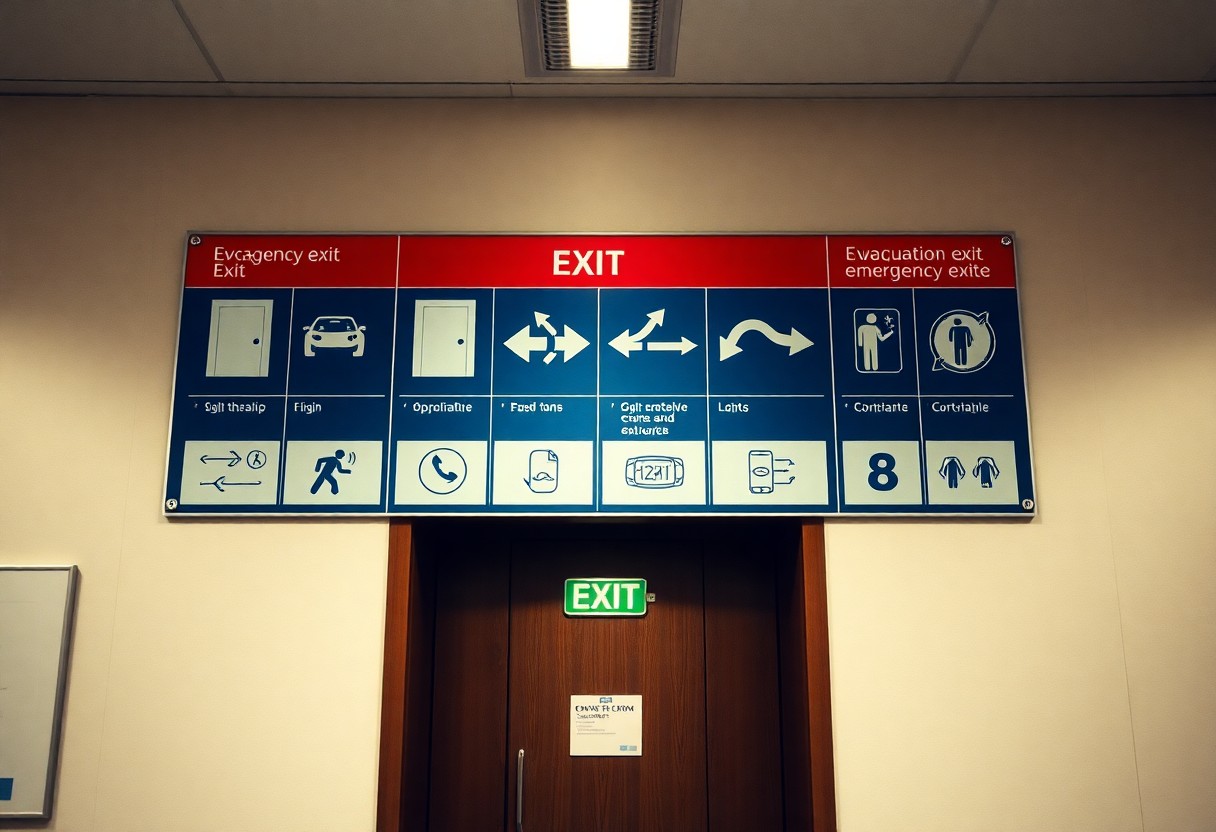
Exits are your lifelines during an emergency, and knowing their locations can significantly enhance your safety. Understanding the layout of your environment allows you to evacuate quickly and avoid potential hazards. Familiarize yourself with the nearest exits, as well as alternative routes, to ensure safe passage for yourself and others. Regularly reviewing evacuation plans boosts your confidence and preparedness, making you better equipped to handle unforeseen situations effectively.
Key Takeaways:
- Evacuation plans should detail primary and secondary exit routes for every area.
- Regular drills help familiarize employees with the evacuation process and exits.
- Emergency exit signage should be clear, visible, and well-maintained to guide during an evacuation.
Importance of Evacuation Plans
Evacuation plans serve as vital frameworks during emergencies, offering you a roadmap to safety. When chaos ensues, having a clear strategy reduces panic and confusion, enabling swift action. Without a plan, you may waste valuable time trying to figure out what to do, putting yourself and others at increased risk. An organized approach not only protects lives but also enhances overall preparedness in any crisis.
Understanding the Need for Preparedness
Preparedness means anticipating potential emergencies and understanding how you’ll respond effectively. It’s vital for you to evaluate risks specific to your environment, whether it’s a fire, flood, or other disasters. Engaging in regular training and drills ensures you’re familiar with procedures, allowing you to navigate your surroundings with confidence. Ignoring this aspect can lead to unnecessary chaos in critical moments.
Benefits of a Well-Defined Exit Strategy
A well-defined exit strategy provides you with a clear path to safety, minimizing confusion and maximizing efficiency in an emergency. It helps identify primary and secondary exits, ensuring you have alternatives if the main route is blocked. Furthermore, familiarizing yourself with these exit points can significantly decrease evacuation times, which is vital when every second counts.
When seconds matter, a well-defined exit strategy enhances your ability to respond effectively. Studies show that environments with clearly marked exits experience up to 50% faster evacuations compared to those without. By knowing your exits, you reduce the chance of panic, enabling a calm and orderly evacuation. Familiarizing yourself with these routes in advance can also contribute to a culture of safety within your community or workplace, as you can encourage others to be equally prepared, promoting a team-oriented approach during emergencies.
Types of Evacuation Routes
- Direct Exits – These routes lead you directly outside.
- Alternative Routes – Backup paths in case direct exits are blocked.
- Staircases – Essential for multi-story buildings, as elevators are unsafe during emergencies.
- Designated Safe Areas – Locations where assembled individuals can wait for further instructions.
- Clear Signage – Visual indicators to guide you swiftly and safely.
After evaluating these types, it’s vital to know exactly how to navigate through each during an emergency.
Primary Exits
Your primary exits are the main doors or pathways used during an evacuation. These routes are strategically placed for maximum visibility and accessibility, ensuring you can exit the building quickly. It’s vital to familiarize yourself with these exits and their locations in your workspace, as these are the quickest way to get to safety when time matters most.
Secondary Exits
Secondary exits serve as backup routes when primary exits are compromised. These can include less commonly used doors or alternate stairways. While not always the first choice, knowing these exits can be the difference between safety and danger, particularly if your primary route is blocked. Regularly practicing routes to secondary exits will enhance your ability to respond effectively.
Secondary exits should provide clear access to safeness during emergencies. Ensure you inspect the paths regularly for any obstructions, such as furniture or debris, and that they are marked clearly with familiar signage. Knowing these routes can immensely improve your evacuation experience, particularly in scenarios where primary exits become unusable due to hazards. Preparing adequately for various situations makes you a more informed and proactive individual in emergencies.

Key Components of an Effective Evacuation Plan
An effective evacuation plan must encompass several key components to ensure safety during emergencies. These elements include clear communication strategies, designated routes and exits, and specific guidelines for every occupant. Building familiarity with these components helps you respond without hesitation, providing a structured way to navigate through panic to reach safety efficiently.
Visual Mapping of Exits
Visual mapping of exits is important for quick recognition during an emergency. You should have detailed evacuation maps displayed throughout your location, indicating direct and alternative routes to safety. These maps must be easily accessible and visible, allowing you to familiarize yourself with the layouts beforehand, thus minimizing confusion when seconds count.
Designation of Assembly Points
Assigning specific assembly points is vital for ensuring everyone is accounted for post-evacuation. Your assembly area should be a safe distance from the building and visible to emergency responders. Choose locations that are easily accessible, well-lit, and communicate these to all occupants regularly to enhance overall safety and organization.
Establishing assembly points requires careful consideration of location and safety. Ideally, each assembly point should be strategically located away from potential hazards, such as falling debris or fire. Areas like parking lots or public parks can serve well, as long as they are recognized by everyone involved. Conducting periodic drills to practice moving to these points ensures that you and others can proceed calmly and efficiently during an actual evacuation.
Communication Strategies
Effective communication during an evacuation is important to ensure everyone understands the protocol and stays informed throughout the process. By establishing clear channels and methods for sharing information, you foster a culture of safety. Regular training sessions and drills can help reinforce these communication strategies, making the information second nature to all staff and residents.
Informing Employees and Residents
To ensure safety, you must actively inform your employees and residents about evacuation plans. Provide detailed briefings during onboarding and conduct regular updates to keep everyone aware of any changes. Utilizing interactive training sessions can enhance understanding and retention, empowering everyone to act swiftly in an emergency.
Utilizing Signage and Alerts
Visual aids and alert systems play a significant role in guiding individuals during an emergency. Strategic placement of clear, visible signage helps you identify exits and evacuation routes quickly. Furthermore, integrating real-time alert systems through PA announcements or mobile notifications ensures that everyone receives immediate updates, increasing the chances of a successful evacuation.
Utilizing signage and alerts means investing in a layered approach to communications. Place illuminated exit signs throughout your facility, highlighting paths and exits even in low visibility conditions. Use color-coded maps that visually lead people to safety. Implement automated alert systems that can broadcast messages directly to individuals’ devices, ensuring you are reaching every corner of the facility instantly. During drills, test these systems to familiarize everyone with their functions, making them more effective in real scenarios when time is of the essence.
Training and Drills
Effective evacuation plans require regular training and drills to ensure everyone is prepared for emergencies. Participating in these sessions helps you familiarize yourself with exit routes and reinforces the procedures in place. For more information, visit this Evacuation procedures toolbox talk.
Conducting Regular Evacuation Drills
Conduct regular evacuation drills to familiarize all occupants with exit routes and assembly points. Schedule drills at least twice a year, treating them as real emergencies. Practice helps reduce panic and ensures you know how to respond swiftly when needed.
Evaluating and Improving Procedures
After every drill, take time to evaluate the effectiveness of your evacuation procedures. Gather feedback from participants to identify any issues or obstacles. Use this insight to refine your plans and address weaknesses in real-time responses.
During evaluations, consider timing, participant understanding, and any logistical challenges encountered. Conducting post-drill debriefs encourages open communication, allowing you to pinpoint areas for improvement. If exit routes were unclear or if some participants didn’t follow the protocol efficiently, adapt your training sessions to enhance comprehension and effectiveness, ensuring that everyone is fully equipped for real emergencies.
Special Considerations
In every evacuation plan, it’s imperative to account for special considerations that may affect the efficacy and safety of emergency procedures. Consider the unique needs of individuals in various scenarios, including those with disabilities, senior citizens, and those requiring medical assistance. Tailoring your plan to address these factors can mean the difference between safety and chaos during an emergency situation.
Accommodating Individuals with Disabilities
When developing your evacuation plan, including provisions for individuals with disabilities is imperative. This may involve designating specific staff members to assist with mobility challenges, ensuring that exits are accessible, and providing adequate resources such as wheelchairs or evacuation chairs. Clear communication about accessible routes can greatly enhance safety for everyone involved.
Handling High-Risk Situations
Your evacuation strategy must also cover high-risk situations like fires or active shooter scenarios, where the stakes are significantly elevated. Having a plan that outlines immediate actions, communicates real-time updates, and ensures rapid access to first responders is vital in these critical moments.
In high-risk situations, your response must be swift and premeditated. Establish zones for sheltering in place when evacuation may be dangerous, and regularly conduct drills tailored to high-stress scenarios. For example, in case of a fire, knowing the fastest route to safety can save lives, so clearly marking pathways and holding practice evacuations can significantly enhance readiness. During such emergencies, prioritizing communication becomes paramount; consider using a public address system or mobile alerts to inform everyone of their immediate actions. Emergency exits should be well-lit and free from obstructions, ensuring that even during panic, individuals can find their way out quickly and safely.
FAQ
Q: What should I do when an evacuation is announced?
A: Immediately stop what you are doing, follow the designated evacuation routes, and proceed to the nearest exit calmly. Help others if it is safe to do so, and do not use elevators during the evacuation.
Q: How do I find the nearest exit in my building?
A: Look for exit signs that are illuminated. Familiarize yourself with the building layout, focusing on clearly marked exits and emergency exit maps typically found near entrances and in hallways.
Q: What if I have a disability or require assistance during an evacuation?
A: Make a plan in advance with designated individuals who can assist you. Utilize accessible exits and notify emergency personnel of your location to receive necessary support during an evacuation.