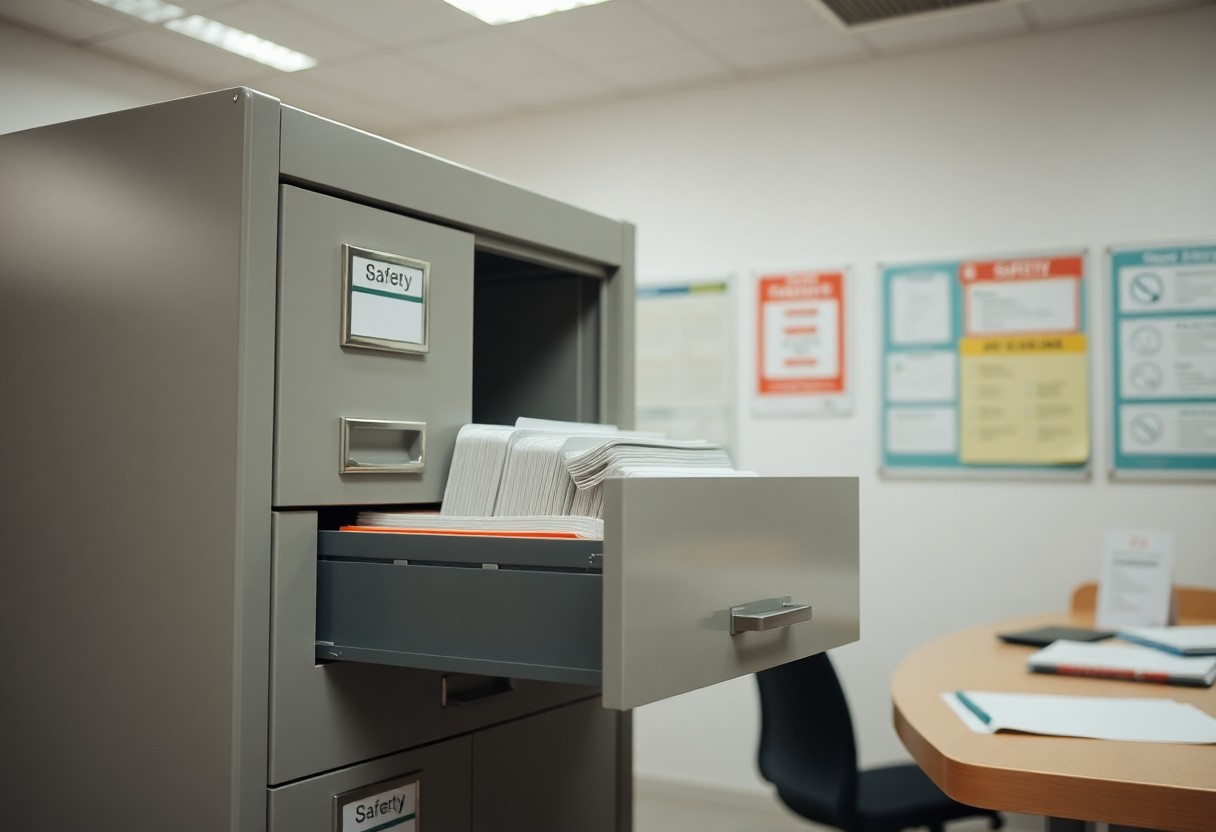
Filing cabinets are important in keeping your workspace organized, but they can pose risks if not used properly. Each time you open a drawer, ensure your balance is maintained to prevent tipping. Limit the weight in upper drawers to avoid accidents, and regularly check for items that could cause injuries. By taking simple precautions, you can enhance your safety, making filing a smooth and secure process in your daily routine.

Key Takeaways:
- Keep filing cabinets organized to prevent overloading drawers.
- Open only one drawer at a time to maintain stability and prevent tipping.
- Ensure heavy items are stored in lower drawers for better balance.
Understanding Filing Cabinet Hazards
Filing cabinets pose several hazards that require your attention. The most significant among these is the risk of tipping, especially when drawers are overloaded or opened improperly. For instance, opening multiple drawers simultaneously can create an unstable condition, increasing the likelihood of the cabinet toppling over. Additionally, sharp edges and corners may cause cuts or injuries, while heavy or awkwardly positioned files can lead to strains or accidents as you reach for them. Awareness of these risks is crucial for maintaining a safe workspace.
Common Risks Associated with Filing Cabinets
You should be aware of various hazards linked to filing cabinets, such as overloading drawers, which increases the risk of tipping. Disorganized files can lead to excessive reaching, resulting in injuries or strains during retrieval. Ensure drawers are not opened at the same time, as this may destabilize the cabinet and lead to potential accidents.
Importance of Proper Organization
Effective organization inside your filing cabinets leads to better safety and efficiency. When documents are arranged systematically, you can easily find what you need without digging through clutter. This minimizes the risk of accidents and prevents injuries associated with reaching for misplaced items.
Organizing your files can save you time and effort. Grouping similar items together not only enhances your productivity but also ensures you’re not overreaching into a precarious drawer, thus reducing the chance of tipping. Consider implementing color-coding or labeling systems for quick identification. A well-structured filing cabinet enables you to maintain your focus and streamline your workflow while minimizing the safety risks inherent in disorganization.
Securing Filing Cabinets
To ensure your filing cabinets are safe, securing them is necessary. Locking mechanisms, such as built-in locks or padlocks, help prevent unauthorized access to sensitive documents, effectively deterring tampering. Additionally, consider anchoring filing cabinets to a wall or floor, especially in high-traffic areas where stability is paramount. Regularly check locks for functionality and ensure that cabinets remain properly closed when not in use.
Stability and Weight Distribution
Stability is vital for the safe use of filing cabinets. Ensure that heavier items are placed in the bottom drawers to maintain a low center of gravity, reducing the risk of tipping. Keeping cabinets level and making sure the surface they sit on is stable also supports proper weight distribution, which minimizes hazards. A well-organized filing cabinet can significantly enhance workplace safety.
Methods for Preventing Tip-Over Incidents
To prevent tip-over incidents, you can implement several strategies. These include securing the cabinet to the wall, regularly decluttering and organizing files, and utilizing anti-tip devices. Placing heavier items at the bottom enhances stability, while limiting drawer openings to one at a time minimizes risk. Educating staff on these methods ensures everyone is aware of best practices.
Utilizing anti-tip devices specific to your filing cabinet model can significantly improve safety. These devices typically involve brackets or straps that connect the cabinet to a wall or another stable structure, ensuring it remains upright during use. Additionally, fostering a culture of safety by training employees on proper loading techniques serves as an effective preventative measure. Encourage maintenance of the cabinet’s integrity by checking for structural damage and promptly addressing any issues.
Best Practices for Safe Use
Implementing best practices while using filing cabinets can significantly reduce accidents and injuries. Always use the top drawers first and maintain a steady center of gravity to avoid tipping. When accessing files, ask for assistance if the cabinet is overcrowded or difficult to reach, ensuring that safety is prioritized over speed.
Loading and Unloading Drawers
Regarding loading and unloading drawers, always distribute weight evenly across the cabinet. Avoid overloading a single drawer, as excessive weight can lead to drawers getting stuck or the cabinet tipping over. Open one drawer at a time and keep cabinet doors securely closed when not in use.
Regular Maintenance and Inspections
Caring for your filing cabinets requires regular maintenance and inspections to ensure they remain safe and functional. Check for loose screws, ensure drawers slide smoothly, and look for any signs of wear or damage that could compromise stability.
Schedule inspections at least once a month, checking for issues like uneven feet, rusting components, or misaligned drawers. A small amount of preventive maintenance, such as tightening screws and cleaning tracks, can extend the life of the cabinet and enhance your safety. Consider employing a maintenance checklist that includes lubrication of moving parts and testing drawer stability. By proactively addressing problems early, you can avoid significant accidents or costly replacements, ensuring both a productive workspace and continued safety.
Ergonomic Considerations
Filing cabinets can contribute to physical strain if not used with proper ergonomics in mind. Positioning your body comfortably and maintaining a healthy posture are vital to reducing stress on your muscles and joints. Ensuring that file drawers are within your reach prevents awkward bending and twisting, which can lead to long-term injuries.
Proper Posture While Using Filing Cabinets
Your posture plays a significant role when accessing filing cabinets. Always stand with feet shoulder-width apart, keeping your back straight and your knees slightly bent while using cabinets. Avoid reaching too far or leaning over the cabinet, as this compromises stability and increases the risk of muscle strain.
Tools and Accessories to Enhance Safety
Utilizing tools and accessories can greatly improve your safety and comfort while using filing cabinets. Consider using anti-tip brackets, drawer pulls, and height-adjustable matting to reduce hazards. These tools not only enhance accessibility but also help maintain a stable work environment.
For instance, anti-tip brackets secure filing cabinets to the wall, preventing them from tipping over when drawers are fully extended. Ergonomic drawer pulls can minimize hand strain, allowing for easier access to files. Additionally, anti-fatigue mats provide cushioning if you spend extended periods near filing cabinets, reducing discomfort and promoting better posture. Investing in these tools significantly enhances your safety and efficiency in managing documents.
Training and Awareness
Effective training and awareness programs are vital in ensuring that all employees understand the potential hazards associated with filing cabinets. Providing educational resources and practical demonstrations will empower your team to recognize risks and adopt safe practices. For comprehensive guidelines, refer to the Filing cabinets | Office Safety tool.
Educating Employees on Safety Procedures
Educating your employees on safety procedures is necessary for creating a safe workspace. Conduct regular training sessions covering topics such as proper loading techniques and safe emptying methods, ensuring every team member knows how to utilize filing cabinets without putting themselves at risk.
Creating a Culture of Safety
Fostering a culture of safety goes beyond merely following guidelines; it involves inspiring your employees to prioritize safety in all aspects of their work. Encourage open discussions about safety practices, allowing team members to share experiences and suggestions. Reinforce this culture with regular safety audits and updates, showing your commitment to maintaining a secure environment. Employees are more likely to engage in safe behaviors when they feel their input is valued and acted upon.
Final Words
To wrap up, ensuring safety when using filing cabinets is important for your well-being in the workplace. By following best practices, such as securing the cabinet to prevent tipping and avoiding overloading drawers, you protect yourself from potential injuries. Regularly check the condition of your filing cabinets and organize documents to maintain easy access. Prioritizing these safety measures not only enhances your personal safety but also promotes a more efficient and secure work environment for everyone.
FAQ
Q: What are the potential hazards of overloading a filing cabinet drawer?
A: Overloading a filing cabinet drawer can lead to tipping, making it unstable and unsafe. This can cause injuries from falling drawers or the cabinet itself, as well as damage to documents inside. Ideally, each drawer should only be filled to a safe weight limit, typically specified by the manufacturer.
Q: How can I ensure a filing cabinet remains stable while accessing drawers?
A: To maintain stability, only open one drawer at a time. Keep heavier items in the bottom drawers and lighter items in the top drawers. Additionally, ensure the cabinet is level and placed on a stable surface to reduce the risk of tipping.
Q: What steps should be taken to properly maintain a filing cabinet?
A: Regular maintenance includes checking the integrity of the cabinet structure, ensuring drawers open and close smoothly, and clearing out unnecessary items to prevent overloading. Lubricate the tracks if needed and inspect for any signs of wear or damage that may compromise safety.