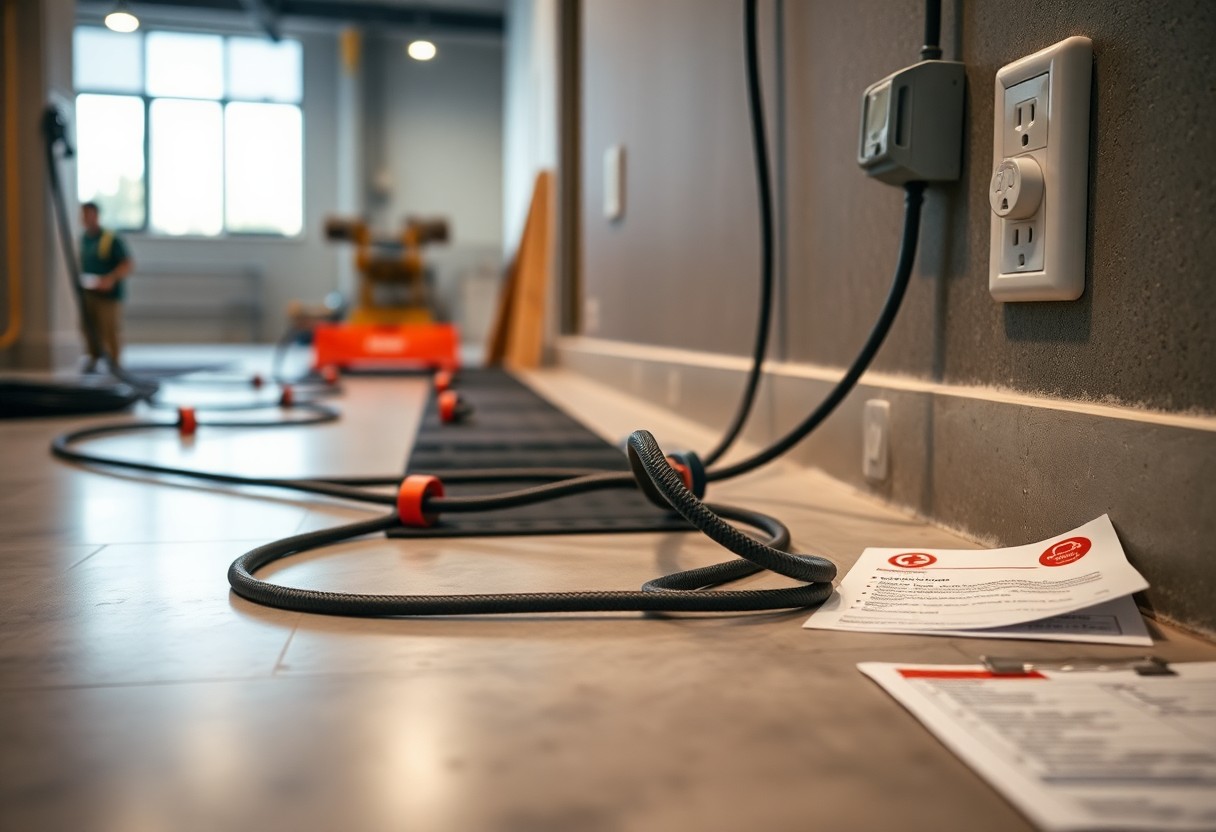
Just inspect cords before use and avoid overloading circuits. You must replace frayed cords, keep cords dry, and prevent electric shock or fire by using the correct gauge and grounded plugs for the load.
Key Takeaways:
- Inspect extension cords before each use for frays, exposed wires, cracked insulation, or damaged plugs; discard or replace damaged cords.
- Match cord gauge and amp rating to the appliance and circuit; use cords rated for outdoor use when outdoors and avoid daisy-chaining or overloading.
- Route cords to prevent damage and hazards: do not run under rugs or through doorways, keep away from water and heat, and use GFCI protection in damp or outdoor locations.
Pre-Use Inspection and Cord Selection
Before each use, you should inspect the cord for cuts, frayed insulation, and tight plugs, and choose a cord rated for the tool’s amperage and length to prevent overheating and fire. Use grounded three-prong cords and remove any with visible repairs.
Identifying Gauge and Amperage Requirements
Match the cord gauge to the tool’s amperage and account for run length; longer runs require a heavier gauge to avoid voltage drop and overheating. If unsure, choose the next lower AWG number for safer performance.
Checking for Insulation Damage and Exposed Wiring
Inspect cords by flexing along their length to reveal cuts, abrasions, and exposed wiring; look for discoloration, melted spots, or loose conductors that increase risk of shock and fire. Remove damaged cords from service immediately.
If you unplug the cord and flex it while examining the entire jacket, you’ll find hidden nicks, pinch points, and heat damage; check the plug, strain relief, and any aftermarket splices. Never tape over cuts-do not use a damaged cord. Instead, tag it out and replace it or have a qualified electrician perform proper repairs to prevent electrocution and fire.
Proper Routing and Placement
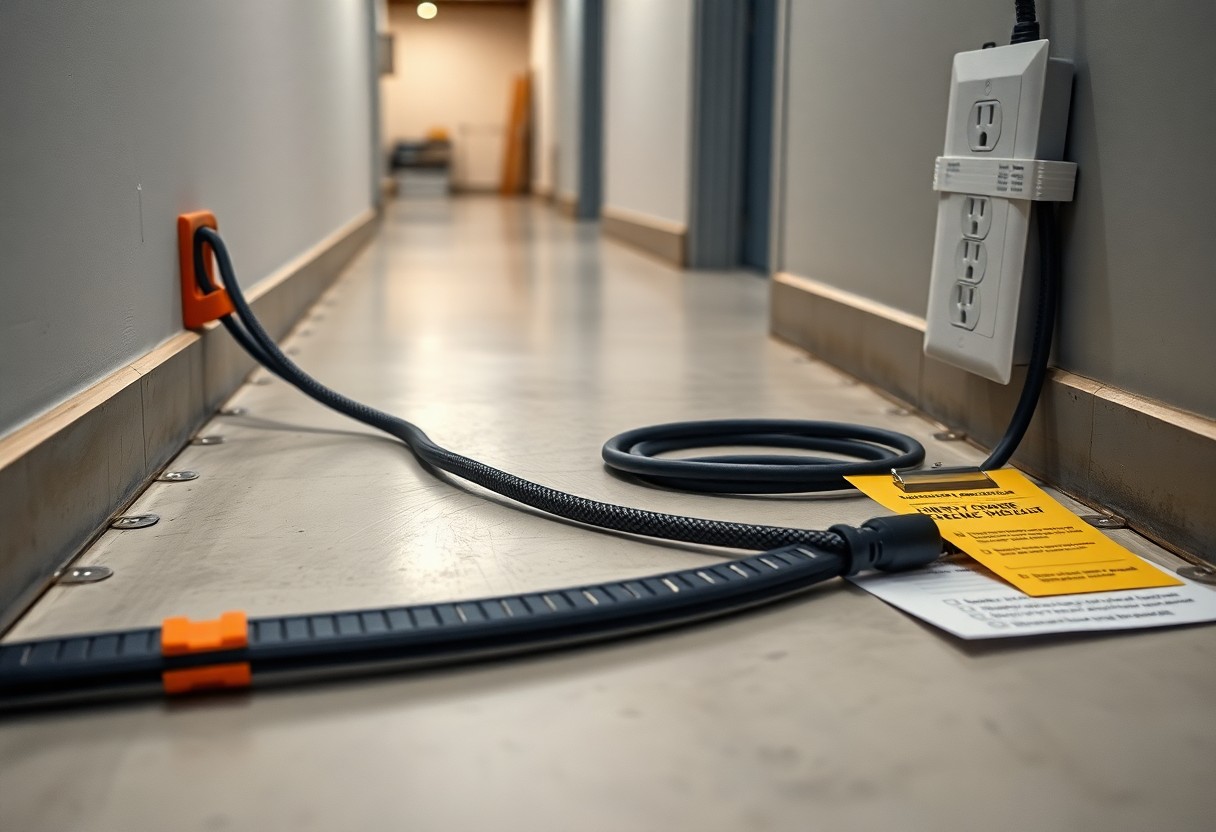
Route extension cords along baseboards and secure them with clips or covers so you reduce trip hazards and avoid pinching; do not run cords under doors or through windows where insulation can be damaged, creating an overheating and fire risk.
Avoiding Trip Hazards in High-Traffic Areas
Keep cords out of main walkways by running them along walls, using low-profile covers or ramps, and choosing adequate cord length instead of stretching across aisles to prevent trip hazards that can injure people or damage equipment.
Preventing Heat Buildup Under Rugs or Furniture
Avoid tucking extension cords beneath rugs or heavy furniture where trapped heat can cause insulation failure and an overheating and fire risk; leave cords exposed and ventilated.
Inspect cords regularly for warmth, brittle or cracked insulation, and flattened areas; if you find a cord that feels warm to the touch or shows fraying, unplug and replace it to eliminate overheating and damaged insulation hazards, and install additional outlets or ventilated cable channels instead of hiding cords under rugs.
Electrical Loading and Capacity
Electrical loads must match the cord’s amp rating; you should check capacity, avoid daisy-chaining, and spread devices across circuits. Overloaded cords can overheat and cause fires or electrical shock, so monitor draw and choose cords rated for the total load.
Understanding the Dangers of Overloading
You must never plug multiple high-watt devices into one cord; excessive current heats insulation, melts connectors, and raises the chance of a fire or shock.
Proper Use of Grounded Three-Prong Plugs
Use grounded three-prong plugs for appliances that require grounding; the third prong gives a low-resistance path for fault current and helps reduce shock risk, so do not remove or bypass it.
Inspect plugs and cords before use; if the ground prong is missing or an adapter defeats grounding, you expose yourself to increased shock and fire risk. Replace damaged cords, avoid defeating grounds with adapters, and plug only into outlets verified as properly grounded to maintain safe operation.
Environmental and Site-Specific Safety
On site you must assess terrain, weather, and foot traffic before running cords; keep them away from standing water, sharp edges, and heat sources, and secure cords to prevent trip hazards.
Utilizing GFCI Protection in Wet Locations
Use GFCI protection on all cords you run in wet or damp areas; it cuts power quickly on faults and reduces risk of electric shock.
Selecting Cords for Outdoor vs. Indoor Applications
Choose cords rated for outdoor use when you expose them to weather; indoor-only cords can degrade, creating fire and shock hazards.
Inspect cord labels for markings like a “W” for outdoor use, the correct gauge for amperage, and three-prong grounding when required; you should select heavy-duty jackets that resist sunlight, moisture, and abrasion for outdoor work. Replace cords with cracked insulation, exposed conductors, or damaged plugs since these defects create shock and fire hazards, and pick low-temperature-rated cords if you work in cold environments.
Prohibited Practices and Misuse
Avoid common misuse: you must not run cords under rugs, through walls, or as permanent wiring; follow Extension Cord Safety Tips for safe choices and prevent fire and shock hazards.
The Risks of Daisy-Chaining Multiple Cords
Daisy-chaining multiple cords overloads circuits and raises fire risk; you should use a single, properly rated cord and a powered outlet, and never connect more than one cord to extend length.
Permanent Installation of Temporary Wiring
Installing an extension cord as permanent wiring bypasses grounded circuits and building codes, leaving you exposed to shock and fire hazards; use permanent conduit and hardwired solutions instead.
You risk hidden overheating, insulation breakdown and fire when temporary cords are routed through walls, ceilings, or under flooring; those cords lack protection, strain relief and approved junction boxes. Call a licensed electrician to install permanent wiring and dedicated outlets, or use listed, heavy-duty cordsets only for temporary needs ensuring proper gauge, grounding and code compliance.
Maintenance and Storage Protocols
Store extension cords in a dry, cool place, off the ground and away from chemicals; you should coil loosely to avoid kinks and keep cords free of debris. Inspect before storage and label damaged cords for repair or disposal to prevent electrical hazards.
Proper Coiling Techniques to Prevent Internal Damage
Coil cords using the over-under or loose figure-eight method so you avoid bends that create internal conductor breaks; you should not wrap tightly around tools or hooks, which causes hidden damage and short circuits.
Criteria for Immediate Removal from Service
Inspect cords for exposed wires, frayed insulation, melted spots, burn marks, broken plugs, or inconsistent operation; if you find any of these, tag and remove the cord immediately to eliminate shock and fire risks.
When you encounter damage, document the issue, log cord location or ID, and replace with a tested spare; do not attempt field repairs on cords with exposed conductors or structural compromise, since such fixes increase the risk of electric shock and fires.
To wrap up
You should inspect extension cords for frays or damage, avoid daisy-chaining or overloading outlets, keep cords dry and clear of walkways, and choose cords rated for the device and environment so you reduce shock and fire risk and maintain a safer workspace.