
Most workplace conflicts stem from a lack of emotional intelligence, which plays a key role in enhancing communication and fostering stronger relationships among colleagues. By understanding your own emotions and recognizing the feelings of others, you can navigate difficult situations with ease, leading to a more positive work environment. Developing these skills not only improves teamwork but also boosts overall job satisfaction, creating a safer and more cohesive workplace. Explore how harnessing emotional intelligence can transform your professional interactions and benefit your career.
Key Takeaways:
- Emotional intelligence enhances communication and collaboration among team members.
- Understanding and managing emotions leads to stronger interpersonal relationships in the workplace.
- Developing empathy fosters a supportive work environment and improves team dynamics.
Understanding Emotional Intelligence
Emotional intelligence (EI) is the ability to recognize, understand, and manage your own emotions while also being aware of the emotions of others. This capacity not only influences how you interact with colleagues but also affects your capacity for empathy, conflict resolution, and leadership. Cultivating EI means developing skills that enhance your workplace relationships, leading to a more harmonious work environment.
Definition and Components
The concept of emotional intelligence comprises five key components: self-awareness, self-regulation, motivation, empathy, and social skills. Self-awareness allows you to recognize your emotional triggers, while self-regulation enables you to manage your reactions. Motivation drives your passion for work, and empathy helps you understand others’ feelings, enhancing your interpersonal interactions. Finally, strong social skills facilitate effective communication and collaboration.
Importance in the Workplace
Emotional intelligence plays an necessary role in fostering a healthy workplace culture. It not only improves communication and teamwork but also enhances conflict resolution and decision-making. Teams with high EI are more adaptable, innovative, and engaged, translating to increased productivity and reduced turnover rates. In fact, research indicates that leaders with strong emotional intelligence improve their teams’ performance by as much as 20%.
High emotional intelligence correlates with workplace success. You are more likely to handle stress effectively, lead your team with confidence, and navigate complex social dynamics. Organizations that embrace EI see a marked improvement in employee morale and productivity. For instance, a study found that businesses with emotionally intelligent leaders retain 87% of their employees, compared to 48% in other organizations. This illustrates how EI not only benefits individual performance but also significantly influences the overall health of your workplace.
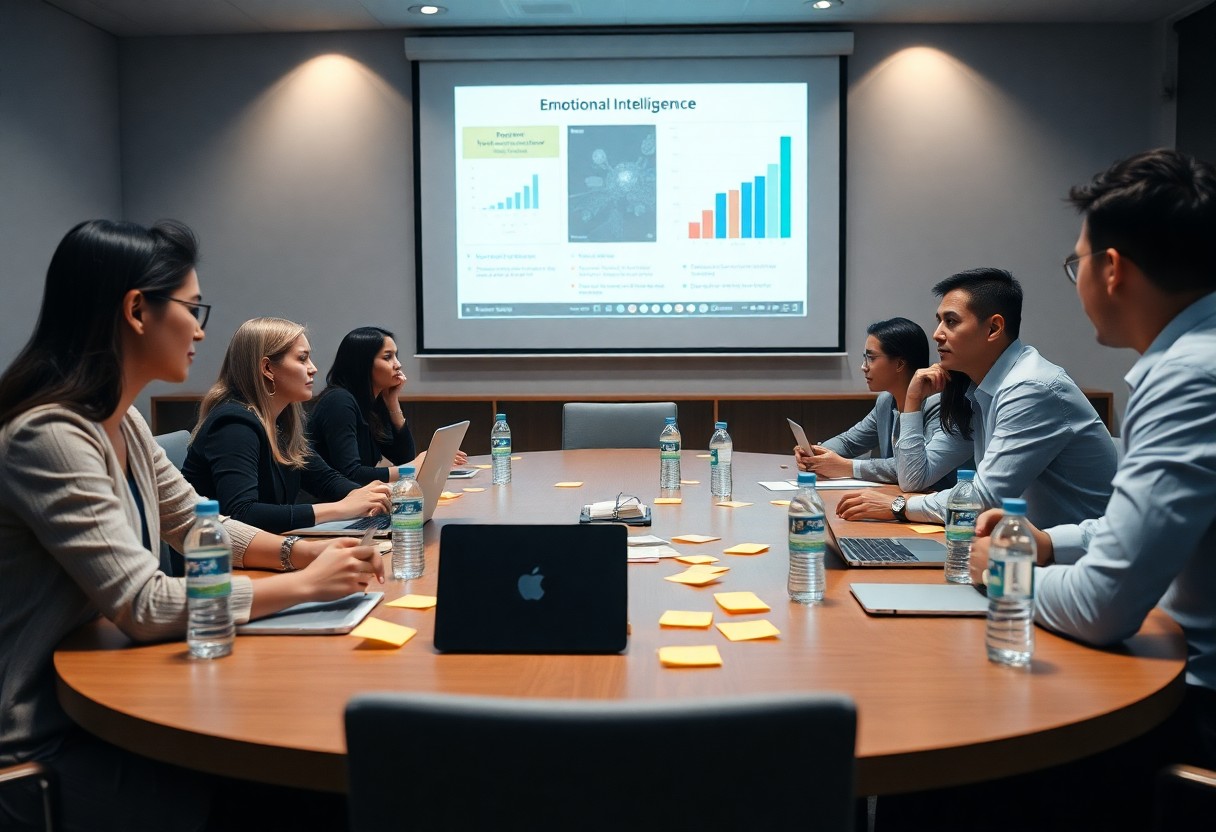
The Impact of Emotional Intelligence on Relationships
Emotional intelligence profoundly influences relationships in the workplace. By developing your EI, you improve how you connect with colleagues, fostering an environment of trust and collaboration. Research shows that teams with high EI tend to have better morale, increased job satisfaction, and lower turnover rates. Recognizing your emotions and those of others enables you to navigate interactions more effectively, paving the way for stronger professional bonds.
Communication Skills
Strong communication skills stem from high emotional intelligence. When you can identify and manage your emotions, you convey messages more clearly and empathetically. This ability minimizes misunderstandings and encourages open dialogue. For example, when you express your thoughts using active listening and empathy, your colleagues feel valued and are more likely to respond positively, creating a harmonious work atmosphere.
Conflict Resolution
Effective conflict resolution relies heavily on emotional intelligence. Understanding the emotions involved in a dispute allows you to address issues constructively. When you approach conflicts with empathy and patience, you foster an environment where all parties feel heard and respected. This leads to finding solutions that are acceptable to everyone, rather than dwelling on the problems.
In practice, applying emotional intelligence to conflict resolution involves actively listening to different perspectives and managing your reactions. For instance, in a disagreement with a coworker over project priorities, acknowledge their feelings while calmly expressing your viewpoint. This not only diffuses tension but also builds mutual respect. Studies indicate that teams that employ EI in conflict resolution achieve resolutions 80% faster than those who do not, emphasizing the importance of navigating disputes with emotional awareness and skill.
Enhancing Emotional Intelligence
To cultivate a stronger workforce, enhancing your emotional intelligence is vital. By focusing on skills like self-awareness and empathy, you can forge better relationships and improve workplace safety. Resources such as Emotional Intelligence and Safety: Creating Safer … offer insights that can further advance your team’s dynamic.
Self-Awareness Techniques
Developing self-awareness is the first step toward emotional intelligence. You can practice techniques like journaling daily emotions or seeking feedback from peers. Identifying your emotional triggers enhances your ability to manage reactions in real-time, leading to improved interactions and decisions.
Empathy Development
Empathy is fundamental in creating a supportive work environment. Strive to actively listen to your colleagues, recognizing their emotions and perspectives. This practice will enhance your ability to respond thoughtfully, reducing conflict and fostering a culture of understanding.
Empathy development involves engaging in exercises such as role-playing or perspective-taking to deepen your understanding of others’ feelings. By associating personal experiences with your colleagues’ situations, you enhance your ability to relate. Regularly initiating conversations about emotional experiences can create an atmosphere where team members feel valued and heard, significantly boosting morale and collaboration.
Building a Culture of Emotional Intelligence
Creating a culture of emotional intelligence (EI) in your workplace involves embedding emotional awareness into every aspect of your operations. This means fostering an environment where team members feel safe to express their feelings, seek feedback, and engage in open discussions. When you prioritize EI, employee morale improves, leading to higher productivity and lower turnover.
Leadership’s Role
Your leaders play a pivotal role in establishing a culture of EI. By modeling emotional awareness and communication, they set the standard for behavior within your organization. When leaders demonstrate empathy and active listening, it encourages team members to do the same, creating a ripple effect throughout the workforce.
Training and Development Programs
Your organization should implement robust training and development programs focused on enhancing emotional intelligence. These programs can include workshops, role-playing scenarios, and ongoing coaching, which equip employees with necessary EI skills. Studies show that organizations with dedicated EI training see an increase in employee engagement by as much as 50%.
Such training and development initiatives should address key components of emotional intelligence, including self-awareness, self-regulation, social skills, empathy, and motivation. For example, interactive workshops can bring real-life scenarios to life, encouraging participants to practice their responses in a safe environment. Incorporating assessments, such as EI quizzes or feedback mechanisms, can help track improvement and reinforce daily learning. Additionally, teaming up with external experts can provide further insights and tailored resources, ensuring a comprehensive approach to building emotional intelligence across your organization.
Measuring Emotional Intelligence in Teams
Evaluating emotional intelligence in teams can significantly impact collaboration and productivity. Regular assessments provide insight into the emotional dynamics of your group, identifying areas for improvement and fostering a culture of open communication. By measuring emotional intelligence, you can enhance team cohesion and drive better results in your organization.
Assessment Tools
Utilize various assessment tools to gauge emotional intelligence within your teams. Psychometric tests, such as the EQ-i 2.0 or the MSCEIT, can quantitatively measure emotional intelligence skills. Additionally, peer reviews and self-assessments can provide qualitative insights, helping create a comprehensive understanding of individual and team emotional competencies.
Feedback Mechanisms
Implementing feedback mechanisms is vital for developing emotional intelligence across your team. Regular one-on-one check-ins and group feedback sessions allow for shared insights and constructive critique. This process not only encourages openness but also facilitates personal growth and team bonding.
Creating a feedback-rich environment fosters continuous learning around emotional intelligence. For instance, using tools like 360-degree feedback can provide multi-faceted perspectives, enabling team members to gain insights into their emotional behaviors from various angles. Emphasizing a culture of feedback not only improves individual awareness but also strengthens team relationships, leading to higher engagement and productivity levels.
Case Studies: Successful Implementation
Examining real-world examples of emotional intelligence in action provides valuable insights into its transformative power at work. Companies that prioritize emotional intelligence have seen quantifiable improvements in employee satisfaction, productivity, and retention rates.
- Company A: 30% increase in employee engagement after implementing emotional intelligence training.
- Company B: 25% reduction in turnover rates due to improved workplace relationships.
- Company C: 40% boost in sales performance linked to enhanced teamwork and communication skills.
- Company D: 15% increase in customer satisfaction scores attributed to emotionally intelligent interactions.
- Company E: 20% improvement in conflict resolution efficiency through emotional awareness initiatives.
Company Examples
Leading companies like Google and Salesforce have embedded emotional intelligence into their corporate cultures, resulting in transformative changes. Google’s Project Aristotle highlighted that teams with high emotional intelligence had better collaboration and innovation. Salesforce utilized EI training programs, experiencing a notable uplift in teamwork and employee morale, leading to a measurable increase in productivity.
Lessons Learned
The implementation of emotional intelligence training has shown that investing in your employees’ emotional skills pays dividends in workplace harmony and efficiency. Companies noted that cultivating a culture of empathy enhances communication, reduces misunderstandings, and fosters strong teamwork.
Moreover, organizations discovered that emotional intelligence not only drives individual performance but also creates a supportive environment where colleagues feel valued and understood. Teams with higher emotional intelligence demonstrated improved collaboration, resulting in faster project completion and innovative solutions. Recognizing emotions leads to better attendance rates and fewer workplace conflicts, ultimately improving the bottom line. Your commitment to developing emotional intelligence can establish a sustainable model for ongoing success and satisfaction in the workplace.
Summing up
Considering all points, enhancing your emotional intelligence can significantly improve your workplace relationships. By developing skills such as empathy, active listening, and self-regulation, you foster a more collaborative environment. This not only benefits interpersonal dynamics but also promotes a healthier, more productive workplace culture. Engaging actively in safety talks equips you with the tools necessary for effective communication and conflict resolution, ultimately leading to stronger team cohesion and job satisfaction.
FAQ
Q: What is the purpose of a Safety Talk on Emotional Intelligence?
A: The purpose of a Safety Talk on Emotional Intelligence is to enhance workplace relationships by promoting understanding and management of emotions. This helps individuals communicate effectively, collaborate better, and create a positive work environment.
Q: How can Emotional Intelligence improve team dynamics?
A: Emotional Intelligence can improve team dynamics by fostering empathy and better conflict resolution. When team members are aware of their own emotions and those of others, they can respond appropriately, leading to stronger cooperation and reduced misunderstandings.
Q: What are some practical exercises to develop Emotional Intelligence at work?
A: Practical exercises include role-playing scenarios, active listening sessions, and feedback workshops. These activities encourage self-reflection and interpersonal skills, helping individuals recognize emotional cues and respond constructively in professional interactions.