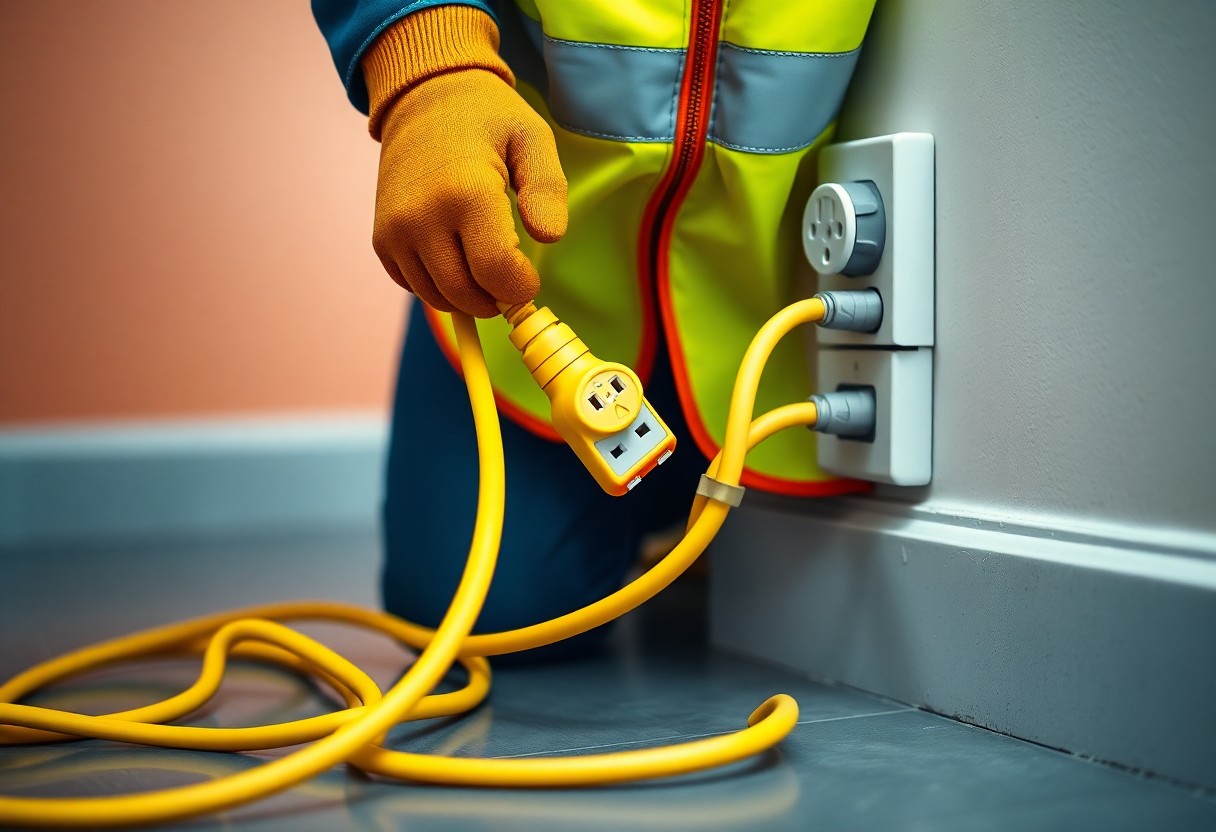
Just because extension cords are common doesn’t mean you can be careless; you must treat them as temporary tools and manage risks. Inspect cords before use, avoid running them under rugs, and never overload circuits because overloading and frayed cords can cause fire or electric shock. Choose the right cord for the job-correct gauge and outdoor rating or GFCI protection-and replace damaged cords immediately to keep your workspace safe.

Key Takeaways:
- Select extension cords rated for the load and environment (correct gauge, length, indoor/outdoor rating, and grounded when required).
- Inspect cords before each use and replace any with frays, exposed wires, damaged plugs, or kinks.
- Use cords only temporarily: avoid overloading or daisy-chaining, keep cords away from heat, sharp edges, water, and never run them under rugs.
Understanding Extension Cords
You need to match cords to the device and setting: length, gauge, plug type and insulation determine performance. Shorter cords reduce voltage drop, thicker wires increase ampacity, and three-prong plugs provide grounding. When you run power-hungry tools or heaters, pick cords rated at or above the appliance’s current draw to avoid overheating and fires.
Types of Extension Cords
Different cords serve distinct jobs: indoor lamp cords are thin, while outdoor-rated, oil- and water-resistant cords are much heavier. You should choose by gauge, conductor count and jacket type to match your environment and load.
- Light-duty (18/2) – small lamps, chargers, low current.
- Medium-duty (16/3) – power tools, small appliances up to ~13A.
- Heavy-duty (14/3 / 12/3) – shop equipment, heaters; 14AWG ≈ 15A, 12AWG ≈ 20A.
- Outdoor-rated (SJTW / SJEOW) – weather-resistant jackets for exterior use.
- Specialty (10/3, RV) – high-current applications, generators, vehicle hookups.
| Cord Type | Typical Specs / Use |
|---|---|
| Light-duty 18/2 | Up to ~7-10A; indoor lamps, short runs; not for heaters. |
| Medium-duty 16/3 | Up to ~13A; drills, small compressors; ok for short tool runs. |
| Heavy-duty 14/3 / 12/3 | 14AWG ≈ 15A, 12AWG ≈ 20A; space heaters, table saws; use for longer runs to reduce voltage drop. |
| Outdoor SJTW / SJEOW | Weather/oil-resistant; required for exterior use and damp locations; look for UL listing. |
Knowing that a 1,500W heater draws ~12.5A at 120V helps you pick at least a 14AWG cord and avoid overloading the cable or outlet.
Electrical Ratings and Specifications
You must read the cord jacket for gauge (AWG), conductor count, voltage and temperature ratings; common ratings are 120V/14AWG/15A or 120V/12AWG/20A. Cords also list jacket type (SJ, SJT, SJTW) and agency listings like UL or ETL, which indicate tested safety standards.
For steady loads plan at 80% of the cord’s amp rating-NEC guidance-so a 15A cord should carry no more than 12A continuously. Also factor length: a 50-100 ft run can produce significant voltage drop, so step up gauge for long distances (use 12AWG instead of 16AWG when runs exceed 75 ft under medium loads). You should never exceed the cord’s temperature rating or use indoor-only jackets outside; that increases risk of insulation failure, arcing and fire. Where moisture or ground-fault risk exists, choose a cord with GFCI protection or plug into a GFCI-protected circuit.
Safe Usage Practices
Place cords where you can see and access them easily, avoiding doorways and high-traffic areas; do not run cords under rugs or through walls because trapped heat and abrasion cause insulation failure. Choose the shortest, lowest-gauge cord that fits the load, use GFCI-protected outlets for damp locations, and stop using any cord with frayed insulation or exposed wires-damaged cords are a leading ignition source and must be replaced immediately.
Proper Placement and Setup
Route cords to the nearest outlet so you minimize length and voltage drop, and secure them with tape or cord covers rather than staples that can pierce insulation; use cords marked “outdoor” for exterior work. Keep plugs and extension box connections elevated off the ground and away from puddles, and leave at least a few inches of slack to prevent tension at plugs-this reduces wear and the risk of loose contacts that generate heat.
Avoiding Overloading
Check appliance labels for wattage or amperage before you plug in and add loads on a cord: a 1,500 W space heater draws about 12.5 A on a 120 V circuit, so avoid pairing it with other heavy loads on the same cord or circuit. Use the correct cord gauge-16 AWG ≈ 13 A, 14 AWG ≈ 15 A, 12 AWG ≈ 20 A-and never daisy-chain multiple extension cords or power strips.
Do the math: most household circuits are 15 A, giving you roughly 1,800 W (15 A × 120 V) before tripping the breaker; plug a 1,500 W heater plus a 1,000 W microwave and you’ll exceed that limit by 700 W, which forces heating, breaker trips, or worse. Account for cord length and gauge-longer, thinner cords suffer voltage drop and heat more, so a 25‑foot 16 AWG cord carrying near‑capacity is far less safe than a short 12 AWG run. If loads approach circuit capacity, move high‑draw appliances to dedicated circuits or use a properly rated cord and consult an electrician for permanent solutions.
Inspecting Extension Cords
Make inspection part of every setup: run your hands along the length to feel for soft spots or stiff areas, flex the plug and connector while watching for loose wires, and test outdoors cords with a GFCI before use. You should inspect cords before each use and perform a more thorough check monthly; if you find exposed wires, melted insulation, or burn marks, remove the cord from service immediately.
Identifying Damage and Wear
When you look for damage, focus on frays, cuts, cracked or brittle sheathing, bent or corroded prongs, and loose or wobbly plugs. NFPA data links about 3,300 home fires annually to cord misuse, often starting from exposed conductors or overloaded connectors. Photograph defects, tag the cord “DO NOT USE,” and replace cords that show any insulation breach or heat during operation.
Regular Maintenance Checklists
Use a short checklist: inspect visually and by touch before each use, verify cord amp rating matches the appliance, test continuity or use a receptacle/GFCI tester for outdoor cords, check strain relief at plugs, coil without tight bends, and store dry; replace any cord with damage, overheating, or missing grounding. Aim for a quick monthly audit and before heavy-season use.
For deeper checks, measure continuity with a multimeter, test GFCI trips for outdoor runs, and confirm wire gauge: 16 AWG for light-duty (~up to 13 A), 14 AWG for 15 A circuits, 12 AWG for 20 A loads. Label cords with purchase dates, avoid stapling or running under carpets, and replace aging or stressed cords-replacement cost is typically $10-$60, a small price compared with repair or fire damage.
Environmental Considerations
Assess how the environment affects cord selection and placement: moisture, UV, temperature swings and chemical exposure all change performance. Outdoor exposure can accelerate jacket cracking and insulation breakdown, increasing shock and fire risk. You should route cords away from standing water, avoid laying them across soil or mulch, and use GFCI protection whenever power is used outside to reduce electrocution hazards.
Indoor vs. Outdoor Use
Indoor cords are generally lighter-often 16 AWG for lamps and chargers-while outdoor cords use heavier conductors like 14 or 12 AWG for power tools, heaters and compressors. You must match cord gauge to device amperage: roughly 16 AWG for light loads under 7 A, 14 AWG for 10-13 A, and 12 AWG for 15+ A. Prefer the shortest, heaviest cord that safely reaches your equipment to limit voltage drop and heat buildup.
Weather Resistance Features
Choose cords labeled Outdoor or marked with a W; they have thicker jackets, molded plugs and sealed terminations that resist UV, water spray and abrasion. Some jackets stay flexible to -40°F (-40°C) and are rated up to 140°F (60°C), so you can rely on them across wide temperature ranges. Always pair outdoor cords with GFCI-protected circuits.
Examine cord markings like SJTW, SJOOW or SJEOW-these indicate thermoplastic or rubber jackets with weather and oil resistance: thermoplastic is lighter, rubber (neoprene) offers superior oil and abrasion protection. You should avoid unmarked, generic cords; check for UV-stable jackets and reinforced strain reliefs. In practical use, rubber-jacketed cords tend to outlast basic thermoplastic models in constant sunlight and fuel-vapor environments.
Alternatives to Extension Cords
You can replace temporary cords with permanent fixes like added receptacles, dedicated 20A circuits for major appliances, or in-floor and ceiling outlets; these options cut trip hazards and greatly reduce overheating and fire risk. Typical installation costs range from about $150-$500 per outlet depending on wall access, and a licensed electrician plus permits keep your work compliant with NEC and local codes.
Power Strips and Surge Protectors
Use power strips only for low-current electronics, not space heaters or refrigerators; most household strips are rated 15A (≈1800W) and surge protectors list a joule rating-commonly 600-3000 J-which indicates energy absorption. Check for a UL or ETL mark, replace after a major surge or if the indicator light fails, and never daisy-chain strips or overload the strip’s rated current.
Hardwired Solutions
Hardwiring outlets and circuits gives the safest, longest-term power: run 14 AWG for 15A circuits and 12 AWG for 20A circuits, install dedicated lines for ovens, HVAC, or microwaves, and add AFCI/GFCI protection where NEC requires it. Hiring a licensed electrician ensures wiring, breaker selection, and grounding meet code and minimizes shock and arc-fire hazards.
Beyond basic receptacles, you can choose recessed TV boxes, floor or island outlets, and in-wall USB or in-wall surge protectors to suit layouts; adding a dedicated 20A circuit for a workshop bench or refrigerator typically costs $300-$800 depending on distance. Aim for AFCI breakers in living areas and GFCI in kitchens/basements, and expect inspectors to require permits for new circuits-so use a pro to avoid unsafe DIY wiring.
Common Mistakes to Avoid
Frequent errors stem from undersized cords and improper placement; you may pick a 16 AWG cord for a 1,500 W heater (~12.5 A), which risks overheating. Match cord gauge to load-14 AWG for up to 15 A, 12 AWG for 20 A-and avoid daisy-chaining, running cords under rugs, or using indoor cords outdoors. For a practical toolbox talk and checklist, review the Extension Cord Safety Toolbox Talk, and always choose UL-listed equipment.
Misuse Scenarios
When you daisy-chain extension cords or plug heavy tools into light-duty cables you increase resistance and heat buildup; using a 16 AWG cord for a circular saw or space heater is a frequent cause of failure. You also create trip and crush hazards by running cords across walkways, through doorways, or under rugs. Replace frayed cords immediately and use a grounded, heavy-duty cord for power tools-do not overload outlets.
Misconceptions about Safety
You might assume a thicker jacket equals correct capacity or that a short cord always prevents problems; both assumptions can mislead. Ampacity depends on gauge, length and insulation/type, and higher ambient temperatures reduce safe load. Always read the cord markings and calculate load (watts ÷ volts = amps) before use.
To be specific, 16 AWG is typically rated around 13 A, 14 AWG around 15 A, and 12 AWG around 20 A; for a 1,500 W (12.5 A) device on 120 V you should prefer 14 AWG or 12 AWG for long runs. You should select cords with appropriate outdoor ratings (SJTW/SJEOW) for wet or UV-exposed sites, and never substitute extension cords for permanent wiring-install a dedicated receptacle or circuit when needed.
Final Words
Upon reflecting, you should treat extension cords as temporary, not permanent, power solutions: select cords rated for your load and environment, avoid daisy-chaining or running them under rugs, keep connections dry and intact, and unplug when unused. Regularly inspect for damage, replace frayed cords, and use ground-fault protection where needed to reduce fire and shock risks. By applying these straightforward practices you protect your equipment and your workplace and set a consistent safety example.
FAQ
Q: How do I choose the right extension cord for a task?
A: Select a cord by matching its gauge (AWG) and amp rating to the tool or appliance load and by keeping length as short as practical. Heavier loads require lower AWG numbers (12 AWG or 14 AWG for power tools and large appliances; 16 AWG for light-duty lamps and chargers). Longer cords increase voltage drop, so increase wire size for long runs. Use three-prong grounded cords for grounded equipment and only use cords labeled for outdoor use (SJTW, for example) when exposed to moisture or rough conditions. Check the cord’s maximum wattage or amperage rating and never exceed it. Avoid using adapter plugs that defeat grounding, and don’t substitute an extension cord for permanent wiring-install a proper outlet instead for long-term needs.
Q: What should I inspect and how often should I maintain extension cords?
A: Inspect cords before each use: look for cracked, frayed, or split insulation, exposed conductors, bent or missing prongs, melted areas, or signs of overheating (discoloration or stiffness). Test cord ends and plugs for secure connections and intact strain relief. Immediately remove and replace any cord with damage; do not attempt to repair by taping over cuts or splicing unless done by a qualified electrician with proper methods. Keep cords clean and dry, avoid kinking or tightly wrapping cords around objects (use loose loops), and store them coiled in a dry, cool place out of direct sunlight. For outdoor or site cords, inspect more frequently and replace cords showing wear from abrasion, chemicals, or weathering.
Q: What safe usage practices reduce risk when using extension cords?
A: Never daisy-chain multiple extension cords or connect a power strip to an extension cord; that increases risk of overload and heat buildup. Avoid running cords under rugs, through doorways, or across high-traffic areas where they can be pinched or damaged; if crossing a walkway is unavoidable, use a purpose-built cord cover. Keep cords away from water and use a GFCI-protected outlet or a GFCI-rated extension cord for damp or outdoor locations. Do not plug high-current fixed appliances (space heaters, air conditioners, refrigerators) into typical thin, light-duty cords-use a properly rated, heavy-duty cord or a dedicated circuit. Unplug by pulling the plug, not the cord, and disconnect when not in use. When using connections outdoors, protect plugs from rain with weatherproof covers and elevate connections off the ground to avoid puddles. Treat extension cords as temporary power solutions, not permanent wiring.