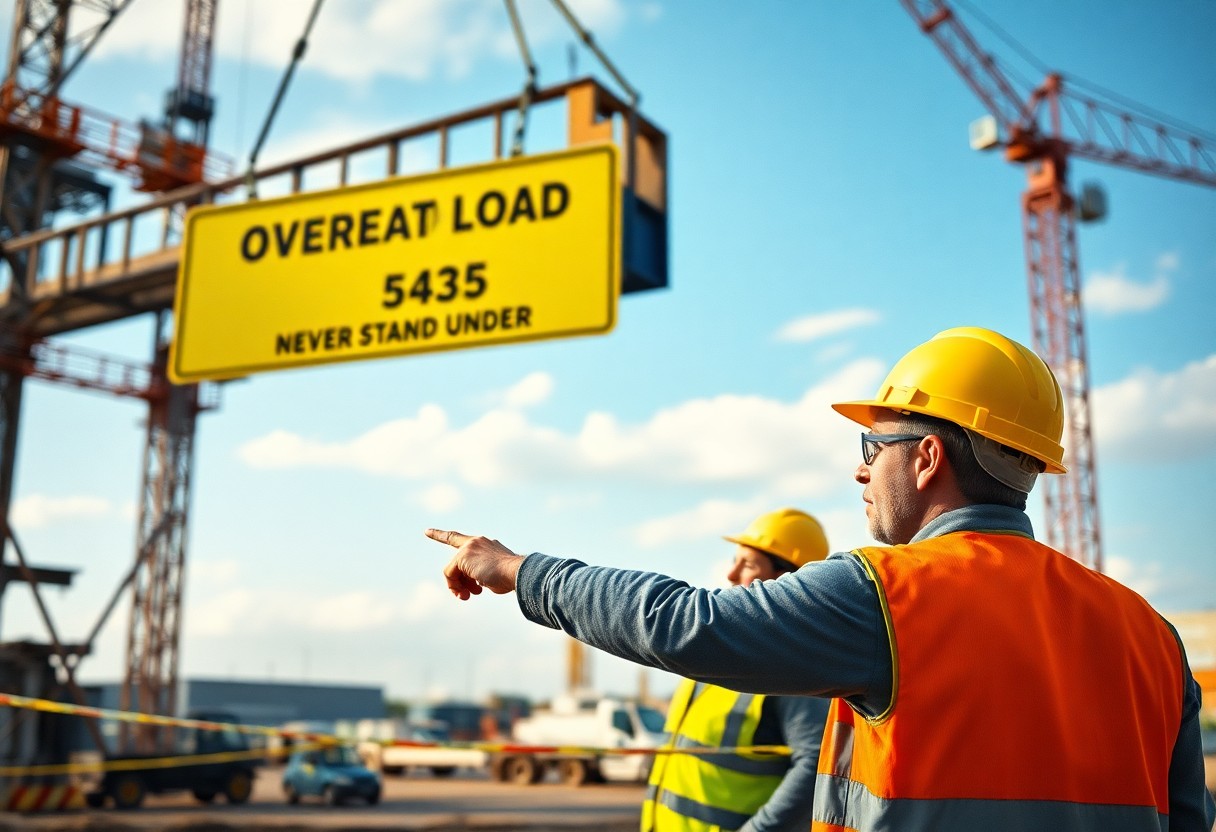
It’s vital that you never stand under suspended loads; falling loads can cause fatal injuries in seconds. You must inspect rigging, maintain clear exclusion zones, use taglines and spotters, and wear appropriate PPE so you can reduce risk and protect co-workers. Follow lift plans, communicate with operators, and stop work if controls fail to keep everyone safe.
Key Takeaways:
- Never stand or pass beneath suspended loads; maintain a safe exclusion zone until the load is landed and secured.
- Ensure rigging and lifting equipment are inspected, rated for the load, and handled by trained personnel using taglines to control movement.
- Establish clear communication and signaling between operators and ground personnel; use barriers and signage to enforce the exclusion zone.
Understanding Overhead Loads
Definition and Types of Overhead Loads
You encounter suspended items such as crane-lifted loads, hoisted equipment and bundled materials that range from small 100 kg tool assemblies to structural modules over 50,000 kg. Rigging failures and improper hitching are common causes of load drops; for example, a slipped sling on a 2,000 kg beam can generate lethal impact forces. After you identify the type and weight, mark exclusion zones and assign trained signalers before the lift.
- Crane-lifted loads – structural steel, HVAC units
- Hoisted machinery – motors, compressors
- Precast panels – wall and floor panels
- Bundled materials – pallets, pipe bundles
| Load Type | Typical Example & Weight |
|---|---|
| Structural steel | Beams, 500-20,000 kg |
| Machinery | Generators, 200-5,000 kg |
| Precast units | Panels, 1,000-15,000 kg |
| Material bundles | Pallets/pipe, 50-2,000 kg |
Common Hazards Associated with Overhead Loads
You face immediate risks like dropped loads, swinging loads, crushing between load and structure, and electrocution when loads contact power lines. A falling 1,000 kg object from 3 m can cause catastrophic injury, so exclusion zones and clear communication are non‑negotiable. Use certified rigging, visible taglines, and a dedicated signal person to reduce exposure during every lift.
Investigations show most incidents stem from planning gaps and human error: inadequate load weight verification, worn slings, or incorrect hitch types. You must verify crane capacity against the lift chart, inspect slings and shackles before each shift, pre-plan pick points, and enforce a strict rule that no one passes under a suspended load; documented lift plans and toolbox talks cut incidents significantly when consistently applied.
Regulations and Safety Standards
You must follow federal and consensus standards that define exclusion zones, equipment ratings, and training requirements so your crews avoid the most common causes of suspended-load incidents. OSHA and industry codes require documented lift plans for complex lifts, qualified personnel for signal and rigging duties, and regular inspections; failure to comply can lead to citations and, more importantly, fatal dropped-load events that otherwise could have been prevented.
OSHA Guidelines for Overhead Loads
OSHA’s crane and rigging rules (see 29 CFR 1926 Subpart CC and 29 CFR 1910.179) require that you keep personnel clear of suspended loads, assign a qualified signal person when needed, and use equipment with appropriate markings (WLL). You must inspect slings and attachments before use (per 29 CFR 1910.184) and establish exclusion zones; failure to implement these controls is a frequent OSHA finding in overhead-load incidents.
Industry Best Practices
You should adopt practices beyond minimum code: perform pre-lift planning, bench-test critical lifts, use taglines and redundant rigging for unstable loads, verify actual weight with scales or load cells, enforce exclusion zones with barriers, and require documented sling and hardware inspections before every use. Emphasize engineered lift plans for complex or heavy lifts and ensure your team practices effective two-way radio or hand-signal communication.
For more detail, conduct a brief pre-lift meeting that assigns roles, specifies sling type and angle limits, and schedules a low “trial pick” to confirm balance and lift path. Inspect slings visually before each lift and maintain formal inspection records; many operations require a detailed inspection interval based on usage (daily/weekly/monthly). Use manufacturer WLLs and commonly accepted safety factors (typically 4:1-5:1 depending on sling type) and call an engineer for lifts that are critical, asymmetric, or above your company’s internal threshold.
Risk Assessment and Mitigation
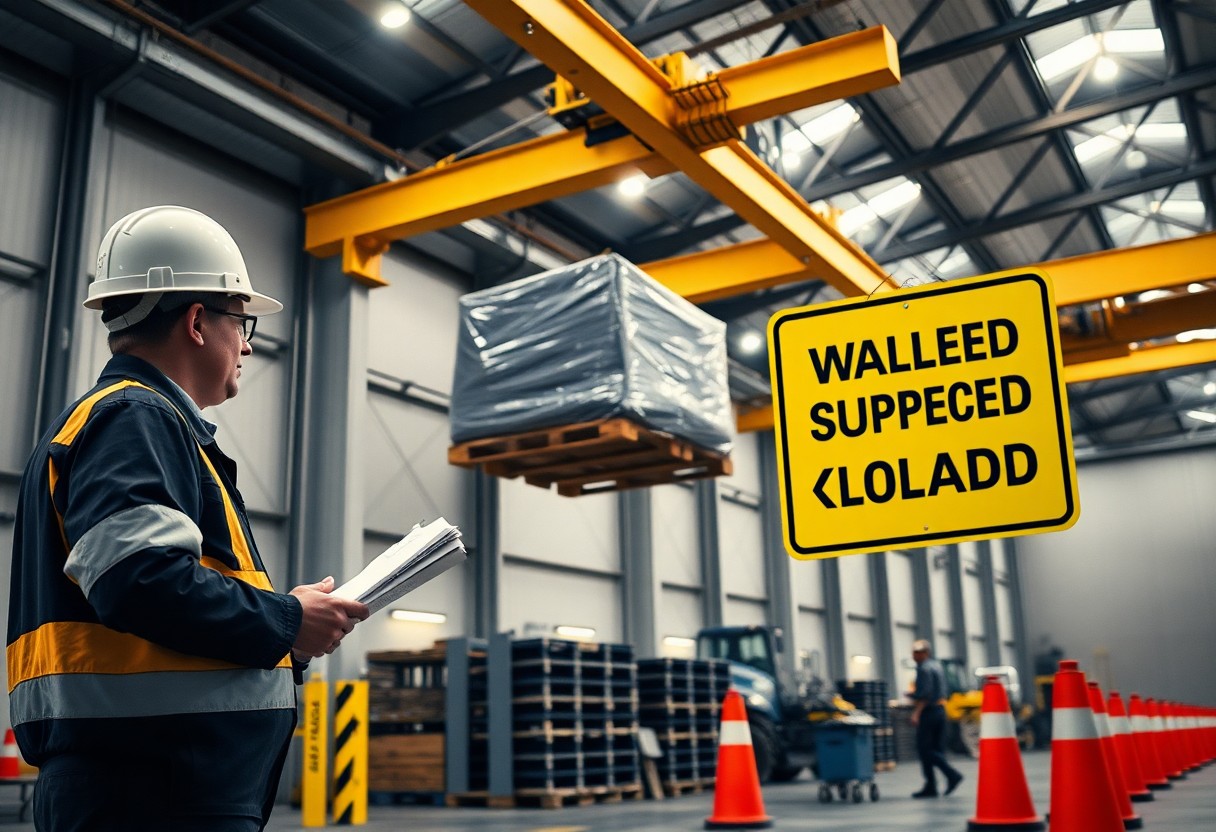
You must perform a formal lift assessment that maps the lift path, verifies load weight against crane charts with at least a 20% safety margin, and identifies ground-bearing capacity, overhead obstructions, and pedestrian flow. Check weather limits and manufacturer wind restrictions (commonly 20-25 mph for many lifts), inspect slings before use and schedule formal inspections per manufacturer (commonly every 6-12 months), and document an exclusion zone and communications plan so everyone knows where not to stand.
Identifying Potential Risks
Walk the site to pinpoint hazards: uneven or soft ground that reduces stability, nearby cranes or structures within the swing radius, unsecured loads that can shift, and poor visibility at night or in fog. Measure and mark the expected horizontal swing and landing area, then add a buffer (commonly 2-3 m / 6-10 ft) for an exclusion zone. Flag any proximity to utilities, and log load center-of-gravity issues or rigging insufficiencies before lifting.
Implementing Safety Measures
You must enforce a written lift plan with a pre-lift briefing, assign a qualified signal person, and use certified rigging rated above the load. Erect physical barriers and signage for the exclusion zone, use tag lines to control swing, perform a 1-foot test lift to check balance, and require radios or hand signals for all crew. Verify the crane’s load chart at the planned radius and stop work authority is granted to everyone on site.
For example, when lifting a 4.2-ton HVAC unit you would confirm the crane can handle at least 5 tons at the working radius, select rated slings and shackles, deploy two tag lines and a spotter, and position barriers at least 3 m (10 ft) from the load footprint. Conduct a controlled test lift 300 mm (1 ft) to verify balance, continuously monitor wind, and abort the lift if any rigging, communication, or stability concern appears.
Personal Protective Equipment (PPE)
When working beneath suspended loads you must rely on PPE as the last line of defense: ANSI/ISEA-rated hard hats, high-visibility garments, steel-toe footwear, eye protection, and fall-arrest systems where exposure exists. Inspect your gear before every shift, remove any item with cracks, dents, frayed straps, or compromised seals, and follow manufacturer service-life guidance-many hard-hat shells show degradation after 5 years and suspensions after 12 months.
Essential Gear for Working Around Overhead Loads
Use a Type II hard hat with a secure suspension and chin strap for lateral-impact protection, ANSI/ISEA 107 Class 2/3 high-visibility vests in crane zones, ASTM F2413 steel-toe boots, ANSI Z87.1 impact glasses, and cut-resistant gloves when handling slings. Add hearing protection when noise exceeds 85 dB, and employ taglines or dedicated spotters so you stay outside the drop zone.
Proper Use and Maintenance of PPE
Follow manufacturer cleaning and inspection instructions: you should check hard-hat suspensions for cracks and loss of elasticity, replace any hat after an impact, store your gear away from UV and solvents, and log inspections. Many sites adopt a policy to replace suspensions every 12 months and shells every 5 years, but replace immediately after damage and never use visibly degraded equipment.
Implement a documented PPE program: you should perform daily inspection sign-offs, tag and remove defective items from service, keep a replacement log with dates, and schedule refresher training every 6 months. For example, a toolbox talk after a near-miss cut incorrect helmet use by ~40% on one site. Check fit by ensuring chin-strap snugness and 2-finger clearance in the suspension; if adjustments won’t correct fit, replace the unit.
Training and Awareness
Importance of Safety Training
You need regular, hands-on training that goes beyond classroom slides; OSHA requires crane operator certification (compliance date Nov 2018) and signal-person qualifications, so practical rigging and signaling drills are mandatory. Weekly 10-15 minute toolbox talks plus quarterly lift simulations help you spot hazards early. Field drills showing never stand under a load and correct sling inspection reduce lift-related near-misses by significant margins on well-run sites.
Developing a Culture of Safety
To build safety into daily operations, you should expect leaders to model behavior and enforce stop-work authority so anyone can halt a lift. Implement anonymous near-miss reporting and visible corrective actions; one mid-size contractor cut its Total Recordable Incident Rate from 0.8 to 0.5 within 12 months after doing so. Strong discipline on procedures makes safety part of your workflow, not an add-on.
Practical steps you can take include pairing new hires with experienced riggers, running pre-lift huddles with checklists, and tracking TRIR and near-miss counts weekly. Use photo-based inspections and maintain a log of sling, hook, and shackle checks; a documented pre-lift checklist and routine audits often reveal overlooked risks before a lift starts.
Emergency Response Procedures
When a suspended load becomes unstable you must stop all crane and lift operations and clear the area immediately, secure the scene, then call emergency services and notify your supervisor. Use the Overhead Hazards Toolbox Talk as a quick reference for roles, hand signals, and isolation steps; maintain a 10 ft (3 m) exclusion radius until the load is secured.
Preparing for Overhead Load Incidents
You should pre-assign an incident commander, train at least two spotters per shift, and map primary and alternate evacuation routes. Conduct quarterly emergency drills, verify rescue gear (harnesses, slings, spreader bars) is inspected, and post clear communication protocols. Establish a designated assembly point at least 10 ft (3 m) from lift paths for rapid accountability.
First Aid and Reporting Protocols
You provide immediate care: apply direct pressure to severe bleeding, immobilize suspected fractures, and manage airway/breathing while someone calls emergency services. Preserve the scene and equipment, collect witness names, then notify your supervisor. File an incident report within 24 hours and secure photos and maintenance logs for the investigation.
You should ensure a responder with current first-aid/CPR certification leads care and deploy an AED if needed; do not remove PPE unless it obstructs life-saving treatment. Report fatalities to OSHA within 8 hours, and any inpatient hospitalization, amputation, or loss of an eye within 24 hours. Preserve lift records, inspection tags, and witness statements to support regulatory and insurance reviews.
Final Words
Conclusively, you must never stand beneath suspended loads; position yourself outside drop zones, maintain clear communication with operators, wear protective equipment, and ensure rigging and lifting gear is inspected before work. Your vigilance and adherence to lift plans prevent injuries and save lives.
FAQ
Q: What qualifies as an overhead load and when is it unsafe to stand beneath one?
A: An overhead load is any object suspended above ground level by cranes, hoists, slings, forklifts with attachments, scaffolding hoists, or temporary rigging. It is unsafe to stand beneath a suspended load when rigging is not certified or inspected, the load is unbalanced or unsecured, taglines are not used for control, personnel are inside the swing or drop path, weather or site conditions increase instability, or communication between operators and ground crews is inadequate. Any movement, sudden shift, or visible damage to lifting gear makes the area beneath a load hazardous.
Q: What controls should be in place to prevent workers from being under overhead loads?
A: Implement engineering controls (establish exclusion zones with physical barriers, plan and mark clear load paths, use taglines to control rotation, position lifts over unoccupied areas, choose appropriate certified lifting equipment, and perform pre-lift inspections). Use administrative controls (written lift plans, permits for critical lifts, certified riggers and signalers, pre-lift briefings, standard hand/ radio signals, spotters, and work sequencing to avoid personnel in drop zones). Ensure training for all involved, maintain and inspect rigging and lifting gear, and substitute methods that eliminate lifts over people whenever possible; PPE is not an effective substitute for keeping clear of suspended loads.
Q: What immediate actions are required if someone is standing under a suspended load or if a load falls?
A: Immediately signal the operator to stop and secure the load, loudly warn personnel to move clear and evacuate the exclusion zone, and establish control over the area to prevent re-entry. If a load falls or a person is struck, call emergency services, render or summon medical aid without exposing others to danger, isolate and preserve the scene for investigation, document the event, tag out equipment involved, inspect rigging before restarting operations, suspend similar lifts until a root-cause review and corrective actions (retraining, procedure revisions, equipment repair) are completed.