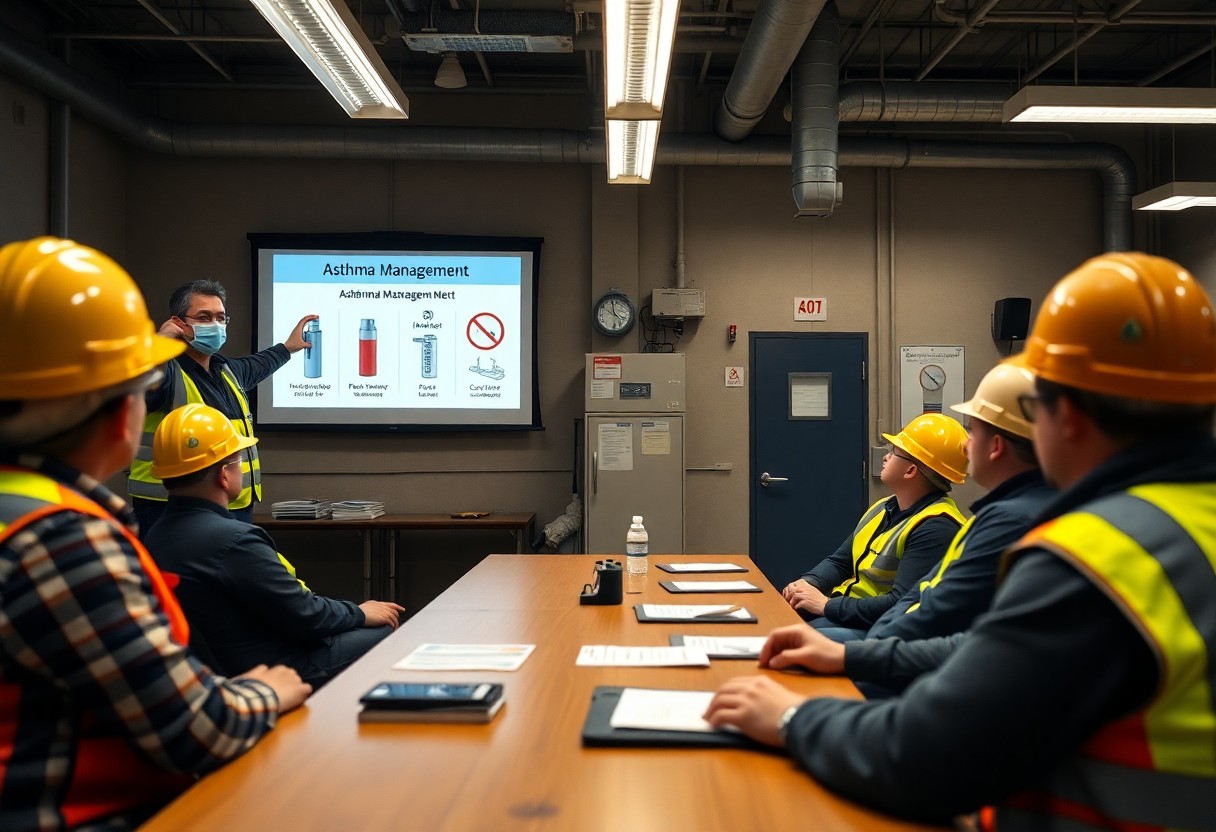
Most workplace asthma incidents stem from exposure to airborne triggers, so you should identify and limit contact with dust, fumes, and chemicals; watch for severe breathlessness, wheeze, chest tightness and act immediately. You must keep your reliever inhaler with you, follow your written action plan, and ensure colleagues know how to assist; if symptoms worsen or you struggle to speak, seek emergency help without delay.
Key Takeaways:
- Identify and minimize workplace triggers (dust, fumes, sprays, cold air) using ventilation, substitution, and improved housekeeping.
- Ensure access to prescribed inhalers and written asthma action plans; train staff on inhaler use and early symptom recognition.
- Have clear emergency procedures and communication-know how to assist during an attack and when to call emergency services.
Understanding Asthma
At work you’ll encounter asthma when exposures, physical exertion, or stress trigger airway narrowing; affecting about 25 million Americans, asthma drives lost time and emergency visits. Practical steps-ventilation, trigger controls, and ready access to reliever inhalers-lower incidents, while training your team speeds response during attacks.
What is Asthma?
Asthma is a chronic inflammatory disease of the airways causing variable airflow obstruction, bronchial hyperresponsiveness and excess mucus. You experience wheeze, cough, chest tightness and shortness of breath when triggers provoke smooth-muscle constriction; severity ranges from intermittent to severe persistent, with roughly 5-10% of patients needing specialist management. Inhaled corticosteroids form the backbone of long-term control.
Symptoms and Triggers
Symptoms commonly include wheeze, persistent or nocturnal cough, chest tightness and breathlessness, and some people present with exercise-induced or cough-only asthma. Workplace triggers often involve isocyanates, cleaning agents, dusts, welding fumes, and animal dander, while viruses, cold air and stress worsen attacks; severe exacerbations can be life‑threatening and require immediate intervention.
Occupational asthma makes up an estimated 10-15% of adult-onset cases; for example, bakers exposed to flour dust and painters exposed to isocyanates frequently develop symptoms months to years after exposure. You should pursue substitution, local exhaust ventilation, appropriate respirators, regular peak-flow or symptom monitoring, and keep an individualized asthma action plan plus a reliever inhaler readily available.
Workplace Risks for Asthma Sufferers
In many workplaces, airborne hazards can provoke attacks: occupational exposures account for up to 15% of adult asthma cases, and sudden high-level events like chemical spills or heavy smoke can be life-threatening. If you work in construction, cleaning, manufacturing or food service you’re more likely to face irritants. Review practical controls in Breathe Easy: Managing Asthma Symptoms at Work and push for ventilation, substitutions, or barriers to cut your exposure.
Common Workplace Triggers
Cleaning sprays with bleach or ammonia, spray paints and isocyanates, flour and grain dust, latex, welding fumes, mold from damp HVAC systems and strong fragrances are frequent triggers you’ll encounter. Even low-level, repeated exposure can worsen control over months; multiple studies link workplace sensitizers to new-onset asthma and exacerbations. If you notice symptoms tied to specific tasks, track timing and tasks to pinpoint the offending agent.
Legal Responsibilities of Employers
Under OSHA’s general duty clause and, in the U.S., the ADA, your employer must provide a workplace free from recognized hazards and make reasonable accommodations for your disability, such as modified duties, improved ventilation, or fragrance-free policies. They’re required to provide training, PPE where appropriate, and to address reported hazards promptly; failure can lead to citations, compensation claims, or corrective orders.
For more detail, ask your employer for an exposure assessment and documented control plan, request involvement of occupational health, and invoke the ADA interactive process if adjustments are needed. Employers should implement medical surveillance when exposures are known (for example, respiratory monitoring for isocyanates), establish written respiratory protection programs per OSHA 1910.134 when respirators are used, and keep clear incident and accommodation records to protect both your health and legal rights.
Effective Asthma Management Strategies
Combine workplace trigger reduction, routine monitoring, and clear communication with supervisors to cut attacks. About 25 million Americans have asthma, so standardized protocols-like accessible rescue inhalers and trained first responders-reduce incident severity and absenteeism. Use data: track symptoms, peak flow and inhaler use weekly; if you need reliever more than three times a week, escalate care with your clinician to prevent emergency visits.
Personal Action Plans
Use a written action plan that lists your daily controller meds, peak flow zones (green 80-100%, yellow 50-79%, red <50%), and stepwise responses for worsening symptoms. Share the plan with your manager, safety officer and a coworker, and include when to use rescue inhaler, when to start oral steroids, and when to call emergency services so workplace responses are consistent and timely.
Medication and Treatment Options
Short-acting beta-agonists (SABA, e.g., albuterol) relieve bronchospasm within 3-5 minutes, while inhaled corticosteroids (ICS) are the mainstay for daily control; combination ICS-LABA helps moderate-to-severe disease. For severe, type-2 asthma, biologics such as omalizumab or mepolizumab target IgE or IL‑5 pathways and cut exacerbations in eligible patients.
Monitor medication use: needing more than 3 SABA canisters per year signals poor control and higher exacerbation risk, prompting specialist referral. If you have ≥2 oral steroid courses or a hospitalization annually, discuss biologic eligibility and nonpharmacologic measures. Store rescue inhalers where accessible, train coworkers on inhaler use, and minimize repeated oral corticosteroid bursts because cumulative systemic effects increase infection, bone loss, and metabolic risk.
Creating a Safe Work Environment
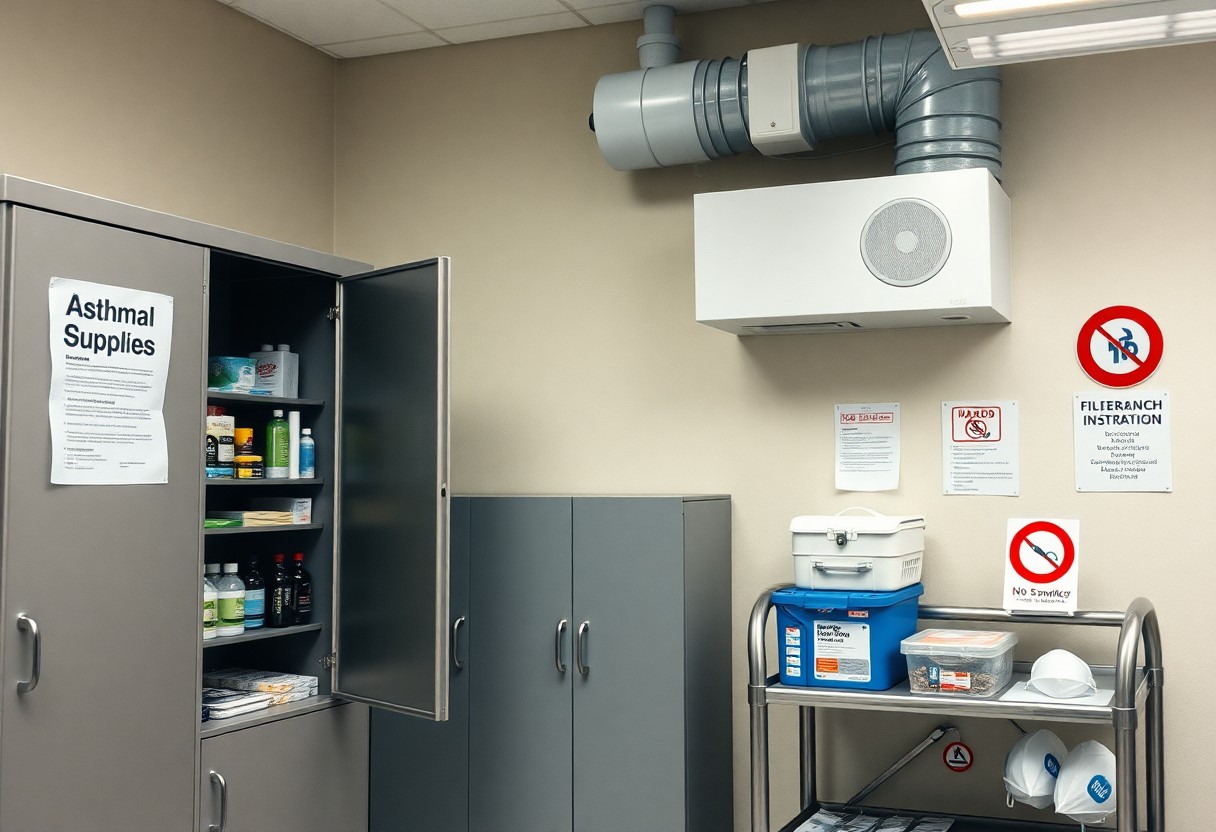
Establish policies that minimize exposures-implement fragrance-free zones, restrict high-emission activities, and designate low-trigger work areas. You should ensure accessible emergency inhalers and clear signage, keep relative humidity between 30-50% to deter mold and dust mites, and schedule HVAC maintenance every 3-6 months. Combining source control with administrative measures reduces workplace asthma risk and helps employees breathe easier during their shifts.
Improving Indoor Air Quality
Upgrade filtration to HEPA units where practical-HEPA captures 99.97% of particles ≥0.3 µm-and increase outdoor air intake to achieve about 4+ air changes per hour in high-occupancy spaces. You can control humidity at 30-50%, replace dusty carpets, use low-VOC cleaning products, and install local exhaust for processes like welding or sanding to remove airborne triggers at the source.
Employee Training and Awareness
Train employees at onboarding and annually with 15-30 minute modules covering trigger recognition, proper inhaler and spacer use, and when to activate emergency plans. You should run quick drills, post visible response steps, and ensure supervisors know how to assist during a severe attack-because rapid intervention can prevent escalation and lost work time.
Go further by creating individualized asthma action plans, confidentially maintained, and training specific roles-custodial staff on low-irritant cleaning choices, maintenance on filter replacement every 3 months, and managers on accommodating restrictions. You should run scenario drills every 6 months, keep spare reliever inhalers and spacers in designated locations, and track incident metrics; organizations that combine these steps often report reduced exacerbations and fewer sick days.
Responding to Asthma Emergencies
When an attack occurs, act quickly and methodically: you should follow the person’s asthma action plan if available, give their prescribed reliever, and monitor response within minutes. In most cases you’ll expect improvement within 5-15 minutes; if signs worsen or there’s no improvement after two treatment cycles, escalate to emergency services. Keep the patient upright, avoid crowding, and have someone note times and doses given so responders get an accurate history.
Recognizing an Asthma Attack
You’ll spot an attack by sudden wheeze, persistent cough, chest tightness and rapid breathing; watch for inability to speak full sentences, use of accessory neck muscles, and pale or bluish lips. Measure peak flow if available: a reading under 50% of personal best signals severe obstruction. Also note vital signs-respiratory rate >30/min or marked agitation/fatigue indicates escalation is needed.
First Aid Response Protocols
Start by seating the person upright and calming them, then deliver their short‑acting beta‑agonist via inhaler with spacer: give an initial 4 puffs, each followed by 4 tidal breaths, and wait 4 minutes. If symptoms persist, repeat the 4‑puff cycle once; use their prescribed reliever nebulizer or oxygen if trained and available. Activate emergency services immediately for severe signs such as cyanosis, collapsing, or worsening mental status.
Use a spacer whenever possible-evidence shows spacers improve lung deposition and reduce oral side effects compared with unaided inhalers. If oxygen is available, titrate to keep SpO2 around 94-98% in adults; children may need slightly different targets per pediatric guidance. In a workplace case, prompt spacer use and two 4‑puff cycles reduced hospital transfers, underscoring how timely, protocolized first aid often prevents deterioration.
Resources and Support for Employees
Accessibility of Health Services
You should check whether your employer provides on-site occupational health, telemedicine, or an Employee Assistance Program (EAP); telehealth often delivers same-day consults or appointments within 24-48 hours. Ask HR about access to spirometry testing, inhaler refill support, and standing medical orders for a workplace stock inhaler, since lack of immediate bronchodilator access is dangerous during an attack.
Support Groups and Community Resources
You can join national organizations like the American Lung Association or the Asthma and Allergy Foundation of America, local hospital classes, or online communities (e.g., Inspire, condition-specific forums) that connect the more than 25 million Americans with asthma. Peer-led groups often meet monthly or biweekly; while they boost self-management and adherence, relying solely on lay advice instead of clinical care is dangerous.
You should look for structured programs offering 4-8 week self-management courses led by respiratory therapists or certified educators that cover inhaler technique, trigger mitigation, and personalized action plan review. Employer-sponsored lunch-and-learn groups, community workshops, and virtual meetups can provide practical tools, and tapping both national resources and a local support group helps you combine evidence-based education with real-world coping strategies.
To wrap up
Considering all points, you must apply the Safety Talk guidance-identify and control triggers, keep your inhaler and written action plan accessible, ensure proper ventilation and PPE, report hazards, and participate in training; by acting decisively you help prevent attacks and keep the workplace breathing easy.
FAQ
Q: What steps should employers and workers take to prevent work-related asthma triggers?
A: Conduct a hazard assessment to identify common triggers (dusts, isocyanates, cleaning agents, fumes, mold, strong fragrances, smoke). Eliminate or substitute hazardous materials where possible, install or maintain local exhaust and general ventilation, use wet-cleaning methods and HEPA filtration for dust control, and enforce fragrance-free and no-smoking policies. Implement safe work practices: proper storage and handling of chemicals, use of less-volatile products, and minimizing aerosol sprays. Provide appropriate respiratory protection when engineering controls are insufficient, with fit testing and training. Keep Safety Data Sheets accessible, schedule routine HVAC and housekeeping maintenance, and provide worker training on trigger recognition and exposure minimization.
Q: How should a workplace respond when an employee is having an asthma attack?
A: Stop the employee’s exposure to triggers and have them sit upright to ease breathing. Follow the individual’s asthma action plan: assist with a prescribed quick-relief inhaler (short-acting bronchodilator) and spacer if available, and monitor response. If symptoms do not improve after initial doses, if breathing difficulty is severe, if the employee cannot speak in full sentences, or if there is blue discoloration or loss of consciousness, call emergency services immediately. Provide supplemental oxygen only if trained and authorized to do so. Document the incident, notify supervisors, and arrange for medical follow-up. After the event, investigate and correct the exposure source to prevent recurrence.
Q: What accommodations and policies support employees with asthma to work safely and productively?
A: Establish written policies that allow disclosure of asthma conditions confidentially, creation of individualized asthma action plans, and timely medical appointments. Provide reasonable accommodations such as relocation to a low-exposure area, reassignment of high-exposure tasks, modified schedules, and engineering controls at the workstation. Supply necessary PPE and training on its use. Adopt workplace-wide controls: fragrance-free rules, strong ventilation standards, substitution of safer products, routine cleaning to reduce allergens, and smoking bans. Implement incident reporting, regular air-quality checks, and a return-to-work process after severe attacks that includes a medical clearance and, if needed, workplace adjustments.