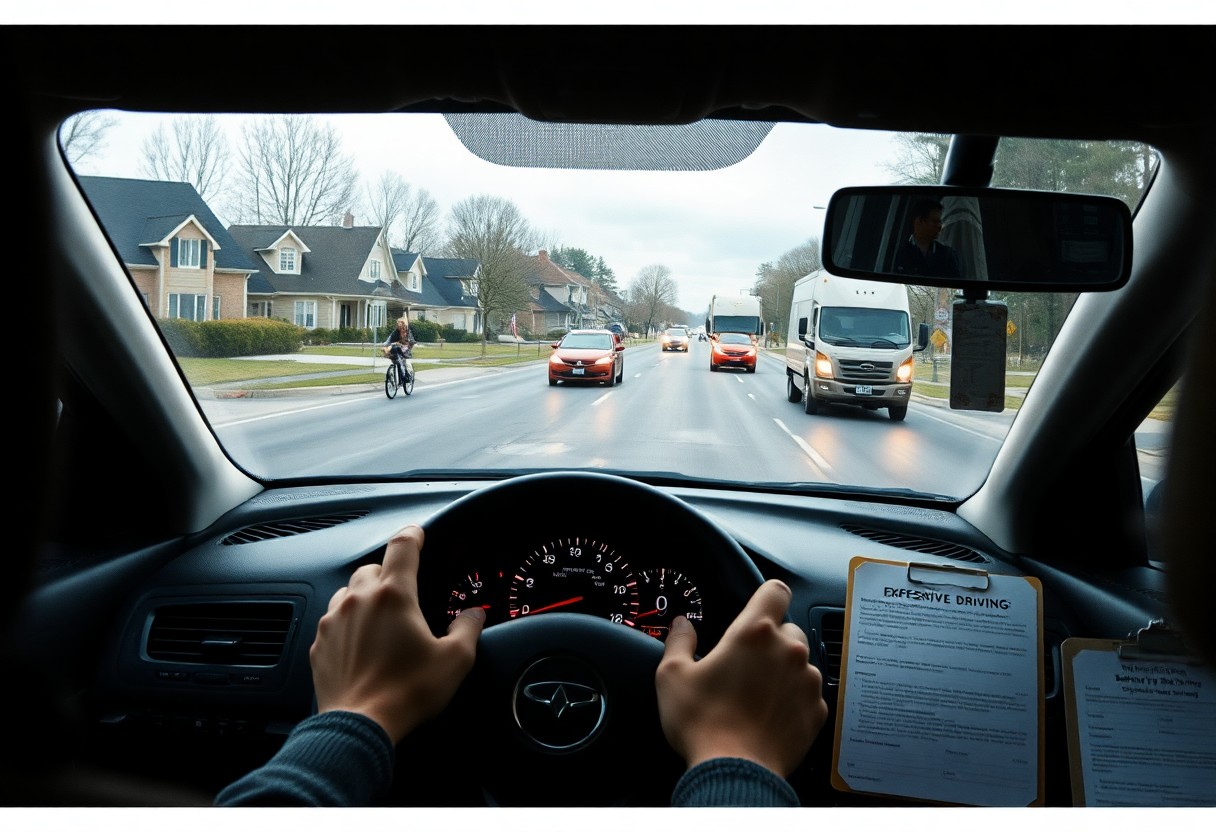
Most drivers underestimate how quickly conditions change, so you must adopt defensive habits that reduce risk; this briefing shows how to detect unexpected hazards like sudden stops or erratic drivers, manage poor weather, and apply positive tactics-scanning ahead, maintaining a safe following distance, and eliminating distractions-to keep you and others safe.
Key Takeaways:
- Maintain a safe following distance and speed; scan 12-15 seconds ahead to spot hazards early.
- Anticipate other drivers’ errors and be ready to slow, change lanes, or use an escape route.
- Eliminate distractions, wear your seatbelt, and set mirrors/controls before driving to stay focused.
Understanding Defensive Driving
You apply defensive driving by continuously managing speed, space, and attention: scan 12-15 seconds ahead, check mirrors every 5-8 seconds, and maintain at least a 3-second following distance in good conditions-double or triple it in rain or snow. Given you travel about 88 ft/sec at 60 mph, a 1.5-second reaction sends you roughly 132 feet before braking, so early recognition and positioning prevent many collisions and reduce impact severity.
Definition of Defensive Driving
Defensive driving means you anticipate others’ mistakes and control factors you can-speed, lane position, and distraction management. You expect sudden lane changes, signal failures, and pedestrian movements, so you leave an escape path, avoid blind spots, and apply the 3-second rule. For example, if a tractor-trailer signals, you ease off the throttle and create space to avoid being boxed in.
Importance of Defensive Driving
Because roughly 94% of crashes are linked to human error, your defensive habits directly reduce crash likelihood and injury severity. Employers report fewer incidents when drivers scan early and maintain space; for you that means fewer near-misses, less downtime, and a lower chance of serious injury. Small, consistent actions produce measurable safety gains on every trip.
Beyond preventing collisions, defensive driving protects vehicle uptime and operating costs: safer fleets experience fewer repairs and lost-work days, and insurers often grant discounts-commonly around 5-10%-for documented training. Additionally, cutting speed by just 5-10 mph in urban or work zones significantly reduces the chance of severe injury, so your speed and spacing choices have direct financial and safety impacts.
Anticipating Other Drivers
Predict likely moves by reading lane position, brake lights, eye contact, and speed changes. Scan 12-15 seconds ahead and note vehicles drifting toward lane markers or failing to signal. If someone is tailgating or weaving, you should increase following distance to at least 4 seconds and be prepared to change lanes or reduce speed. At intersections expect last‑second turns and erratic lane choices; give yourself room to react.
Recognizing Hazardous Behaviors
Watch for weaving, inconsistent speed, late signaling, wide turns, and eyes off the road. At 60 mph you travel about 88 ft/s, so following too closely leaves little time to react. If a driver drifts within lane lines more than twice in 30 seconds or brakes unpredictably, treat them as a hazard: drop a lane, create space, and report impaired or aggressive driving when safe.
Watching for Blind Spots
Mirrors reveal most traffic, but you must perform a quick shoulder check before any lane change; this 1-2 second glance catches vehicles missing from mirrors. For large trucks, avoid lingering in their no-zones on the right and directly behind; if you can’t see the truck driver in his mirror, they likely can’t see you. Signal early and don’t assume others will yield.
Blind spots concentrate at your left and right rear quarters and can hide motorcycles and compact cars; an A‑pillar can obscure a pedestrian in urban turns. On a multi‑lane highway at 65 mph, a vehicle 20 feet behind can close distance quickly if it accelerates, so signal at least 3 seconds, re‑check mirrors, then shoulder‑check before moving. When visibility is poor, reduce speed and use extra glances to cover hidden lanes.
Weather and Road Conditions
When conditions shift, you must increase space and lower speed: aim for 3-4 seconds in dry, 4-6 seconds in rain, and 6-10 seconds in snow or ice. Turn on headlights when visibility drops and avoid cruise control in slippery conditions. Hydroplaning can begin at speeds above roughly 35 mph on standing water, so if you feel loss of traction gently lift off the accelerator and steer straight until grip returns.
Adapting to Weather Changes
Before you hit adverse weather, check forecasts and route options, and plan to reduce speed by about 10-30% in heavy rain or strong crosswinds. Use low beams in fog or heavy rain and cancel cruise control when roads are wet or icy. If visibility falls to the point you can’t see the road edges, pull over safely; a parked vehicle with hazards on is far preferable to driving blind.
Navigating Different Road Surfaces
Gravel, wet leaves, packed snow and ice each demand different inputs: on loose surfaces, slow early and avoid sudden steering; on wet leaves treat the road like ice; on bridges and overpasses expect freeze-ups before the main roadway. Maintain smooth, progressive throttle and braking, and be aware that black ice forms near freezing and in shaded areas, often giving no visual warning.
On gravel reduce speed to maintain directional control and allow extra stopping distance; on packed snow use a higher gear to minimize wheel spin and let ABS modulate braking pressure during stops. When you encounter ice, keep inputs minimal-aim for very low speeds (single digits to 20 mph) if unavoidable-and steer gently; if your vehicle has winter tires, you’ll gain substantially better grip below 7°C (45°F).
Emergency Situations
Preparing for the Unexpected
You should keep a compact emergency kit with a first-aid kit, high-visibility vest, roadside triangles or flares, and a portable jump starter, plus a flashlight, basic tools, tire pressure gauge, and a 12V phone charger. Carry at least one liter of water per person and inspect your spare tire and jack before long trips; check tire pressure and brake fluid monthly to lower the odds of being stranded.
Avoiding Panic Responses
When something sudden happens, slow your breathing and focus on a safe target; steer where you want to go and avoid slamming the brakes. If your vehicle has ABS, press the brake pedal firmly; if not, pump the pedal at roughly two times per second. Keep both hands on the wheel at 9 and 3, signal intentions, and reduce speed gradually to regain control.
In common emergencies-hydroplaning, a blowout, or an animal strike-apply specific steps: during hydroplaning, ease off the accelerator and keep the wheel straight until traction returns; with a blowout at highway speeds, hold the steering wheel firmly, gently decelerate, and steer to the shoulder within 30-60 seconds without abrupt turns; when an animal appears, brake firmly but avoid sudden swerves that can cause a rollover. Practice these responses in a safe environment so your reactions become controlled, not panicked.
Safety Measures and Best Practices
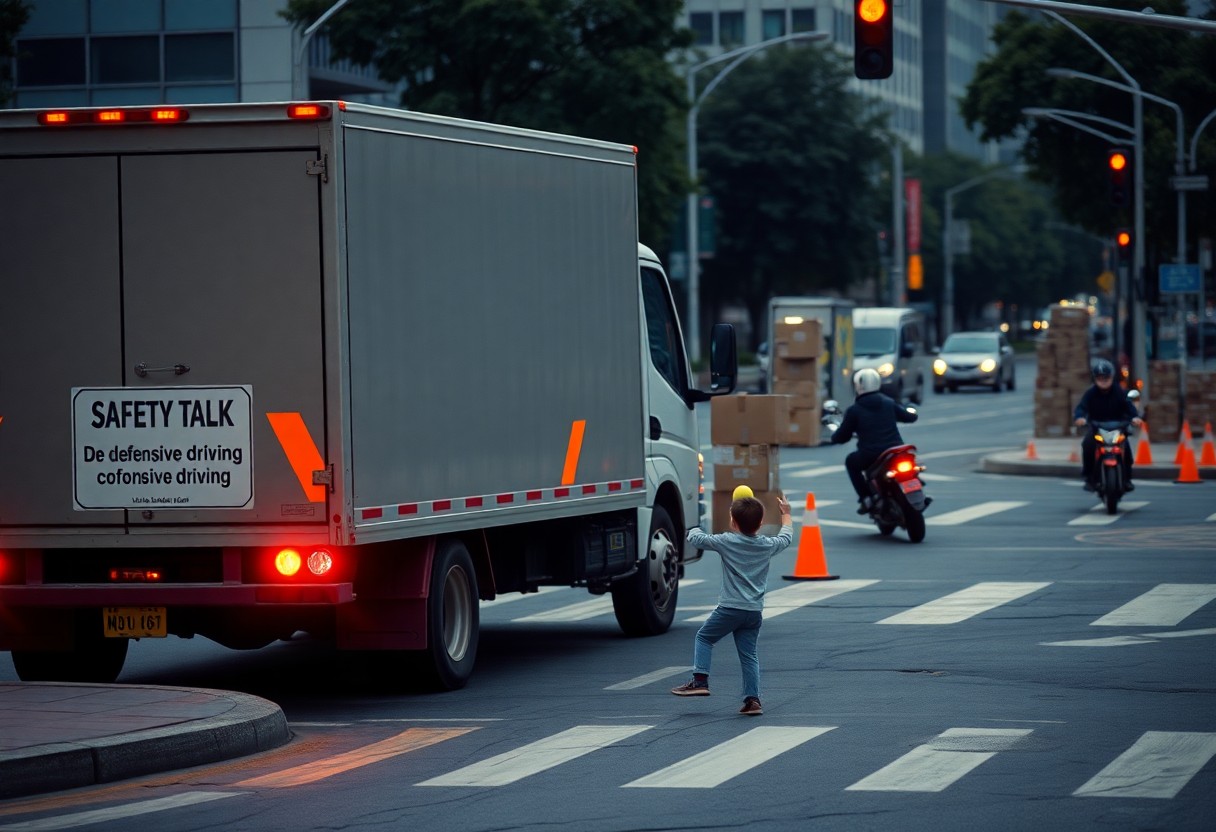
Adopt layered actions: maintain the 12-15 second scan, follow 3-4 seconds in dry (longer in poor conditions), and keep your vehicle maintained; Safety Talk: Defensive Driving – Stay Safe on the Road! offers a full checklist. Use high-visibility vests, check tire pressure to manufacturer specs, and carry an emergency kit so you reduce reaction time and exposure to serious hazards.
Seat Belt Usage
You must wear a properly fastened belt every trip: seat belts reduce the risk of fatal injury for front-seat occupants by about 45% and lower moderate-to-critical injuries by roughly 50%. Position the lap belt low across your hips and the shoulder belt across your chest, and install child seats per manufacturer limits to prevent ejection and minimize severe trauma.
Use of Technology in Defensive Driving
Features like automatic emergency braking, lane-keep assist, and blind-spot monitoring can cut specific crash types by as much as 50% in studies; you should treat them as supplements, not substitutes, for attentive driving. Keep cameras and sensors clean and software current so alerts remain reliable and help reduce your cognitive load without replacing your judgment.
Practice with the systems active in low-risk settings to learn their limits-AEB may not detect small motorcycles or debris. After windshield replacement or collision repairs, have ADAS recalibrated to restore system accuracy; otherwise overreliance can create hidden, dangerous blind spots that manual checks would have caught.
Training and Resources
Tap into state-approved training libraries, telematics vendors, and nonprofit guides (NHTSA, AAA, your DMV) for downloadable checklists, 1-2 hour e-modules, and annually updated manuals. Many fleets keep a 25-50 page vehicle inspection toolkit and a digital incident-reporting template you can use to standardize responses and speed post-incident follow-up.
Defensive Driving Courses
Choose state-certified 4-8 hour courses-online or in-class-that drill scanning, gap management, and collision avoidance; completion often earns a 5-15% insurance discount and may satisfy ticket-dismissal requirements in some jurisdictions. You should add hands-on modules like skid-control or night driving drills to practice critical maneuvers in controlled conditions.
Ongoing Training Programs
Pair telematics-based coaching with monthly 30-60 minute refreshers and quarterly in-vehicle evaluations; telematics coaching can reduce hard-braking and speeding events by up to 40%. Prioritize sessions on distracted driving, intersection behavior, and fatigue management to prevent repeat risky behaviors.
Structure ongoing training with short pre-trip briefings, 10-minute post-trip debriefs, and monthly KPI reviews-set a target safety score above 80%. Use simulators for hazard perception, assign mentors for new drivers, and link incentives to measurable drops in near-misses; a regional delivery fleet cut incidents by about 30% within six months using this approach.
Summing up
Now you should apply defensive driving on every trip: scan ahead, adjust speed for conditions, maintain safe following distance, anticipate others’ mistakes, and plan escape routes; your vigilance and calm decisions reduce risk and let you respond effectively when the unexpected occurs.
FAQ
Q: What are the core defensive driving principles to expect the unexpected?
A: Adopt a proactive scanning pattern-scan far ahead (12-15 seconds), check mirrors frequently and monitor side corridors for hazards. Maintain ample space cushion by using a time-based following distance (at least three seconds in good conditions, increase for poor weather or heavy traffic). Control speed so you can stop or steer around hazards within the visible space, reduce distractions by silencing notifications and keeping both hands on the wheel, and position your vehicle to maximize escape routes (avoid being boxed in). Assume other road users may make mistakes and plan at least one evasive option for each potential hazard.
Q: How should I respond when another driver suddenly swerves, brakes hard, or enters my lane?
A: Assess the immediate threat and act calmly: lift off the accelerator to reduce speed, check mirrors and blind spots for escape routes, and apply firm, steady braking if required-use threshold braking or ABS technique as appropriate. If steering is needed, aim for a safe gap rather than overcorrecting; steer smoothly and avoid abrupt inputs that can cause loss of control. Use your horn and lights to warn others when safe to do so. If a collision is unavoidable, attempt to reduce speed and choose a glancing impact angle to lessen force. After resolving the event, move to a safe location, secure the vehicle, and call for assistance if necessary.
Q: What pre-trip checks and habits reduce the chance of encountering dangerous surprises on the road?
A: Perform a quick walk-around and in-cabin check: confirm tires are properly inflated and have adequate tread, lights and signals work, wipers and washer fluid are functional, brakes feel normal, and mirrors are correctly adjusted. Plan routes and check weather/traffic forecasts; carry an emergency kit (portable phone charger, flashlight, basic tools, water, first-aid supplies). Start rested, avoid alcohol or impairing medications, and schedule breaks on long trips to maintain alertness. Secure cargo and minimize in-car distractions so you can focus on scanning and reacting to unexpected hazards.