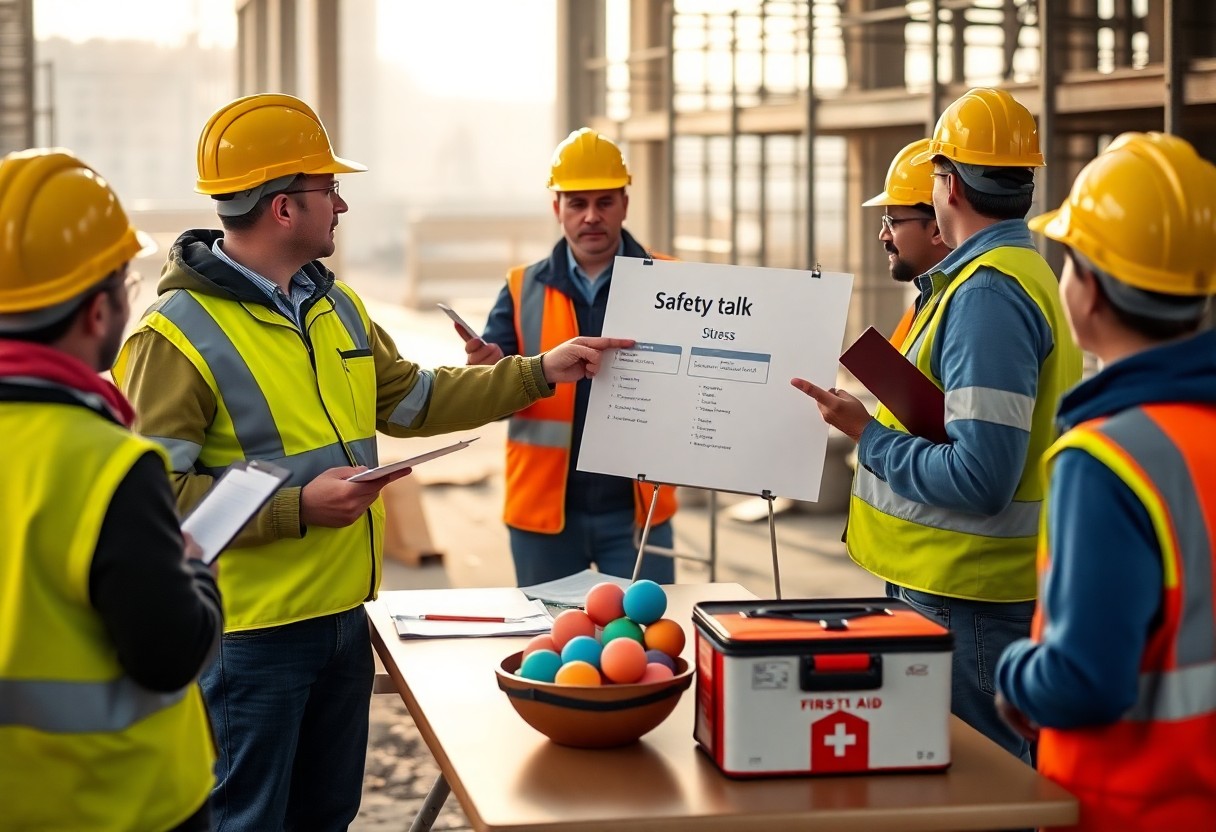
Over time, stress can erode your performance and safety; chronic stress raises the risk of accidents, injury, and illness. You can strengthen your response by building habits that protect your well-being: small daily routines, social support, and controlled breathing increase tolerance and recovery. Use practical, measurable steps so your resilience reduces downtime and sharpens decision-making, keeping you safer on the job and more effective at work and home.
Key Takeaways:
- Recognize your personal stress signals and use quick grounding techniques (deep breathing, progressive muscle relaxation, or the 5-4-3-2-1 sensory check) to calm immediate reactions.
- Strengthen resilience with consistent routines: prioritize sleep, balanced nutrition, regular exercise, and supportive relationships; reach out for help when stress exceeds your coping capacity.
- Build practical skills-break problems into manageable steps, set realistic goals, and reframe negative thoughts to focus on controllable actions.
Understanding Resilience
You build resilience by practicing specific habits that help you rebound from setbacks and maintain performance under pressure. In operational settings, that means combining quick coping tools with longer-term strategies-for example, a 5-minute grounding routine after a near-miss plus weekly peer debriefs-to keep your decision-making sharp and reduce the chance of error or injury when stress spikes.
Definition of Resilience
Resilience is your ability to recover, adapt, and continue functioning after stress or adversity; it blends emotional regulation, problem-solving, and social support. For instance, when you face a production delay, resilience lets you move from frustration to actionable planning within hours or days instead of lingering in reactive cycles, which helps preserve safety and productivity.
Importance in Stress Management
When you strengthen resilience, you lower the probability that short-term stress becomes chronic burnout, which in turn cuts error rates and absenteeism. Studies and workplace programs often report 15-30% reductions in perceived stress and missed work after resilience training, so investing time in skills yields measurable safety and performance gains.
Practically, you cultivate resilience with targeted actions: practice cognitive reframing for 5-10 minutes daily, schedule 7-9 hours of sleep to support recovery, and use team huddles to share coping tactics. One common intervention-brief, structured debriefs after incidents-has helped teams shorten recovery time and increase near-miss reporting, demonstrating how simple routines translate into fewer accidents and faster bounce-back.
Factors Influencing Resilience
Multiple elements determine how well you rebound from pressure: your biology, history of setbacks, quality of social support, and the safety of your work environment. The linked case review on workplace recovery offers practical interventions – see Safety Talk – Building Resilience – Bounce Back from Stress for tools and protocols. After you identify which factors are modifiable, prioritize low-cost actions that reduce chronic stress and improve performance.
- Biological baseline (sleep, health)
- Support systems (peers, mentors)
- Workplace safety (procedures, hazards)
- Coping skills (strategies, training)
Psychological Factors
Your beliefs, appraisal style and emotional habits shape resilience: people with flexible thinking and strong self-efficacy recover faster after mistakes, while rigid negative appraisals lengthen recovery. Training in cognitive reframing and brief exposure techniques reduces acute distress; studies show a 25-35% improvement in coping after targeted interventions. Perceiving threats as controllable and temporary improves your ability to plan and act under pressure.
- Self-efficacy
- Mindset (growth vs fixed)
- Emotional regulation (skills, practice)
Environmental Factors
Physical conditions, team norms and access to resources directly affect recovery: poor lighting, excessive noise or unclear procedures raise error rates, while supportive supervisors lower burnout. Small investments-better lighting, quiet rooms, clear checklists-cut incident rates and speed return-to-work. Any reduction in hazards or clearer procedures reduces strain and improves your day-to-day resilience.
- Physical hazards (noise, ergonomics)
- Team culture (psychological safety)
- Organizational resources (PPE, training)
Dig deeper into environmental tweaks: retrofit ergonomics (e.g., adjustable workstations reduced musculoskeletal complaints by ~30%), implement clear SOPs and create quiet recovery spaces; these changes yield measurable gains in safety and performance. Prioritize fixes with high return-better ventilation, signage, and staffing-then monitor outcomes with near-miss tracking. Any improvement you make in the environment produces measurable declines in incidents and faster recovery times.
- Ergonomic fixes (adjustable stations)
- SOP clarity (checklists, signage)
- Recovery spaces (quiet rooms, breaks)
Strategies to Build Resilience
Focus on practical, repeatable habits you can use on shift: set a 10-minute daily routine, schedule micro-breaks every 90 minutes, and plan simple “if-then” coping scripts for likely setbacks. Use measurable goals (e.g., take 10 deep breaths before high-risk tasks) and track your progress weekly to reduce reactivity. Evidence and workplace programs show consistent practice over 6-8 weeks yields noticeable improvements in your recovery and decision-making.
Positive Thinking Techniques
Use cognitive reframing: when a setback happens, write one sentence reframing the event into a lesson within five minutes. Practice gratitude by listing three specific wins each night; small trials with first responders found mood benefits from this routine. Apply “if-then” statements (if you feel overwhelmed, then you name three facts) to interrupt catastrophic loops and strengthen your mental flexibility.
Stress-Reduction Practices
Begin with portable, evidence-based routines you can do anywhere: box breathing (4-4-4-4) for 1-2 minutes, progressive muscle relaxation for 10-15 minutes, and the 5-4-3-2-1 grounding technique during acute episodes. Use HRV biofeedback for 10 minutes daily if available. Consistent repetition lowers your physiological arousal and makes you less reactive; prioritize short, frequent sessions over rare long ones to build resilience.
Design a realistic schedule you will follow: 5 minutes of breathing before your shift, a 2-minute grounding break every 90 minutes, and 10-15 minutes of progressive relaxation or guided mindfulness after work. For teams, run a 6-8 week pilot with weekly 15-minute sessions and measure self-reported stress; many organizations observe a drop in workplace errors and absenteeism when physiological stress decreases across the team.
The Role of Support Systems
When you build and use a support network, outcomes improve: social ties lower mortality risk by about 50% (Holt-Lunstad et al., 2010) and speed recovery after injury. Peers, supervisors, unions and family provide practical, emotional, and procedural support; implementing daily safety huddles, buddy checks, and designated peer-support volunteers turns abstract support into on-the-job resilience you can rely on after high-stress events.
Importance of Social Connections
Strong connections reduce isolation and give you immediate practical help after incidents: adopt 15-minute debriefs after near-misses, weekly one-to-one check-ins with supervisors, and a peer-buddy system so you have someone to report hazards to right away. Examples from healthcare and construction show regular briefings improve situational awareness and lower the chance of repeat errors, helping you stay both safer and more effective.
Seeking Professional Help
If stress persists beyond peer support, seek professional care-occupational health providers, EAPs, or licensed therapists can assess work-related risks and coping. Cognitive behavioral therapy is evidence-based and commonly delivered in 6-20 sessions, via in-person or telehealth, and employers often cover initial visits; choose a clinician familiar with your industry for targeted strategies and return-to-work planning.
When you contact a provider, expect an assessment of symptoms, functioning and safety, followed by a measurable care plan-often brief CBT or trauma-focused work with progress tracking. If you’re in immediate danger or having suicidal thoughts, call emergency services or 988 in the U.S. Many workplaces offer EAPs that are free and confidential, and telehealth can get you appointments within days rather than months.
Personal Resilience Plans
Center your resilience plan on specific actions: identify your top 3 triggers, pick 2-4 coping behaviors, and schedule them into your week. Test interventions in a 30-day trial, log outcomes, and watch for escalation signals like increased mistakes or chronic sleep loss. You should aim for small, repeatable habits (for example, a 10-minute breathing or movement break twice daily) that reduce load without adding complexity.
Creating a Customized Plan
Begin by mapping stressors to responses: if deadlines spike your anxiety, assign a 15-minute prioritization ritual and a hard email cutoff at 7 p.m. Set SMART-style targets (specific, measurable)-for instance, lower average daily stress from 7 to 5 on a 0-10 scale over 4 weeks. Include resources you can actually use: a colleague backup, a short guided meditation, and one boundary you enforce each week.
Tracking Progress and Adjustments
Use simple metrics you can sustain: a daily 0-10 stress rating, sleep hours, and one mood note. Conduct a 10-15 minute weekly review and a 30-minute monthly adjustments session. If your average stress doesn’t drop by ~2 points after 30 days, change a single variable-swap the practice, tighten a boundary, or increase recovery time by 20%. Watch for persistent decline as a danger signal.
Track in a compact format: Date | Stress (0-10) | Sleep (hrs) | Trigger | Response | Result. Log daily entries and run a 7-day rolling average to spot trends; for example, a drop from 7.5 to 5.0 over three weeks shows meaningful improvement. Use a spreadsheet, a habit-tracking app, or a wearable for sleep data, but keep the review human-spend 15 minutes weekly noting what worked and what didn’t. When adjusting, change only one element at a time and give it 3-6 weeks to judge effectiveness; if outcomes improve, codify the change, and if not, iterate again.
Case Studies and Real-Life Applications
You can measure how targeted interventions change outcomes quickly: small pilots often reveal what scales best across an organization, and data-driven tweaks let you refine programs in weeks rather than months. Several field examples show both risk and reward when you invest in resilience and stress management-from reduced absenteeism to lower incident rates-so you can judge what will work for your teams and what requires stronger leadership support.
- 1) Manufacturing plant, 450 workers: 6‑month resilience training. Results: 35% reduction in recordable injuries, 22% drop in absenteeism, average Perceived Stress Scale down by 5 points.
- 2) Emergency department, 120 staff: 12‑week peer support + mindfulness. Results: burnout prevalence fell from 62% to 28%, turnover dropped by 18 percentage points, patient satisfaction rose 8%.
- 3) Remote tech firm, 300 employees: 8‑week program + flexible scheduling. Results: productivity (output per engineer) up 15%, sick days per employee down from 5 to 3 annually, stress ratings down 1.8/10.
- 4) Firefighters cohort, 80 participants: 24‑month cognitive behavioral resilience program. Results: PCL‑5 PTSD scores decreased by an average of 12 points, overtime incident rate reduced by 27%, sustained at 12‑month follow‑up.
Success Stories
You see clear wins when programs align with job demands: one hospital unit cut acute stress leave by 60% after pairing shift redesign with brief resilience coaching, and clinicians reported a 40% increase in perceived control over workload-evidence that combining systems change with individual skills delivers measurable improvements for your people.
Lessons Learned
You learn fastest by tracking baseline metrics, securing leadership buy‑in, and iterating quickly; projects that measured PSS, turnover, and incident rates every quarter were 3x more likely to scale successfully, so set up simple dashboards before you start.
More detail: standardize your metrics (use PSS or PCL‑5 where appropriate), pilot with 50-300 participants to gain statistical signal, and plan a minimum of 6 months to detect behavioral change; also allocate budget for ongoing coaching and one dedicated coordinator to maintain momentum and data integrity.
FAQ
Q: What is resilience and how can I apply it after a stressful incident at work?
A: Resilience is the ability to recover and adapt after stress or disruption. After an incident, start with a brief safety check and a short debrief to clarify facts and immediate needs. Use grounding techniques – steady breathing, naming five things you can see, or a 60-second body scan – to reduce acute arousal. Break tasks into small, manageable steps and set one clear short-term goal (e.g., tidy one work area, complete one form). Reconnect with a colleague or supervisor for social support and to share workload if needed. Track recovery progress over the next days (sleep quality, mood, concentration) and escalate to formal supports – supervisor, occupational health, or Employee Assistance Program – if symptoms persist or worsen.
Q: How can supervisors and safety leaders support team resilience after a traumatic or high-stress event?
A: Supervisors should provide timely, practical support: ensure physical safety, allow an immediate pause if people are shaken, and offer a private space to collect themselves. Hold a short, structured debrief focused on facts, actions taken, and next steps rather than assigning blame. Adjust expectations temporarily – redistribute tasks, allow modified duties, or schedule rest breaks. Communicate clearly about available resources (critical-incident support, counselling, time-off policies) and follow up individually within 24-72 hours. Model calm behavior and encourage peer check-ins. Document actions taken and plan training or process changes to reduce future risk.
Q: What quick techniques can workers use on shift to manage sudden stress and prevent escalation?
A: Use brief, evidence-based strategies you can do in minutes: 1) Box breathing – inhale 4s, hold 4s, exhale 4s, hold 4s for 3-5 cycles; 2) Grounding – name five things you see, four you can touch, three you can hear, two you can smell, one you can taste; 3) Progressive muscle release – tense then relax major muscle groups for 30-60 seconds; 4) Micro-breaks – stand, stretch, walk 2-5 minutes and hydrate; 5) Task triage – list tasks, mark one high-priority, postpone non-urgent work. If stress impairs safety or decision-making, ask for temporary relief or handover. Seek formal help if panic, intrusive memories, sleep disruption, or functional decline continue beyond a few days.