
Battery handling can expose you to acid burns and dangerous sparks, so you must follow safe procedures: wear chemical-resistant gloves and eye protection, work in good ventilation, keep flames and metal tools away, and always disconnect the negative terminal first. If acid contacts your skin or eyes, flush immediately with water for at least 15 minutes and seek medical help. By applying these steps you protect yourself and others while preserving equipment integrity.
Key Takeaways:
- Use proper PPE – acid-resistant gloves, eye protection, and an apron; flush affected skin or eyes with water immediately and seek medical attention for any chemical burns.
- Prevent sparks and short circuits by disconnecting chargers before maintenance, keeping tools insulated, and avoiding metal jewelry near battery terminals.
- Store and handle batteries upright in ventilated areas, keep terminals capped, and neutralize acid spills with baking soda while ventilating the area.
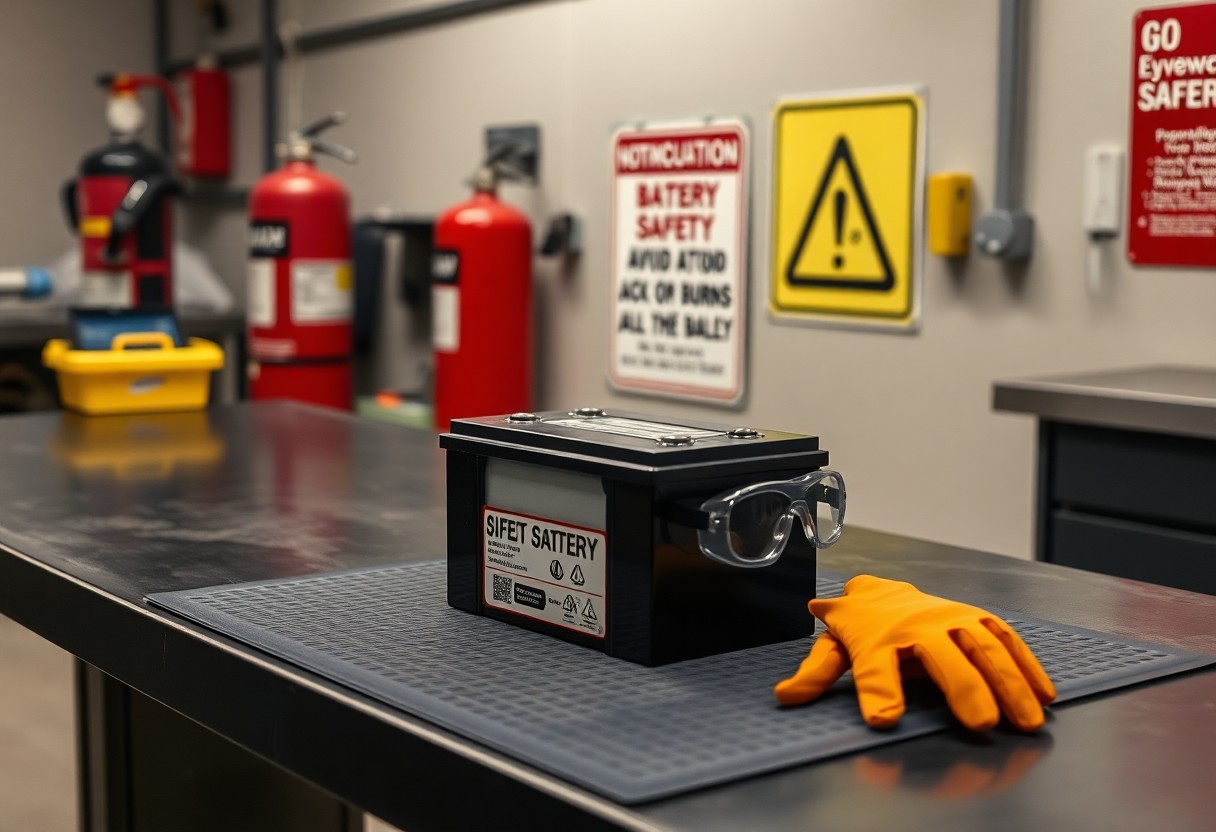
Understanding Battery Chemistry
Battery operation depends on redox reactions where you convert stored chemical energy into electricity; cell voltages vary by chemistry-lead‑acid cells ≈2.0 V each (six cells ≈12 V), while lithium‑ion cells are ≈3.6-3.7 V. Electrolyte composition governs hazards: automotive lead‑acid uses ~30-35% sulfuric acid by weight, and Li‑ion uses flammable organic carbonates. Knowing these values helps you assess risk, maintenance needs, and appropriate PPE for handling and disposal.
Types of Batteries
You commonly encounter lead‑acid in vehicles, lithium‑ion in portable electronics, nickel‑metal‑hydride in tools, disposable alkaline cells in low‑drain devices, and primary lithium cells in watches and sensors; each differs in energy density, nominal voltage, rechargeability, and specific hazards such as acid burns or thermal runaway.
- Lead‑acid – 2.0 V per cell, heavy (lead content ~9-14 kg in car batteries), electrolyte is concentrated sulfuric acid, major risk: acid burns and lead poisoning.
- Lithium‑ion – ~3.6-3.7 V per cell, high energy density, uses flammable organic electrolytes; risk: thermal runaway and smoke that can exceed 500°C.
- Nickel‑metal‑hydride (NiMH) – ~1.2 V per cell, safer than older NiCd but can vent hydrogen under abuse; common in cordless tools.
- Alkaline – ~1.5 V single‑use cells, contain zinc and manganese dioxide; rupture can cause caustic leakage and skin irritation.
- Recognizing the specific chemistry guides your handling, storage, transport, and emergency response choices.
| Lead‑acid | ~2.0 V/cell; 12 V car batteries contain ~30-35% H2SO4; hazards: acid burns, lead toxicity, heavy weight. |
| Lithium‑ion | ~3.6-3.7 V/cell; high energy density; risks: internal short → thermal runaway, flammable gases, >500°C reaction temperatures. |
| NiMH | ~1.2 V/cell; moderate energy; hazards include venting hydrogen under overcharge and elevated temperatures. |
| Alkaline | ~1.5 V/cell; non‑rechargeable; ruptures leak caustic KOH solutions that can cause skin and eye irritation. |
| Lithium (primary) | ~3.0 V single‑use; contains metallic lithium or lithium compounds; short circuits can cause fires and thermal events. |
Hazardous Components
Sulfuric acid, heavy metals like lead and cadmium, flammable organic electrolytes, and reactive lithium metal are the main hazards you will encounter; concentrations and quantities vary, for example most automotive cells use ~30-35% H2SO4 and a typical car battery contains roughly 9-14 kg of lead, both requiring specific disposal and spill procedures.
Deeper detail shows how each component behaves: spilled sulfuric acid has pH near 0.5 and causes rapid chemical burns, lead dust causes neurotoxicity at low chronic exposures, and Li‑ion electrolytes release toxic, flammable gases during decomposition-thermal runaway events can produce temperatures exceeding 500°C and CO, HF, and hydrocarbons. You must use acid neutralizers, ventilated areas, appropriate respirators for heavy‑metal dusts, and follow DOT/ICAO shipping limits to reduce incident frequency and severity.
Risks Associated with Batteries
You face chemical, thermal and mechanical hazards: lead‑acid batteries contain about 36% sulfuric acid that can cause severe tissue damage, charging produces hydrogen (explosive between 4-75% by volume), and Li‑ion cells can enter thermal runaway exceeding 500°C and releasing toxic gases. Shorts, dropped tools, or corroded terminals can create sparks that ignite flammable vapors. Treat batteries as stored energy and hazardous chemicals – small mistakes can produce burns, fires, or permanent eye injury.
Acid Burns
Concentrated sulfuric acid in batteries can produce full‑thickness skin or corneal burns within seconds; automotive electrolyte (~36% H2SO4) strips tissue and generates deep damage. If you get acid on skin, flush with water for at least 15 minutes and remove contaminated clothing; for eye exposure, irrigate continuously for 15-20 minutes and seek immediate medical attention. Even minor splashes can cause permanent scarring or vision loss if not treated promptly.
Sparks and Explosions
Hydrogen evolved during charging collects near terminals and has a 4-75% explosive range with a minimum ignition energy around ~0.02 mJ, so tiny sparks or static discharges can trigger an explosion. You must avoid smoking, open flames, and placing metal tools across terminals; a dropped wrench or jewelry short can produce a spark and a violent event. Ensure ventilation and use insulated tools to lower the immediate risk.
To reduce explosion risk, charge at or below about C/10 where practical to limit gassing, provide forced ventilation to keep hydrogen well below the 4% lower explosive limit (aim under 1%), and maintain at least a 3 m clearance from open flames. Use non‑sparking, insulated tools, remove metal jewelry, and cover terminals when idle. Inspect for bulging, corrosion, or electrolyte leaks-visible damage often precedes thermal events and increases likelihood of sparks or rupture.
Safety Precautions
Before you charge or service batteries, plan the work area: provide adequate ventilation, spill containment and at least 3 m (10 ft) clearance from ignition sources, isolate cells, and use non‑sparking tools; consult guidance like Battery Charging: A Multitude of Hazards. Keep a neutralizer on hand (sodium bicarbonate) and an emergency eyewash within 10 seconds reach.
Personal Protective Equipment
You must wear acid-resistant gloves (neoprene or nitrile), splash goggles plus a face shield, and an acid‑resistant apron or coat; use chemical‑resistant boots and replace PPE at the first sign of damage. For eye exposure, flush with water for at least 15 minutes while arranging medical evaluation.
Proper Handling Techniques
You should use two‑person lifts or mechanical aids for items over 20 kg (44 lb), keep batteries upright and secured during transport, and always disconnect the negative (-) terminal first to reduce shorting risk; use insulated tools and remove metal jewelry before handling.
For large batteries-forklift batteries commonly exceed 200 kg (440 lb)-employ certified lifting gear and slings rated at least 1.5× the battery weight, inspect slings before each use, and move units in spill trays; cap terminals during transfer and verify state of charge with insulated meters after installation.
Emergency Response
If a spill or incident occurs, immediately evacuate nonvital personnel, ventilate the area, and isolate the battery-keep people at least 5 m away. If safe, de‑energize equipment, don appropriate PPE, and contact emergency services plus your facility spill team. For skin contact, flush with running water for at least 15 minutes; for eye exposure flush for 20 minutes and seek urgent medical care. If you observe smoke or flames, treat it as a fire and notify responders immediately.
First Aid for Acid Burns
Remove contaminated clothing promptly and rinse the affected area under running water for at least 15 minutes; do not apply creams or attempt on‑site neutralizers. If acid reaches the eyes, hold eyelids open and irrigate continuously for 20 minutes while someone summons medical help. After thorough irrigation, cover the area with a sterile, non‑adhesive dressing and obtain professional care for anything beyond mild redness or persistent pain.
Dealing with Battery Sparks
If you see sparks, stop work, disconnect the battery only if it’s safe, and eliminate ignition sources-no smoking or open flames-while ventilating to disperse hydrogen, whose lower explosive limit is about 4% by volume. Use insulated tools, remove metal jewelry, and maintain distance; persistent sparking or smoke requires evacuation and immediate emergency response because sparks near venting cells often precede thermal runaway.
To reduce recurrence, isolate the battery and cover terminals with insulated caps; when connecting chargers always attach positive first and when disconnecting remove negative first to lower short risk. You should enforce tool control, train staff on insulated‑tool use, and keep at least a 0.5 m clear radius for ventilation-industry reports frequently trace spark‑ignited incidents to loose tools or jewelry contacting terminals, so regular terminal inspections are vital.
Storage and Disposal
Store batteries in a controlled area and separate chemistries to prevent cross-contamination; label with purchase or service dates and inspect monthly for swelling, corrosion, or acid leaks. Keep lead‑acid cells upright and on a dedicated tray with a float charger to maintain full charge, while lithium‑ion cells should be kept at about 30-50% state of charge for long storage. Maintain ambient temperatures near 20°C (68°F) to slow degradation and reduce risk.
Safe Storage Practices
Store on non‑conductive shelving in a ventilated, dry room away from direct sunlight and heat sources, and keep ambient temperature below 25-30°C when possible. Tape or fit terminal covers to prevent accidental shorting, and segregate new, used, and damaged units; place damaged lead‑acid batteries in an acid‑resistant secondary container. Inspect seals, vents, and insulation monthly, and secure batteries so they cannot tip or be struck by falling objects.
Environmentally Friendly Disposal
Do not dispose of batteries in household trash: lead‑acid batteries are typically >95% recyclable, and lithium‑ion cells must be recycled to recover valuable metals and prevent fires. Use certified recyclers, municipal hazardous waste events, or retail drop‑off programs (for example, many big‑box stores and Call2Recycle locations). Label problematic batteries (swollen, leaking) and transport them in isolated, covered containers to avoid spills and shorts.
Prepare batteries for recycling by taping exposed terminals, placing each unit in individual plastic bags or original packaging, and separating chemistries; for safety, discharge small rechargeable packs if the recycler requests it. Search local municipal waste programs or Call2Recycle.org for drop‑off points, and choose recyclers with industry certifications to ensure metals like lead, cobalt, and nickel are recovered and not released into the environment.
Training and Awareness
Require your team to complete battery-specific safety training that includes handling, charging, spill response, and how to control hydrogen risks; schedule an annual refresher and 1-2 hour hands-on sessions every six months. Teach voltage testing, insulated tool use, and correct lifting for heavy batteries. Emphasize recognition and treatment of sulfuric acid exposure and mandatory PPE, and keep competency records for each employee.
Importance of Safety Training
Your training should cover battery chemistry, neutralization with sodium bicarbonate, and first‑aid for acid burns, plus correct use of PPE such as acid‑resistant gloves, aprons and splash goggles. Include torque specs for terminal connections, safe charging protocols, and manual handling for 20-50 kg units. Verify learning with a short written test and a 5‑minute practical drill, then file results in personnel records.
Regular Safety Meetings
Hold brief toolbox talks weekly (10-15 minutes) and longer safety meetings monthly (30-60 minutes) so you can review near‑misses, incident trends, and procedure changes; schedule a quarterly live drill for spill neutralization and controlled disconnection. Assign owners to action items, display charging‑area inspection checklists during meetings, and rotate facilitators to maintain engagement.
Include a timed agenda, defined roles (facilitator, recorder, safety observer), and metrics you track-training completion rate and battery incidents per 1,000 work hours. Require sign‑in so you can document attendance, photograph hazards, and close action items within seven days. Rotate topics (terminal cleaning, ventilation checks, correct tool selection) and store minutes in a central digital log for audits and continuous improvement.
Conclusion
Taking this into account, you must wear appropriate PPE, ventilate and isolate battery work areas, handle acid with care and neutralize spills immediately, avoid open flames and sparks, secure connections and follow proper disconnect and reconnect procedures, and report defects so your workplace stays safe.
FAQ
Q: What personal protective equipment and basic work practices prevent acid burns and sparks when handling batteries?
A: Wear acid-resistant gloves, splash-proof safety goggles or a full face shield, and an acid-resistant apron. Remove jewelry and use insulated tools and wrench sets to avoid accidental shorting. Work in a well-ventilated area away from open flames, sparks, and smoking. Keep batteries upright and secure to prevent tipping; inspect for cracked cases, loose vent caps, and corroded terminals before handling. Use terminal covers and non-conductive mats, and always disconnect or isolate power sources before performing maintenance-when disconnecting vehicle batteries remove the negative (ground) cable first and reconnect it last.
Q: What immediate first-aid and emergency steps should be taken for acid exposure, sparks, or short-circuit incidents?
A: For skin contact: immediately flush the area with running water for at least 15 minutes, remove contaminated clothing, and seek medical attention for anything beyond minor irritation. For eye exposure: flush eyes continuously for at least 15 minutes and get emergency medical care. If a short or spark occurs, cut power only if it can be done safely with insulated tools; do not use metal tools directly across terminals. For fires or flames, evacuate the area and extinguish with a CO2 or dry-chemical (ABC) extinguisher-do not use water directly on energized terminals. For large acid spills, isolate the area, ventilate, contain runoff, neutralize with appropriate absorbent/neutralizer (follow product guidance), and dispose of waste per local hazardous-waste rules.
Q: How should batteries be charged, stored, and transported to reduce the risk of acid burns and spark-related incidents?
A: Charge batteries in a well-ventilated, non-confined area to prevent hydrogen buildup; use a charger matched to the battery type and voltage, turn the charger off before connecting or disconnecting clamps, and connect clamps in the correct polarity. Store batteries upright on sturdy, non-conductive shelving away from heat sources and flammable materials, with vent caps secure and terminals insulated. During transport, secure batteries upright to prevent tipping and shorting; separate batteries to avoid contact between terminals. Keep a neutralizing agent, spill kit, and eyewash station accessible wherever batteries are charged or stored, and follow manufacturer and local regulatory guidance for handling and disposal.