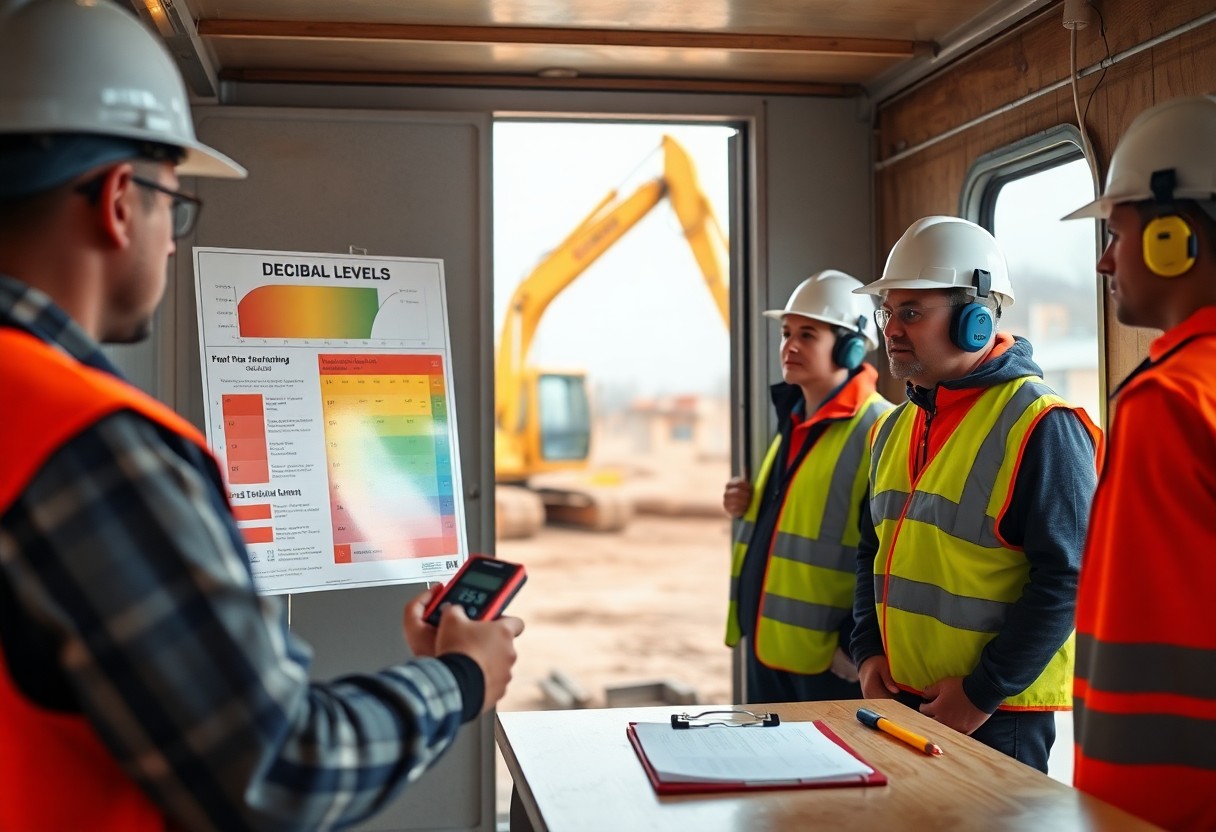
Safety begins with you measuring sound so you can protect your hearing and meet standards; know that sustained exposure above 85 dB can cause permanent hearing loss and sounds over 120 dB are immediately dangerous. Use calibrated monitors, follow exposure limits, and act on readings to reduce risk-engineering controls, administrative changes, and hearing protection give effective prevention. Your vigilance preserves health and ensures compliance.
Key Takeaways:
- Know the numbers: exposures at or above 85 dB(A) over an 8-hour shift increase the risk of hearing loss; higher levels sharply reduce safe exposure time.
- Monitor correctly: use calibrated dosimeters or sound-level meters and record dBA, Leq, and peak values to compare against action and limit levels.
- Act on results: implement engineering or administrative controls and provide properly fitted hearing protection when noise exceeds allowable limits.
Understanding Noise Pollution
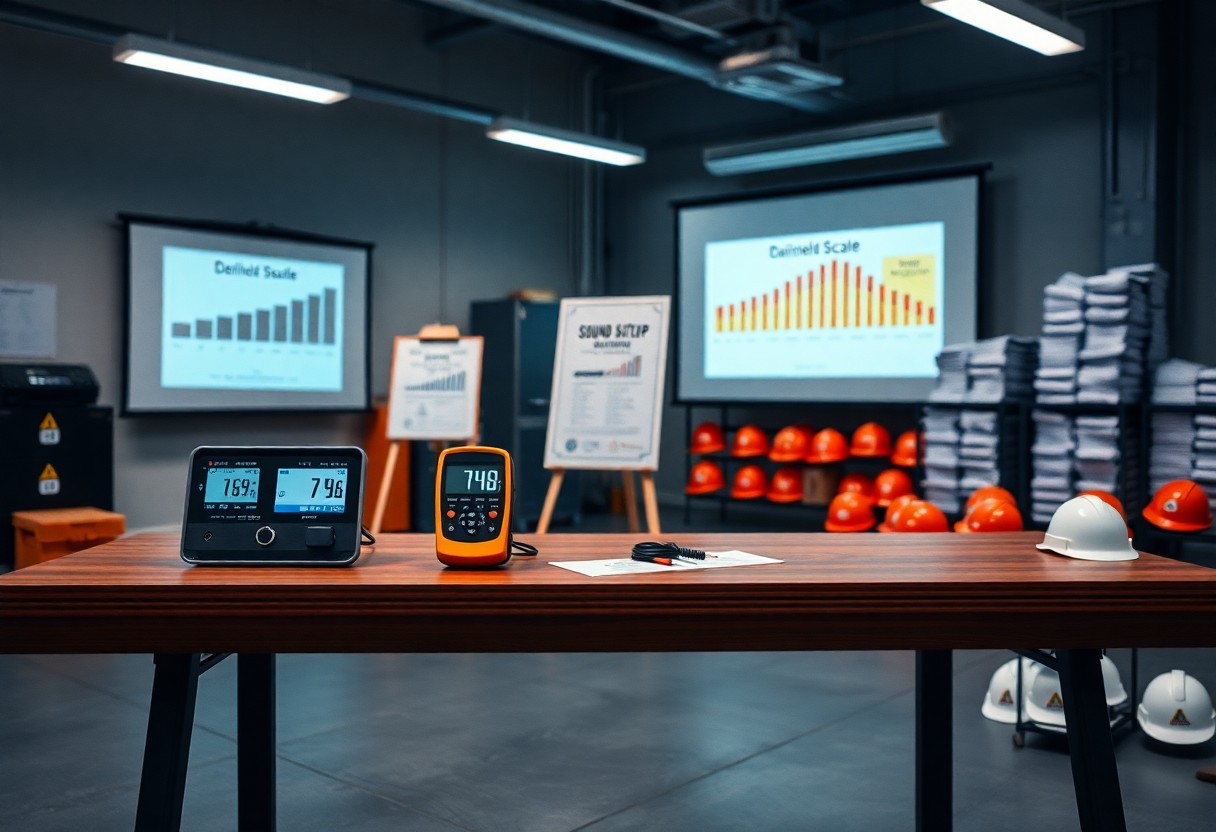
When assessing noise you should focus on both level and duration: the EPA suggests a 24-hour exposure cap near 70 dB, while occupational guidance flags 85 dB over an 8-hour shift as the point where hearing-loss risk rises sharply. Normal conversation is about 60 dB, busy streets run 80-85 dB, and power tools often reach 95-110 dB, so you must track both peaks and averages to plan controls and PPE.
Definition of Noise Pollution
Noise pollution is unwanted or harmful sound that interferes with daily activities and harms health; you notice it as disrupted sleep, impaired communication, or reduced concentration. It drives hearing loss, annoyance, stress, and elevated cardiovascular risk over time. In workplace terms, sustained exposures at or above 85 dB(A) significantly increase your chance of permanent hearing damage, so classification depends on intensity, duration, and frequency.
Sources of Noise Pollution
Traffic (road, rail, air), construction equipment, industrial machinery, and entertainment venues are the main sources you encounter. For context: jet takeoff ~140 dB, jackhammer ~120 dB, chainsaw ~110 dB, lawn mower ~90 dB, and a busy street ~80-85 dB. Household tools, motorcycles, and nearby night-time activity add to cumulative exposure that can push your daily dose past safe limits quickly.
In workplaces you must distinguish continuous from impulsive noise: OSHA’s PEL is 90 dB(A) for 8 hours with an action level at 85 dB(A), whereas NIOSH recommends a more protective 85 dB(A) limit using a 3 dB exchange rate. Impulsive sounds above 140 dB (firearms, explosions) can cause immediate injury, so you should measure time-weighted averages and peak levels to design engineering controls, administrative limits, and appropriate hearing protection.
The Importance of Noise Monitoring
Consistent monitoring lets you pinpoint problem areas, verify controls, and document exposures so you can reduce risk and liability; for example, using dosimeters to log an 8‑hour TWA quickly shows if equipment exceeds 85 dB(A), while short bursts over 120 dB demand immediate action. Regular data guides engineering fixes, administrative limits, and targeted hearing protection to protect your workforce and cut long‑term costs.
Health Impacts of Noise Exposure
Chronic exposure at or above 85 dB(A) over an 8‑hour shift increases your chance of permanent hearing loss, while single impulsive events above 120-140 dB can cause instant injury; you also face higher risks of tinnitus, elevated blood pressure, sleep disturbance, and reduced concentration that raise accident rates on the job.
Legal Regulations and Standards
Federal guidance differs: OSHA sets a PEL of 90 dB(A) (8‑hour TWA, 5 dB exchange) with an action level at 85 dB(A), while NIOSH recommends a 85 dB(A) limit using a 3 dB exchange rate; your monitoring determines whether you must implement a hearing conservation program, controls, audiometry, and written records.
In practice you must act when measurements trigger rules: enroll employees in audiometric testing at the 85 dB(A) action level, provide training and correctly fitted hearing protection, and prioritize engineering controls over PPE; industries like manufacturing and construction commonly face citations when monitoring, training, or recordkeeping are incomplete.
Measuring Decibel Levels
To verify exposure you need consistent measurements: use time-weighted averages and peak readings to catch intermittent spikes above 85 dB(A) and impulsive noise near 140 dB. You can follow methods in Safety Talk – Noise Monitoring – Know the Decibel Levels to align with regulatory limits and your control strategies.
Decibel Scale Explained
The decibel scale is logarithmic, so a +10 dB rise equals ten times the sound energy and is perceived roughly twice as loud; you should note that 85 dB(A) over 8 hours raises hearing risk and exposures around 120-140 dB can cause immediate damage. Use common anchors-60 dB normal conversation, 85 dB heavy traffic, 100 dB chainsaw, 120 dB jet engine-to assess hazards on the floor.
Tools for Measuring Noise Levels
You should use a calibrated Type 1 or Type 2 sound level meter for spot checks and a personal dosimeter for full-shift exposures; smartphone apps can help with quick screening but lack the accuracy for compliance. Calibrate instruments to a 94 dB acoustic calibrator before use and prefer octave-band analyzers when evaluating controls like mufflers or barriers.
For compliance you want to understand differences: Type 1 meters give lab-grade accuracy (±1 dB) for engineering surveys while Type 2 is acceptable for general occupational monitoring. Choose dosimeters that record Leq, peak, and time history and set the exchange rate to match your jurisdiction (commonly 3 dB or 5 dB) and criterion level (often 85 dB). Mount a dosimeter in the employee’s hearing zone (near the ear), log at 1-5 second intervals to catch transients, and use A-weighting for overall exposure plus C-weighting for impulsive peaks. Combining handheld meters for spatial mapping with personal dosimeters gives a complete picture; a factory audit often reveals intermittent spikes above 110 dB that averaged into hazardous shifts, prompting engineering fixes and targeted hearing protection.
Safe Decibel Levels in Various Environments
Different environments require distinct limits; you should target background levels that prevent harm and disturbance. For occupational settings the threshold is often cited as 85 dB(A) over an 8‑hour shift, while impulsive sounds above 120 dB can cause immediate pain and damage. In public spaces, aim for 40-55 dB depending on time of day; concerts and industrial sites will be higher but must use controls and PPE to reduce risk.
Workplaces
If your workplace exceeds 85 dB(A) averaged over a workday, you need monitoring and controls: OSHA’s PEL is 90 dB TWA while NIOSH recommends 85 dB. For example, many metalworking shops measure 95-100 dB near presses, requiring engineering controls, administrative rotation, and fitted hearing protection; transient sources like jackhammers at 110 dB demand immediate PPE and exposure limits.
Residential Areas
You should aim for quieter home environments-WHO recommends <40 dB at night to prevent sleep disturbance, while daytime background levels under 55 dB limit annoyance. Typical busy streets register ~60-70 dB, lawn mowers ~85-90 dB, so proximity, barriers, and timing of noisy chores matter to your health and neighbors’ comfort.
For practical guidance, use the NIOSH 3 dB exchange: 85 dB = 8 hr, 88 dB = 4 hr, 91 dB = 2 hr, 94 dB = 1 hr, 97 dB = 30 min, 100 dB = 15 min. You can measure with calibrated apps or meters, increase distance, add glazing or insulation, schedule noisy activities mid‑day, and choose quieter equipment-these controls materially reduce your exposure and complaints.
Strategies for Noise Reduction
When you tackle noise you should prioritize reducing sound at the source, interrupting its path, and limiting exposure time. Target engineering fixes that can cut levels by 6-20 dB (an often-noted 10 dB reduction halves perceived loudness), combine administrative controls like rotation and scheduling, and use PPE as a last line. For example, replacing old compressors and adding enclosures plus quieter tooling can drop a plant TWA from 92 dB to below 85 dB(A).
Engineering Controls
You can lower noise by modifying equipment or the environment: install full enclosures, mufflers on exhausts, vibration isolators, and absorptive panels (NRC 0.6-0.9). Swap pneumatic tools for electric equivalents, upgrade bearings and belts, and ensure preventive maintenance to avoid the 3-6 dB increases caused by wear. Enclosures and silencers often cut 6-20 dB, enough to move many jobs below the 85 dB(A) action level.
Administrative Policies
You should manage exposure through scheduling, job rotation, and time limits-use the NIOSH 3 dB exchange to set allowable durations (e.g., 94 dB ⇒ 1 hour). Schedule noisy tasks when fewer people are present, require “noisy task” permits, post signage, and enforce quiet zones. Train workers on peak sources, document controls, and use dosimeters to verify that time-based measures keep individual TWAs below targets.
In practice you must implement a written program: track individual exposures, provide annual audiograms for employees at or above 85 dB(A), and audit scheduling to ensure rotation reduces cumulative dose. For example, rotating operators every two hours on an 88 dB task can materially cut daily dose compared with an eight-hour assignment; combine rotation with real-time alarms to enforce limits and retain records for compliance checks.
Implementing a Noise Monitoring Program
Set up a program that ties measurements to actions: you should define thresholds (NIOSH 85 dB(A) action level, OSHA PEL 90 dB(A) 8‑hour TWA), assign responsibilities, schedule baseline surveys and routine audits, supply calibrated sound level meters and dosimeters, and document controls and audiometric testing. For example, a plant that installed enclosures and rotated operators cut average line noise from 95 dB to 82 dB within six months.
Planning and Assessment
Start by mapping noise sources and conducting task‑based dosimetry: you can run 8‑hour dosimeters on representative workers and 15‑minute spot checks on machines. Prioritize any area consistently above 85 dB(A) – forklifts at 90-92 dB and CNC mills at 95 dB need immediate controls. Use floor plans, occupancy data, and shift patterns to choose sampling points and ensure statistical coverage for reliable exposure estimates.
Continuous Monitoring and Reporting
Deploy fixed monitors at high‑risk zones and wearable dosimeters for mobile staff; configure real-time alerts when levels exceed 85 dB(A) or when peak spikes surpass 120 dB. Log data at 1‑second or 1‑minute intervals, feed dashboards for supervisors, and export CSVs for compliance; rapid notifications let you stop work or add hearing protection immediately.
Also analyze logged data for TWA, peak events, and trends: set your exchange rate to 3 dB for NIOSH‑based controls or 5 dB for OSHA comparisons, compute 8‑hour TWAs automatically, and tag events with video or maintenance tickets. Calibrate sensors monthly, retain records for at least 2 years for audits, and integrate alerts with maintenance so repeated over‑exposures trigger engineering fixes rather than relying solely on PPE.
Final Words
Upon reflecting on Safety Talk – Noise Monitoring – Know the Decibel Levels, you should prioritize regular monitoring, interpret decibel readings, and apply hearing-protection and engineering controls when thresholds are exceeded. You must document exposures, train staff to recognize hazardous levels, and act on data to prevent hearing loss and maintain compliance. Consistent vigilance protects workers and preserves your operational integrity.
FAQ
Q: What decibel levels should I be concerned about and how does the decibel scale work?
A: Decibels (dB) measure sound intensity on a logarithmic scale: a small increase in dB represents a large increase in sound energy. Typical levels: normal conversation ~60 dBA, busy city traffic ~85 dBA, lawn mower ~90 dBA, chainsaw ~110 dBA, rock concert ~120 dBA, gunshot/air hammer ~140+ dB. Occupational exposure limits differ: OSHA’s Permissible Exposure Limit (PEL) is 90 dBA for an 8‑hour time-weighted average (TWA) using a 5 dB exchange rate, while NIOSH recommends a more protective 85 dBA TWA with a 3 dB exchange rate (each 3 dB rise halves allowable exposure time). Peak or impulse noise is also hazardous – exposures above ~140 dB peak pressure risk immediate damage and require engineering controls and hearing protection.
Q: How should noise monitoring be performed on site and what instruments and settings are used?
A: Use appropriate instruments: sound level meters for area surveys and personal noise dosimeters for worker exposure. Calibrate devices before and after use, select A‑weighting (dBA) for human hearing response, and measure equivalent continuous levels (Leq/TWA) plus peaks. For personal monitoring, mount the dosimeter microphone near the worker’s ear at shoulder level and run a full-shift sample or task-based samples to capture high-noise periods. Conduct representative area surveys at machine locations and worker positions, measure worst-case tasks, record environmental conditions and durations, and log results with task descriptions and timestamps. If any TWA meets or exceeds your alarm/action level (commonly 85 dBA for a Hearing Conservation Program or 90 dBA for OSHA PEL), implement controls and document follow-up monitoring and training.
Q: What controls and hearing protection options should be used when monitoring shows hazardous noise levels?
A: Apply the hierarchy of controls: first pursue engineering solutions (isolate noisy equipment, add enclosures, vibration damping, quieter tools or maintenance to reduce noise sources). If engineering fixes aren’t sufficient, implement administrative controls (rotate tasks, limit exposure time, schedule noisy operations when fewer workers are present). Provide hearing protection when exposures remain high; select protectors based on noise spectrum and required attenuation, verify fit for each worker (seal checks, fit‑testing where available), and educate on correct insertion and care. Use dual protection (earplugs plus earmuffs) for very high levels or impulse noise. Also implement a hearing conservation program when exposures meet the regulatory action level (audiometric baseline testing, periodic audiograms, training, and recordkeeping) and ensure monitoring and controls are reviewed whenever processes or equipment change.