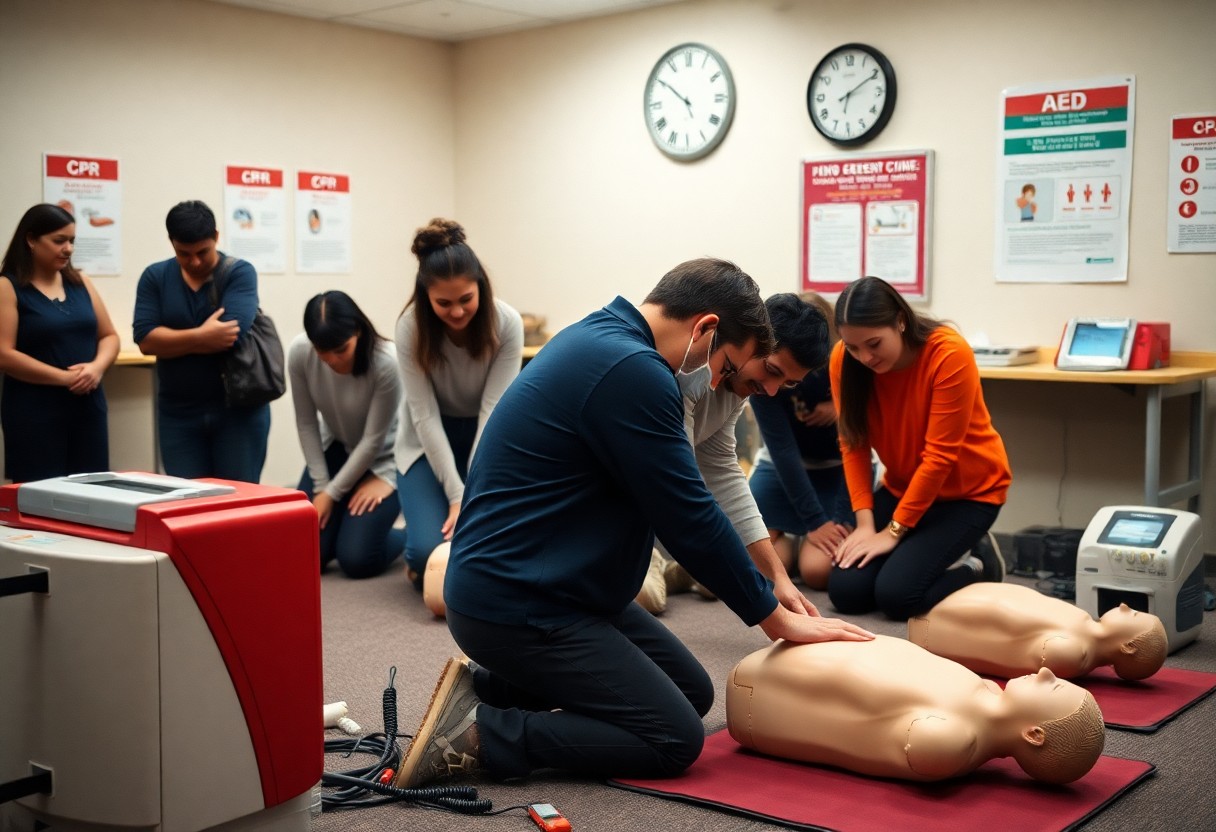
Just a few minutes can mean the difference between life and death in an emergency situation. Knowing how to perform CPR and use an AED can empower you to take decisive action when someone suffers a cardiac arrest. In these critical moments, your ability to react swiftly can significantly improve the victim’s chances of survival. By understanding the procedures and techniques involved, you position yourself as a vital link in the chain of survival, where every second truly counts.
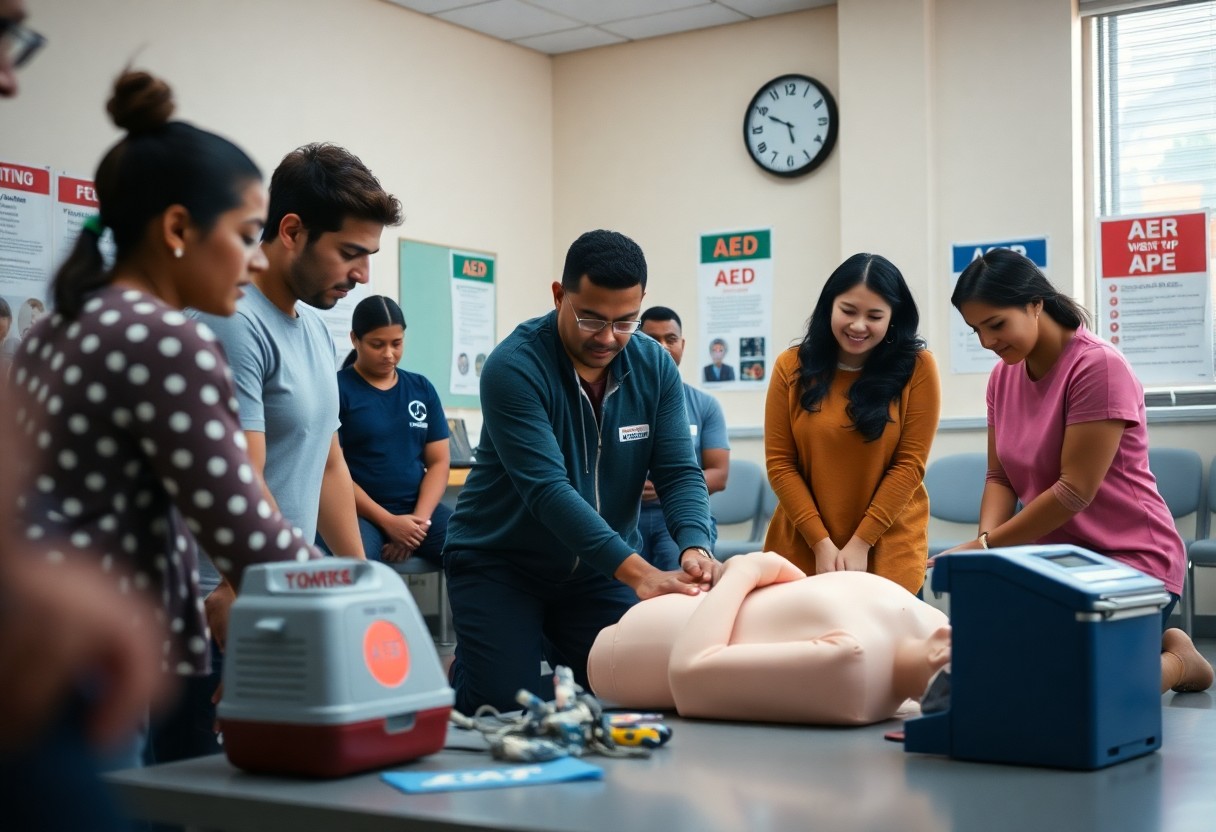
Key Takeaways:
- CPR and AED training can significantly increase survival rates in cardiac emergencies.
- Immediate response is imperative; every second plays a vital role during such incidents.
- Public awareness and education on CPR and AED usage can empower bystanders to act confidently.
Importance of CPR
Understanding CPR’s role in emergencies can make a life-saving difference. When you perform CPR, you help maintain blood flow to vital organs, significantly increasing the chance of survival after cardiac arrest. Studies show that immediate CPR can double or triple a victim’s chances of living long enough to receive advanced medical care. Your actions within the first few minutes can have profound impacts on the outcome.
Understanding Cardiac Arrest
Cardiac arrest occurs when the heart suddenly stops pumping blood, usually due to an electrical malfunction. In this state, the victim becomes unresponsive and stops breathing, leading to death if not treated immediately. You may be the difference between life and death by acting swiftly to provide CPR and call for emergency assistance.
The Chain of Survival
The Chain of Survival outlines critical steps that improve the odds of survival in a cardiac event. It includes recognizing the emergency, calling 911, administering CPR, and using an AED when available. Each link plays a vital role in ensuring that a victim receives timely intervention, enabling emergency responders to take over and provide further care.
The Chain of Survival emphasizes a series of interconnected actions that serve as a roadmap to saving lives. First, quickly recognizing the signs of cardiac arrest ensures that help is on the way without delay. Next, calling emergency services provides professional assistance that arrives in conjunction with your actions. Starting CPR promptly keeps blood flowing to vital organs, optimizing the victim’s chances dramatically. Finally, using an AED, which can be found in many public spaces, delivers a controlled shock to the heart, restoring its rhythm. By understanding and participating in each of these steps, you contribute to a robust safety net that enhances survival rates in emergencies.
CPR Techniques
Mastering CPR techniques is vital for effective intervention during emergencies. Your actions can help sustain life until professional help arrives. Key components include chest compressions, rescue breaths, and understanding the appropriate techniques tailored to different age groups. Familiarizing yourself with these methods empowers you to perform CPR confidently and effectively, significantly increasing the chances of survival in cardiac events.
Hands-Only CPR
Hands-only CPR is a simplified technique designed for untrained bystanders. By focusing solely on high-quality chest compressions without rescue breaths, you can maintain blood flow during cardiac arrest. Aim for a rate of 100 to 120 compressions per minute, pressing down at least two inches deep on the center of the chest. This method is effective, easy to learn, and has been proven to save lives.
CPR for Children and Infants
When providing CPR for children and infants, adjusting your technique is vital due to their smaller size and unique physiological needs. For children over one year old, use one hand for compressions, while infants require gentle two-finger compressions. Ensure a depth of about one-third the chest’s thickness and maintain a compassionate approach to rescue breaths, allowing for the delicate nature of their bodies.
When performing CPR on children, it’s important to be aware of the differences in anatomy. Effective compressions should be about two inches deep for children and about 1.5 inches for infants. Aim for a compression rate of 100 to 120 compressions per minute, incorporating rescue breaths at a ratio of 30:2 for children and 15:2 for infants if you are trained. Always check for responsiveness first, and if you notice signs of breathing difficulties or unresponsiveness, activate emergency services immediately. Your early intervention can mean the difference between life and death.
AED Awareness
Understanding AEDs (Automated External Defibrillators) is imperative for everyone. These portable devices can analyze your heart’s rhythm and deliver an electric shock if necessary, significantly increasing the survival chances of someone experiencing a cardiac arrest. Educating yourself on AED usage can make a life-saving difference, especially during CPR and AED Awareness Week.
What is an AED?
An AED is a portable device designed to treat people experiencing sudden cardiac arrest. It checks the heart’s rhythm and can potentially deliver an electric shock to restore a normal rhythm. Easy to use, AEDs often have audio and visual prompts to guide you through the steps.
Steps to Use an AED
Using an AED involves several straightforward steps: first, call 911 or have someone else call for emergency help. Next, open the AED and turn it on, then attach the pads to the person’s bare chest as indicated. Ensure no one is touching the person while the AED analyzes the rhythm, and follow any prompts to deliver a shock if advised.
When using an AED, act quickly and confidently. Open the device as soon as possible, as each second counts in a cardiac situation. Follow the visual or audio instructions carefully. Ensure the pads are applied correctly on the chest, typically one on the upper right and one on the lower left. If the AED instructs you to deliver a shock, clear the area and press the shock button only when prompted. After delivering a shock, continue with CPR until help arrives or the person shows signs of recovery.
Recognizing Emergencies
Understanding how to recognize emergencies is crucial for effective response. You need to identify indicators such as sudden collapse, unresponsiveness, or abnormal breathing. Being attentive to your surroundings can make all the difference when someone requires immediate assistance, allowing you to act swiftly and decisively.
Signs of Cardiac Arrest
In cases of cardiac arrest, you might observe loss of consciousness, absence of breathing, or weak pulse. Other signs include a person clutching their chest, appearing pale or blue, or exhibiting involuntary movements. Quick recognition of these symptoms can lead to immediate action, which is vital for survival.
When to Call for Help
Call for help immediately if you witness someone suddenly collapse, stops breathing, or shows any sign of cardiac arrest. Time is of the essence; delay can result in irreversible brain damage or death. You should also reach out for assistance if the situation appears dangerous or if you are unsure how to proceed.
In an emergency, dial your local emergency number without hesitation. Provide clear information about the victim’s condition, your location, and what you are witnessing. If performing CPR or using an AED, keep the dispatcher on the line for additional guidance until professional help arrives. Your prompt action can save a life.
Training and Resources
Investing in training and resources enhances your ability to respond effectively during emergencies. Participating in structured programs equips you with both theoretical knowledge and practical skills necessary for performing CPR and using an AED. Various organizations offer certifications that bolster confidence and ensure you are prepared when every second counts.
CPR and AED Classes
Participating in CPR and AED classes significantly increases your readiness for emergencies. These hands-on courses, typically led by certified instructors, teach you how to perform life-saving techniques correctly. You gain knowledge on adult, child, and infant CPR, and you learn the proper use of an AED. Completing these classes often comes with certification, empowering you to act decisively in critical situations.
Online Resources and Guidelines
Utilizing online resources and guidelines can strengthen your understanding of CPR and AED techniques. Multiple reputable organizations provide comprehensive materials, including video demonstrations and step-by-step instructions, allowing you to learn at your own pace. These resources often include updated protocols and tips, ensuring your knowledge aligns with the latest standards in emergency care.
For further enrichment, websites from the American Heart Association and Red Cross offer a plethora of resources, including instructional videos, printable guides, and access to online training courses. Engaging with these materials helps solidify your skills and keeps you informed about evolving protocols. Many platforms also feature quizzes and scenario-based training, deepening your practical knowledge and readiness. By integrating online learning with in-person classes, you ensure well-rounded preparation for emergencies.
Myths and Misconceptions
Myths and misconceptions surrounding CPR and AED usage can prevent you from acting confidently in emergencies. Many people believe that performing CPR can do more harm than good, or that AEDs are too complicated to use. These false beliefs can lead to inaction during critical moments, emphasizing the need for education and awareness regarding how life-saving techniques are actually performed and the straightforward nature of modern AEDs.
Common CPR Myths
You might think that if you perform CPR, you could break ribs or cause harm; however, the risk of injury is far outweighed by the potential to save a life. Additionally, many believe that CPR is only necessary for those who appear to be dying. In reality, prompt intervention with CPR can greatly enhance the chances of survival, especially during cardiac events.
Clarifying Misconceptions about AEDs
It’s common to hear that AEDs are difficult to use, but this is a misunderstanding. AEDs are designed to be user-friendly, providing voice prompts and visual cues to guide you through the process step by step. Despite fears that using an AED might cause harm or deliver a shock unnecessarily, these devices are smart enough to analyze heart rhythms and will only shock when necessary, ensuring safety for the patient.
You might hesitate at the thought of using an AED, fearing you’ll shock someone who doesn’t need it. In truth, these devices are equipped with advanced technology that assesses the heart’s rhythm before advising a shock. Studies show that over 90% of AEDs are simple to use with clear instructions, and you can often save lives within minutes, as early defibrillation can increase survival rates significantly. Your ability to use an AED correctly can make a life-or-death difference in those critical moments.
Final Words
Conclusively, your awareness and understanding of CPR and AED usage can make a significant difference in emergency situations. By being prepared to act swiftly, you empower yourself to potentially save a life when every second matters. Ensure you familiarize yourself with these life-saving techniques and encourage others to do the same. Your proactive approach not only enhances your own skills but fosters a safer community for everyone.
FAQ
Q: What is the purpose of the Safety Talk on CPR and AED awareness?
A: The purpose is to educate individuals on the importance of performing CPR and using an AED during a cardiac emergency, emphasizing that timely action can significantly impact survival rates.
Q: Who should participate in the Safety Talk sessions?
A: Anyone interested in learning about CPR and AED usage is encouraged to participate, including employees, students, and community members.
Q: What topics are covered in the Safety Talk regarding CPR and AED?
A: The talk covers basic CPR techniques, how to use an AED, recognizing signs of cardiac arrest, and the importance of calling emergency services promptly.