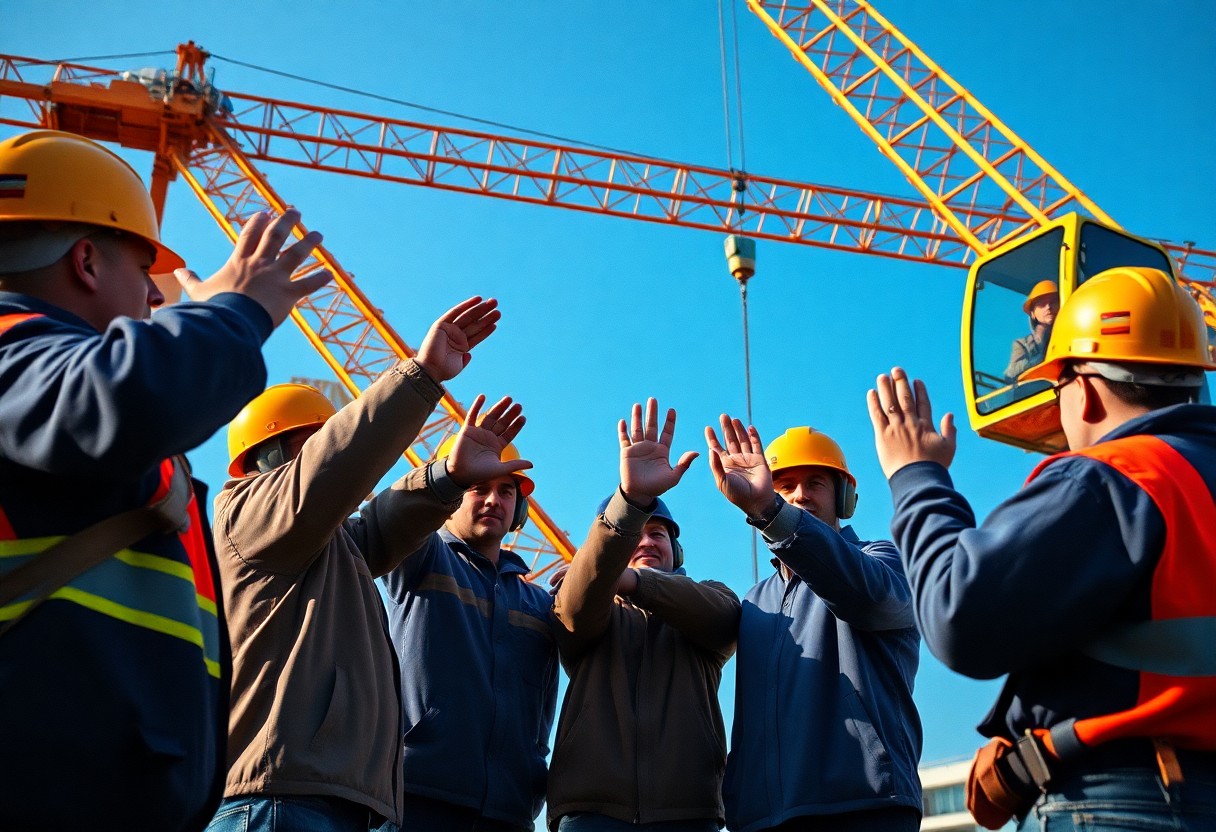
Crane operations rely heavily on effective communication to ensure safety on the job site. Using hand signals correctly is vital for you to guide the operator and prevent accidents, especially in noisy environments where verbal instructions may fail. By mastering standardized signals, you enhance your ability to coordinate movements clearly, minimizing risks and protecting yourself and your coworkers. This post will explore the vital hand signals you need to know to communicate effectively and keep everyone safe during crane operations.
Key Takeaways:
- Clear communication through hand signals enhances safety in crane operations.
- Standardized signals help avoid misunderstandings between operators and ground workers.
- Regular training and refreshers ensure familiarity with hand signals and proper usage.
Importance of Crane Hand Signals
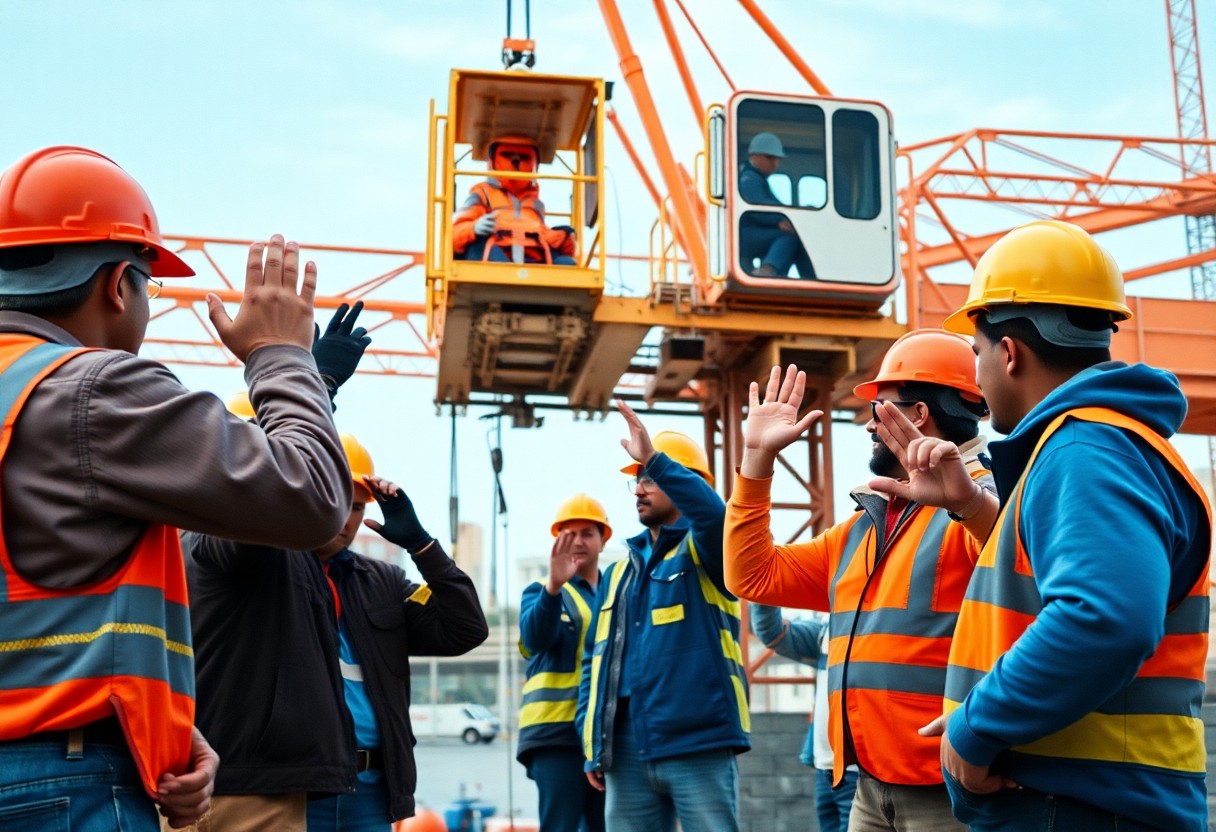
Effective communication through crane hand signals is imperative for maintaining safety and efficiency on construction sites. With operators often separated from the ground crew by distance and noise, clear and standardized hand signals become vital for directing movements and ensuring everyone’s awareness of ongoing operations. This not only enhances coordination but also fosters a collaborative environment where workers understand their roles and the expectations placed upon them.
Enhancing Safety on Site
Utilizing standardized crane hand signals significantly enhances safety on site by reducing miscommunication. When each team member is trained in these signals, your crew can quickly respond to changing circumstances, minimizing the risk of accidents. Having a set of universally recognized signals enables swift action, ensuring that everyone is on the same page and aware of the crane’s movements.
Preventing Accidents
Adopting crane hand signals helps prevent accidents by providing a visual method of communication, crucial in noisy environments. By understanding and using the same set of signals, you reduce the chances of misunderstanding that could lead to serious incidents. Studies show that effective communication in construction can lower accident rates by over 30%, emphasizing the importance of these techniques.
Specific examples illustrate the effectiveness of hand signals in accident prevention. For instance, a construction site experienced a 25% drop in near-miss incidents within six months of implementing a hand signal training program. Workers could accurately communicate their intentions, and operators could respond accordingly to stops or adjustments. Furthermore, sites that utilize these signals report higher levels of confidence among team members, contributing to an overall culture of safety. The implementation of hand signals is not merely a procedural choice; it directly correlates with lower accident rates and a more positive working atmosphere.
Standard Crane Hand Signals
Understanding standard crane hand signals is vital for ensuring smooth operations at any job site. These signals have been developed through industry consensus and best practices, enabling you to communicate effectively without the need for verbal instructions. Familiarizing yourself with these signals will enhance your ability to coordinate movements and improve overall site safety.
Commonly Used Signals
Among the commonly used signals are the “stop” signal, which is denoted by raising both arms, and the “lower load” signal, indicated by moving one arm downward. Each signal serves a unique purpose, enabling you to guide crane operators and ensure the safety of everyone on site. Mastering these signals is crucial for your role in any lifting operation.
Visual Representation
Using visual representation such as diagrams and illustrations can reinforce your understanding of hand signals. When you can see how each signal looks in practice, you’ll be better equipped to execute them correctly in real-world scenarios. Visual aids should be displayed prominently at the worksite, allowing for easy reference and quick learning.
Consider incorporating clear visual aids like posters or digital screens that depict each hand signal alongside its meaning. For instance, a diagram showing the “hoist load” signal, where one arm is raised with the palm facing upward, can enhance your memory of these crucial gestures. This practice not only aids in personal learning but also fosters a culture of safety on the worksite by ensuring that everyone is consistently on the same page regarding communication. By regularly reviewing these representations, you position yourself and your colleagues for a more efficient and safer work environment.
Roles and Responsibilities
Each participant in crane operations has specific roles and responsibilities imperative for safe and efficient workflows. Understanding these roles is key to minimizing risks and ensuring that all tasks are conducted seamlessly. By clearly defining who does what, confusion is reduced, which ultimately enhances overall site safety.
Signal Person
The signal person is your primary communicator on the job site, coordinating movements to ensure safety. You must stay within the operator’s line of sight, using standard hand signals to convey instructions. This role demands attention to detail and a thorough understanding of both crane operations and site dynamics to prevent mishaps.
Crane Operator
The crane operator is responsible for executing the signal person’s commands with precision while maintaining control of the crane. You need extensive training and experience to handle the equipment safely, understanding not just the machinery but also the weight limits and environmental factors affecting operations.
As the crane operator, you must be highly skilled in interpreting signals quickly and accurately. Operating large machinery requires focus, along with an acute awareness of surroundings, including other workers and potential hazards. Each operator typically undergoes rigorous training and certification, often logging hundreds of hours before they can confidently manage various types of lifted loads and understand operational limits dictated by the manufacturer. Awareness of load dynamics, environmental concerns, and mechanical proficiency directly impacts your performance and the safety of the entire team.
Best Practices for Communication
Effective communication during crane operations relies on clarity and consistency. Following What Hand Signals Teach Us About Communication can help you convey your intentions clearly and prevent misunderstandings. Utilizing hand signals, vocal commands, and visual cues ensures that everyone on site stays aligned, resulting in fewer accidents and increased productivity.
Maintaining Clear Visibility
Ensuring clear visibility among all team members is vital for safe crane operations. You should position yourself where you can see the operator and the load at all times. Utilizing spotters equipped with communication devices makes it easier to relay important information regarding the load’s location and movement, minimizing blind spots and reducing the likelihood of accidents.
Establishing Communication Protocols
Setting up definitive communication protocols is vital for safety and efficiency on site. Establish specific hand signals, verbal commands, and radio procedures for your operations. You can enhance understanding by conducting regular training sessions, reviewing protocols, and encouraging feedback among team members. A consistent approach helps everyone stay synchronized, creating a safer work environment.
Developing detailed communication protocols involves outlining the specific roles each member plays during operations. For example, the crane operator may rely on ground personnel for direction, necessitating a combination of hand signals and verbal confirmations to ensure accuracy. Establishing a code for emergencies—such as a specific signal for “stop”—adds another layer of safety. Conducting drills to practice these protocols keeps everyone sharp and ensures that in real-time situations, responses can be quick and effective.
Training and Certification
Effective training and certification programs are imperative for ensuring that crane operators possess the necessary skills and knowledge to operate safely. These programs cover everything from hand signals to machine mechanics, equipping you with the expertise to avoid accidents and enhance operational efficiency. With rigorous standards in place, certifications validate your competency and reliability on-site, fostering a culture of safety that benefits everyone involved.
Importance of Training Programs
Training programs are vital for fostering a comprehensive understanding of crane operations. They arm you with the knowledge of safety protocols, equipment functionality, and communication techniques, ultimately reducing the risk of accidents. Engaging in training enhances your ability to interpret hand signals and execute maneuvers with precision, promoting not only your safety but the safety of your coworkers.
Recertification and Continual Learning
Continual learning through recertification ensures you remain updated with the latest industry standards and practices. Regular recertification allows you to refresh your skills, gain insights into new technologies, and stay informed about any changes in safety regulations. This dedication to ongoing education not only amplifies your marketability but also aligns with best practices in operational safety.
Recertification typically occurs every three to five years, depending on the governing body or workplace requirements. During this time, you will revisit key concepts, review updated protocols, and potentially engage in hands-on assessments. Emphasizing continual learning underscores your commitment to safety and proficiency, which is particularly vital in the evolving landscape of crane operations. Investing time in ongoing education demonstrates accountability and keeps you equipped to handle modern challenges effectively.
Case Studies: Effective Signal Use
Exploring successful case studies demonstrates how effective crane signal use drastically enhances safety and efficiency in operations.
- Case Study 1: A construction project in New York reduced incidents by 40% after implementing standardized signals.
- Case Study 2: In California, a company achieved a 30% increase in productivity by training crew members on signal recognition.
- Case Study 3: A large-scale bridge project reported zero accidents when using a designated signal person during 14 weeks of operations.
- Case Study 4: An industrial site recorded an 18% decrease in downtime after clarifying signals among crane operators and ground crews.
Successful Operations
In your operations, recognizing the importance of hand signals can lead to significant safety improvements. For instance, by adopting a consistent signaling protocol, your team can minimize misunderstandings, resulting in a documented 50% decrease in near-miss incidents on various job sites.
Lessons Learned
Reflecting on past experiences reveals how imperative communication is in crane operations. Continuous training ensures that all team members are on the same page, which has proven to be a game changer in avoiding accidents.
Each case study emphasizes that without proper hand signal training, teams face heightened risks. Regular assessments and updates to your signaling protocols keep your operations aligned with best practices. One notable incident involved a near miss that could have been avoided with clearer communication; lessons like this reinforce the need for ongoing education and adherence to clearly defined signals.
To wrap up
From above, effective communication using crane hand signals enhances workplace safety and efficiency. You must ensure that your team is well-versed in these signals to minimize misunderstandings during operations. By prioritizing clear communication, you not only protect yourself but also your colleagues and equipment. Regular training and practice sessions will solidify your skills, allowing you to respond swiftly to any situation. Embrace this knowledge to foster a safer working environment for everyone involved.
FAQ
Q: What are crane hand signals and why are they important?
A: Crane hand signals are a set of standard gestures used to communicate with crane operators during lifting operations. They are important for ensuring safety and efficiency on job sites, as they help avoid misunderstandings and accidents that can occur due to miscommunication.
Q: How can workers learn and practice crane hand signals effectively?
A: Workers can learn crane hand signals through formal training sessions, workshops, or instructional videos. Regular practice in a safe environment, combined with visual aids and simulation exercises, helps reinforce these signals and ensures fluency among team members.
Q: What should a team do if a signal is unclear or misunderstood during a lift?
A: If a signal is unclear or misunderstood, the lifting operation should be halted immediately. Workers should clarify the intended signal before proceeding, ensuring that both the signaler and the crane operator have a mutual understanding to maintain safety.