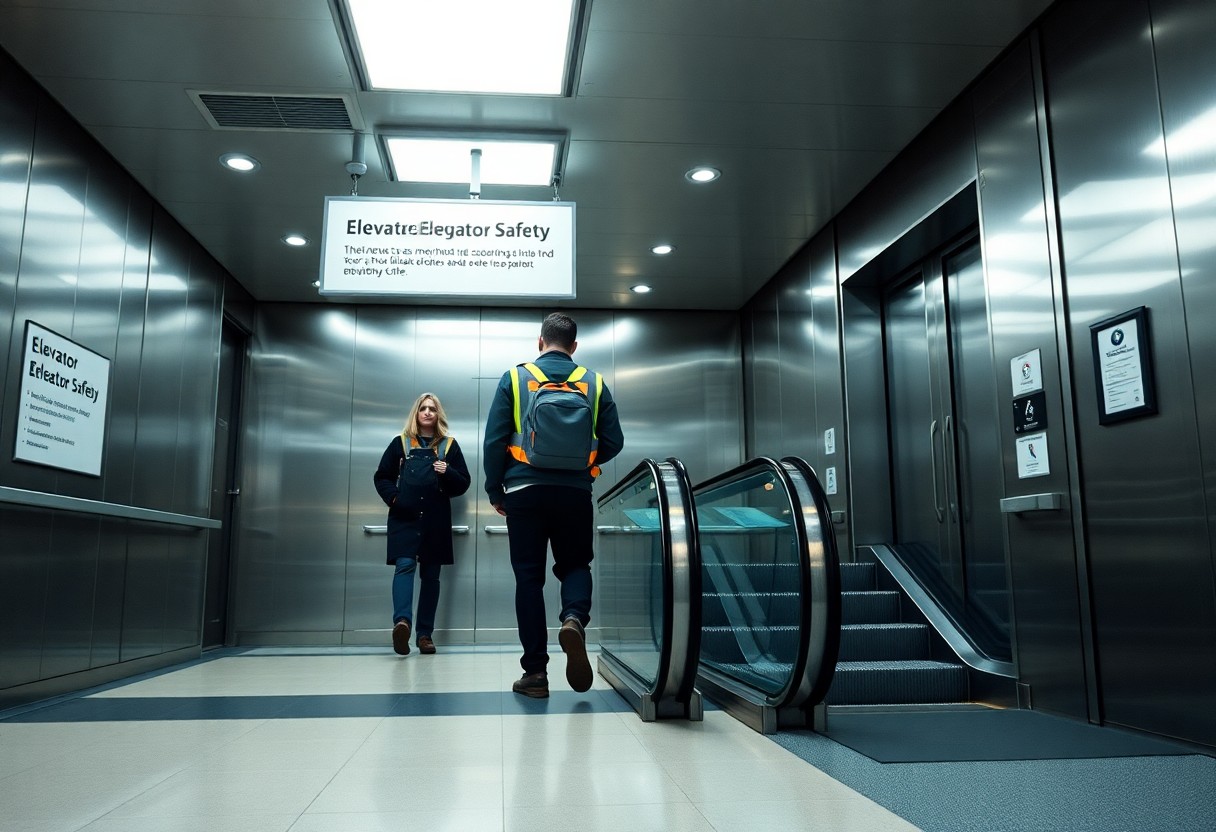
Many accidents can occur due to improper use of elevators and escalators, making it important for you to maintain awareness of your surroundings. Always stand clear of doors when entering or exiting an elevator, and ensure that you do not overload it. When using escalators, face forward and hold onto the handrail for support. Be cautious of tripping hazards at the step edge and keep loose clothing or belongings away from the escalator steps. By practicing these safety measures, you can significantly reduce your risk of injury.
Key Takeaways:
- Always stand clear of the elevator doors and wait for it to come to a complete stop before entering or exiting.
- Keep loose garments, bags, and belongings away from escalator steps to prevent entanglement.
- Use handrails on escalators to maintain balance and stability while in motion.
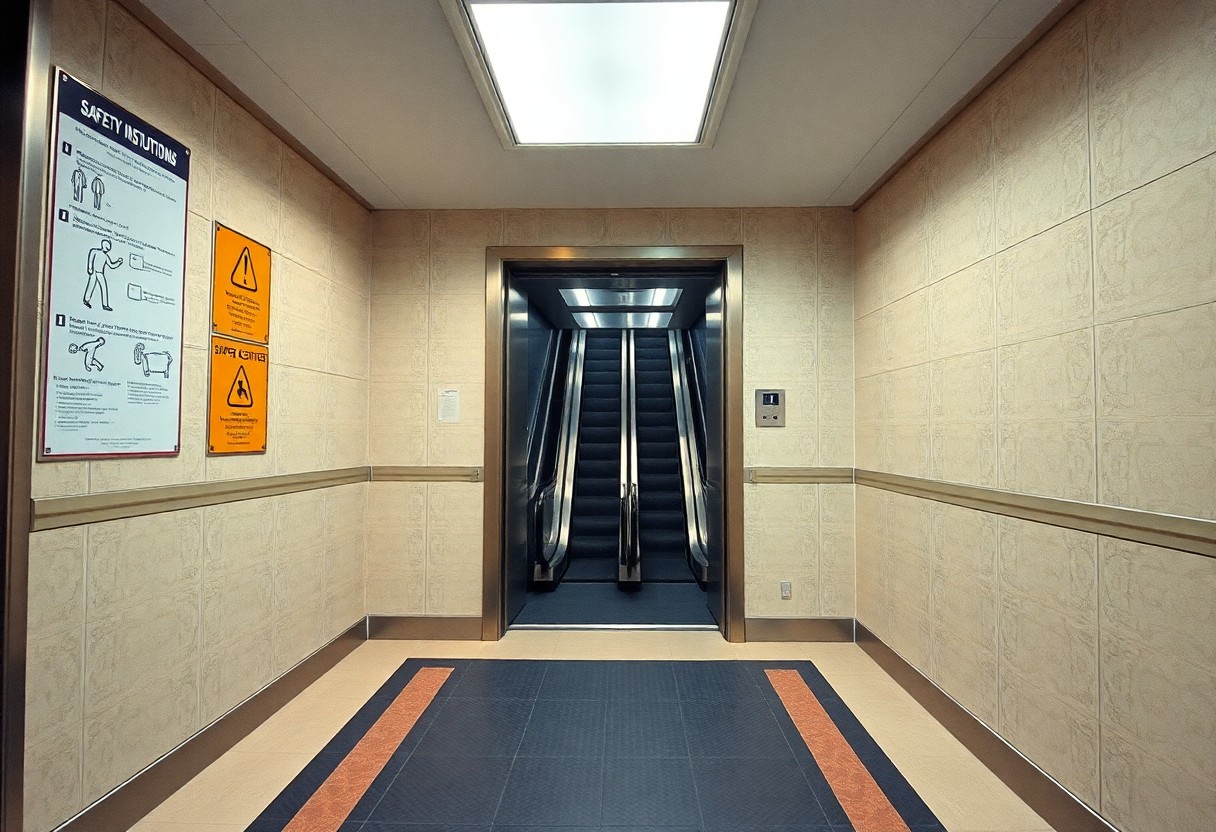
Elevator Safety
When using elevators, adherence to proper safety protocols is important for ensuring personal safety and the safety of others. Always wait for the elevator to come to a complete stop before stepping in or out. Maintain a safe distance and avoid overcrowding—most elevators have a weight limit clearly indicated. If the elevator malfunctions, remain calm and use the emergency communication system to alert staff.
Operating Procedures
Follow established operating procedures to mitigate risks while using elevators. Always wait for passengers to exit before entering, check if the elevator is level with the floor, and use handrails when available. Avoid leaning against the door or attempting to force it open. Additionally, always stand clear of the doors as they close.
Common Hazards
Numerous hazards can pose risks when using elevators, such as overcrowding, door entrapment, and malfunctioning equipment. Additionally, inadequate maintenance can lead to sudden stops or, in rare cases, elevator falls. Stay alert for warning signs like unusual noises or erratic movement, which may indicate potential issues.
Overcrowding typically occurs when people ignore the displayed weight limits, leading to stress on the elevator’s mechanisms. Door entrapment frequently happens when individuals try to enter or exit before the doors are fully open. Malfunctions can be exacerbated by infrequent maintenance, highlighting the need for regular inspections and servicing. Understanding these dangers helps you make informed decisions and keeps you safer when using elevators.
Escalator Safety
When using escalators, safety is paramount. Always ensure your clothing and belongings are secured and do not overload the step. Stand clear of the sides and hold onto the handrail. For more comprehensive Safety Tips for Escalators & Elevators, refer to trusted sources to help you navigate safely.
Proper Use Guidelines
To use escalators properly, always face forward while standing and avoid sitting or squatting on the steps. Children should be closely supervised as they may not have the awareness to use escalators safely. Never attempt to walk against the direction of the escalator, and refrain from blocking the handrail to prevent hazards.
Potential Risks
Escalator risks range from trips and falls to serious injuries caused by entrapment. Statistics show that thousands of escalator-related injuries occur each year, often involving clothing or footwear getting caught.
Furthermore, approximately 10,000 injuries annually in the U.S. are linked to escalators, with many incidents resulting from improper use. Common causes include loose shoelaces or bulk items getting wedged in moving parts. Increased vigilance is necessary to prevent mishaps, particularly for the elderly, children, and individuals with mobility issues. Always assess your surroundings and ensure that the area is clear before stepping on or off an escalator.
Safety Measures for Children
Implementing safety measures specifically for children is imperative when using elevators and escalators. Your active participation in teaching kids about proper usage can significantly reduce the risk of accidents. Educate them on the importance of waiting patiently, holding onto handrails, and standing clear of the edges. Regularly reinforcing these behaviors can promote a culture of safety for young users.
Supervision and Awareness
Always supervise children when using elevators and escalators. Keeping a close eye on them ensures that they follow safety protocols, such as not playing or horseplaying near these mechanisms. Your vigilance can help prevent accidents resulting from distraction or impulsive behavior.
Safety Features and Design
Modern elevators and escalators are equipped with several safety features designed to protect users, especially children. For example, many escalators now include safety sensors that stop the escalator if an object or a person’s clothing gets caught. Additionally, elevators often feature interior call buttons that are placed out of children’s reach, minimizing the chance of accidental activation. These thoughtful design elements aim to enhance safety and provide a safer experience for everyone.
Safety features like edge protection on escalators prevent children from placing their feet in dangerous positions, while automatic door sensors in elevators ensure that doors do not close on users. Some buildings also use visual stickers or markers on escalators to guide children on where to stand, reinforcing safe behaviors. By understanding these technological advancements, you can better advocate for children’s safety in environments where these systems are present.
Maintenance and Inspections
Regular maintenance and inspections play a vital role in ensuring the safety and reliability of elevators and escalators. These systems require routine checks to function optimally and to prevent malfunctions that could lead to accidents. Scheduling professional inspections can significantly reduce risks and enhance the lifespan of these transportation devices, making your ride safer.
Importance of Regular Maintenance
Conducting regular maintenance is necessary for avoiding potential hazards associated with elevators and escalators. Well-maintained equipment operates smoothly and reduces the chance of unexpected failures. Implementing a proactive maintenance schedule ensures that all components, such as brakes and motors, are functioning correctly and that safety features are intact.
Identifying Unsafe Conditions
Being vigilant about identifying unsafe conditions can save lives. Pay attention to unusual noises, rough starts, or sudden stops in elevators, and check for escalator steps that are misaligned or damaged. These signs often indicate underlying issues that require immediate attention to prevent accidents.
Unusual operational behaviors can point toward unsafe conditions. For instance, if an elevator fails to level properly with the floor, this can result in trips or falls. Likewise, escalators with visible wear, such as frayed steps or malfunctioning handrails, pose serious risks to users. Regular checks should be made for these indicators, and any identified issues should be reported immediately to maintenance personnel for prompt resolution. Being proactive about these concerns will not only help maintain equipment functionality but also safeguard your well-being and that of others.
Emergency Protocols
In the event of an emergency involving elevators or escalators, it’s vital to follow established protocols to ensure your safety and that of others around you. Always stay calm and alert, assessing the situation before taking action. Familiarize yourself with the emergency buttons or alarms specific to the equipment you are using, as these can initiate rescue procedures and alert maintenance personnel.
Procedures for Getting Stuck
If you find yourself stuck in an elevator, remain calm and use the emergency communication system to inform staff of your situation. Do not attempt to exit the elevator independently, as this can lead to serious injury. It’s important to wait for trained professionals to safely assist you.
Responding to Accidents
In the case of an accident involving an escalator or elevator, your priority should be to assess the situation and ensure everyone’s safety before contacting emergency services. Quickly inform nearby personnel of the incident, as they can help manage the scene and provide assistance until professionals arrive.
Always be mindful of your surroundings during an accident; assess any injuries sustained and assist others if you are trained to do so. Documenting the incident can also help in reporting to authorities, ensuring anything out of the ordinary is addressed. You should never compromise your safety while trying to provide help; prioritize contacting emergency services who can handle the situation appropriately.
Public Awareness Campaigns
Public awareness campaigns are vital in enhancing elevator and escalator safety. These initiatives leverage various media platforms to disseminate important safety messages, reaching diverse audiences. Campaigns often include informative posters, social media posts, and community workshops designed to educate the public on potential hazards and safe practices. Statistics show that areas with active awareness campaigns have seen a significant decrease in safety incidents related to vertical transportation.
Education and Training
You benefit greatly from education and training initiatives that focus on elevator and escalator safety. Schools, workplaces, and community organizations provide courses that teach you the safe usage of these systems, emphasizing proper behavior and emergency procedures. Training sessions often include hands-on practice, allowing you to feel more confident and prepared.
Community Initiatives
Community initiatives aim to engage local residents and businesses in promoting safety around elevators and escalators. Events such as safety fairs and partnerships with local authorities foster a culture of vigilance, encouraging you to participate actively. By adopting safety practices and sharing resources, your community can significantly minimize risks.
Community initiatives often involve collaboration between local governments, schools, and businesses to create comprehensive safety programs. For example, neighborhood safety fairs can offer free demonstrations and distribute informative materials about safe practices. Additionally, outreach programs targeting at-risk groups, such as seniors, can provide tailored education sessions, enhancing awareness and reducing the likelihood of accidents. When communities come together, you create a safer environment for everyone.
To wrap up
Ultimately, your awareness and precautions regarding elevator and escalator safety can significantly reduce the risk of accidents. Always ensure you wait for the doors to fully open before entering or exiting, pay attention to your surroundings, and hold onto handrails when using escalators. Being vigilant about these safety practices helps ensure not only your safety but also the safety of others around you. Prioritize these habits to create a safer environment in public spaces.
FAQ
Q: What are the key safety tips for using an elevator?
A: Always wait for the elevator to come to a complete stop before entering or exiting. Ensure that there are no obstructions in the doorway. Use the handrail if available and do not overload the elevator with more people than its capacity. If the door does not open, do not attempt to force it and wait for assistance.
Q: How should one safely use escalators?
A: Stand clear of the escalator steps until it is in motion. Hold onto the handrail while riding, and ensure that children are always supervised. Keep loose clothing, shoelaces, and bags away from the escalator’s edge. If you drop something on the escalator, do not attempt to retrieve it; wait for it to stop.
Q: What should you do in case of an elevator emergency?
A: In the event of an elevator emergency, do not panic. Press the emergency button to notify building personnel or emergency services. Stay calm and wait for help to arrive. Avoid trying to exit the elevator if it is stuck between floors.