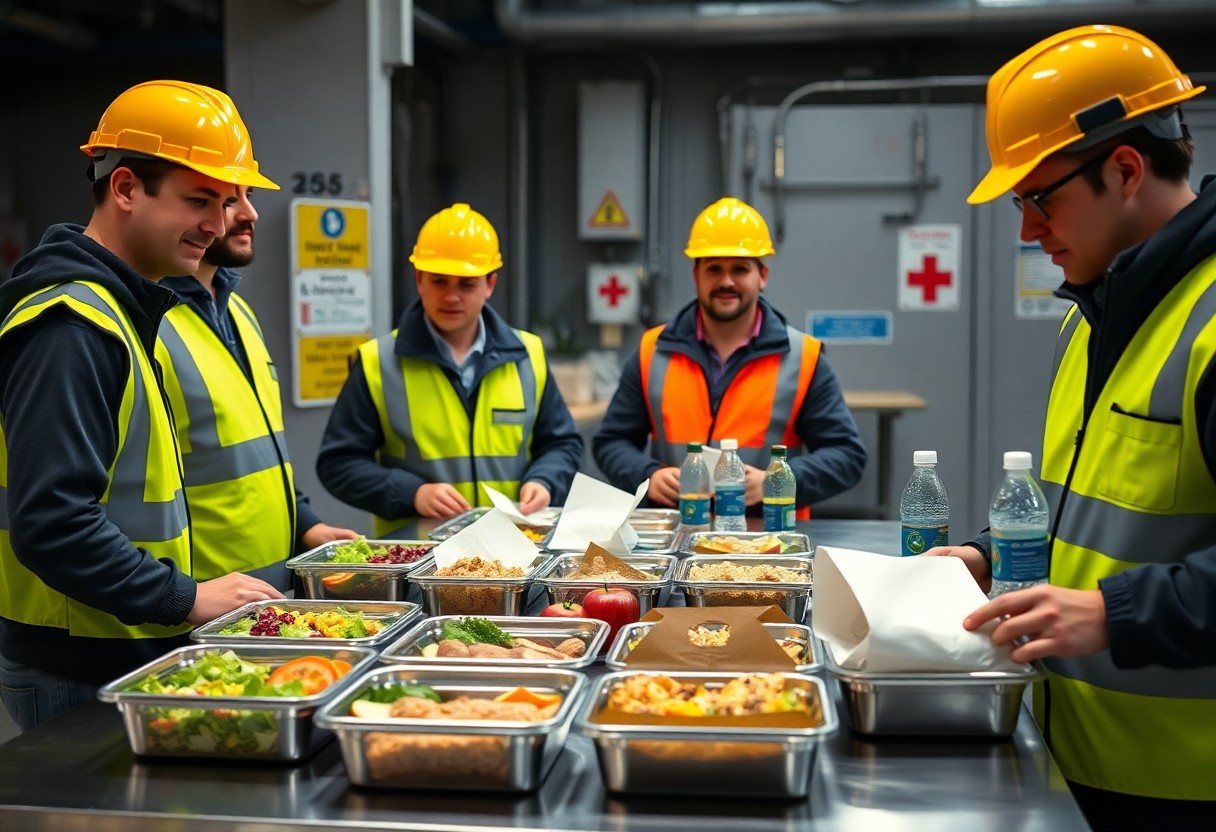
You must fuel your body for safety and performance by choosing balanced meals and snacks that sustain energy and mental focus. Avoid high-sugar and high-fat foods that can cause energy crashes and raise accident risk, and prioritize hydration, whole foods, and regular eating intervals to reduce fatigue, sharpen focus, and support your long-term health on shift.
Key Takeaways:
- Pack balanced meals and snacks-lean protein, whole grains, fruits/vegetables, and healthy fats-to maintain steady energy and alertness on the job.
- Hydrate regularly with water; limit sugary drinks and excess caffeine to support concentration and reduce heat-stress risk.
- Eat at consistent intervals and follow safe food storage and hand-washing practices to prevent blood-sugar dips and foodborne illness.
Importance of Nutrition in the Workplace
Good workplace nutrition shapes your day-to-day health and the company’s bottom line; dietary risks were linked to about 11 million deaths in GBD analyses and noncommunicable diseases have an estimated economic burden of $47 trillion over two decades (WHO). Practical changes at work-from better meal options to hydration-drive measurable reductions in illness and healthcare spending, so your food environment matters as much as safety gear.
Impact on Employee Health
Poor eating patterns raise your risk for obesity, type 2 diabetes and heart disease and also affect mood and immunity; adopting a Mediterranean-style pattern has been shown to lower major cardiovascular events by roughly 30% in large trials (PREDIMED). If you prioritize whole grains, legumes, vegetables and lean protein at work, you lower long‑term disease risk and the acute illness that pulls you away from tasks.
Relationship to Productivity
When you skip balanced meals or rely on sugary snacks, expect more fatigue, slower reaction time and impaired decision-making, which drives presenteeism as much as absenteeism; mental disorders tied to poor diet contribute to global productivity losses of about $1 trillion per year (WHO). Simple dietary shifts at work therefore translate into fewer errors, faster recovery and steadier focus across shifts.
To boost on‑the‑job performance, you can implement concrete steps: offer breakfasts with 20-30 g protein, keep water stations visible, replace sugary drinks and schedule regular snack breaks to stabilize blood glucose. Evidence shows workplace nutrition programs can increase fruit/vegetable intake by about 0.5 servings/day on average and, in several case studies, reduce sick days-so these modest changes deliver measurable productivity gains.
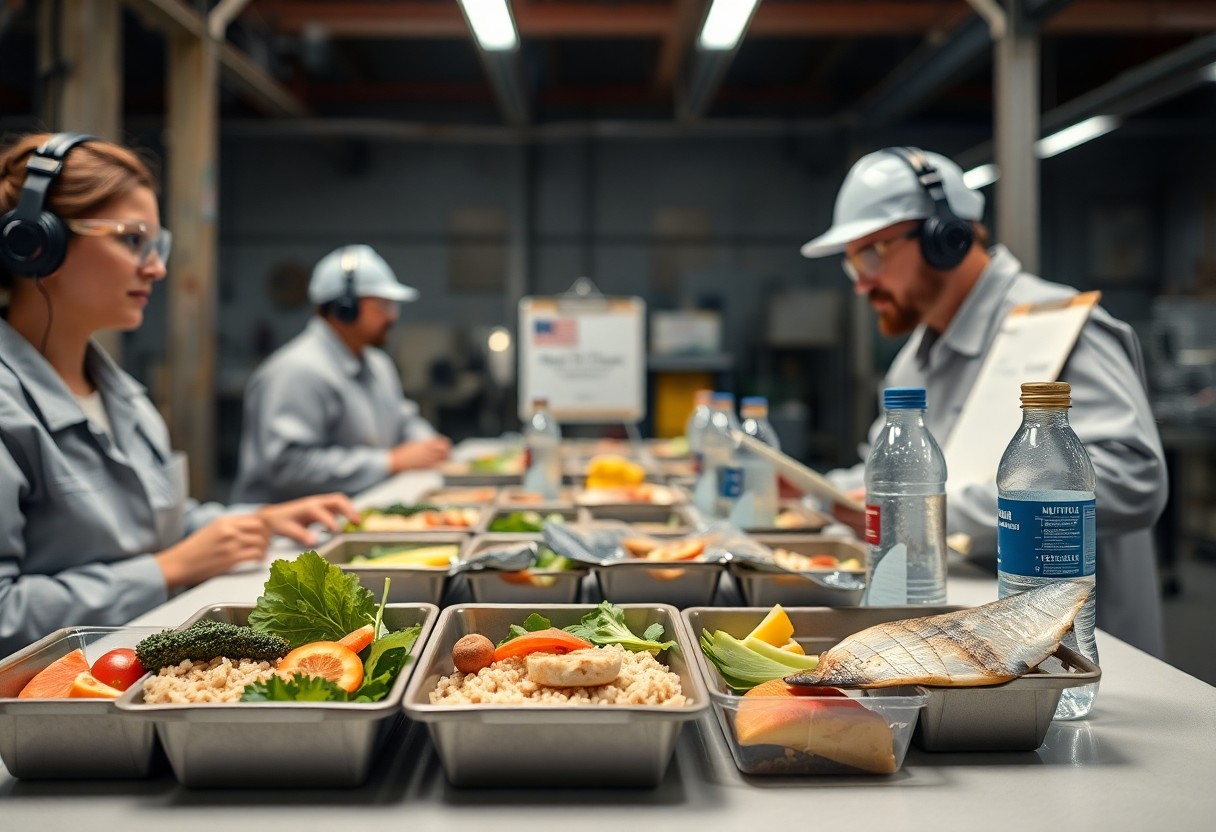
Healthy Eating Habits
You should build meals around 25-30 g protein, fiber-rich vegetables and healthy fats to maintain focus during long shifts. Aim to eat every 3-4 hours to avoid energy dips; for example, a 3‑oz chicken breast with 1 cup quinoa and salad sustains you for several hours. Keep hydration at 2-3 liters daily and avoid skipping meals, since that often causes blood sugar crashes and impaired judgment.
Meal Planning Strategies
Batch-cook proteins and grains in a single 60‑minute Sunday session to produce 8-10 ready meals; portion containers to 400-600 kcal with 25-30 g protein each. Label dates and refrigerate-cooked meals keep 3-4 days-and reheat to 165°F (74°C) before eating. Never leave perishable food at room temperature more than 2 hours to prevent foodborne illness.
Healthy Snack Options
Choose snacks of 150-300 kcal with 7-15 g protein to steady energy between tasks. Good picks include Greek yogurt + 1 oz almonds, hummus with sliced peppers, an apple with 2 tbsp peanut butter, or a hard‑boiled egg with whole‑grain crackers. Select bars with <10 g added sugar and watch sodium on jerky to avoid post-snack fatigue.
Prep five single‑serve snack packs on Sunday-each 150-200 kcal-using 1/4 cup trail mix, a 100 g Greek yogurt, or two hard‑boiled eggs. Keep perishables in a small cooler at <4°C (40°F) or eat within 2 hours of removal. Rotate protein, fruit and fiber options so you don’t default to vending machines mid‑shift; this routine reduces impulse buys and helps maintain steady concentration.
Nutritional Guidelines for Workers
You should aim for meals that sustain shifts: target half your plate vegetables, 25-30 g protein at breakfast and 20-40 g at main meals, and limit added sugars to <25 g/day. Hydration matters-drink about 2-3 L daily and avoid high-sugar energy drinks. Practical policies and tips to Promote healthy eating on-site include healthy vending, visible water stations, and meal-prep breaks that reduce fatigue and injuries.
Understanding Dietary Needs
Your energy and macronutrient needs depend on job intensity: sedentary roles ~1,800-2,200 kcal/day, moderate ~2,200-3,000 kcal, heavy manual labor up to 3,000-4,000 kcal/day. Aim for protein of 0.8-1.6 g/kg (higher for heavy work), fiber 25-35 g/day, and sodium under 2,300 mg. For example, an 80 kg roofer may need ~2,800-3,400 kcal and 96-128 g protein to maintain strength and recovery.
Incorporating Variety in Meals
You can rotate food groups weekly to avoid nutrient gaps: swap white rice for quinoa, include fatty fish twice weekly, use legumes 3-4 times a week, and choose whole grains like oats or barley. Snacks such as 30 g nuts or 150 g Greek yogurt stabilize blood sugar during long shifts and prevent risky stimulant use.
Plan simple swaps and sample meals: Monday-turkey wrap with spinach and hummus; Wednesday-lentil stew with brown rice; Friday-grilled salmon with roasted mixed vegetables. Pack portable options like an apple plus 20-30 g almonds, hard-boiled eggs, or a ~400 kcal balanced bento. Follow the plate method-50% veg, 25% protein, 25% carbs-to keep variety practical on job sites.
Overcoming Challenges to Healthy Eating
You can beat common barriers by combining planning with simple strategies: set aside two 60-90 minute meal-prep sessions weekly, keep portable, nutrient-dense snacks like nuts and Greek yogurt on hand, and substitute one takeout meal per week with a 15-20 minute recipe. Employers who offer a fridge or scheduled deliveries cut reliance on vending machines, and rotating a small menu of 5 lunches reduces decision fatigue while improving intake.
Time Constraints
Batch-cooking saves time: spend 90 minutes on Sunday to make 5 lunches (grains, protein, veg), use an Instant Pot or sheet-pan dinners for 10-20 minute reheats, and keep 5 grab-and-go breakfasts (overnight oats, hard-boiled eggs) for busy shifts. When you plan two short prep sessions a week, you cut daily cooking by up to 70% and avoid impulse fast-food choices.
Accessibility of Healthy Foods
If your site lacks a grocery nearby, rely on frozen produce, canned beans, and whole grains-these last months and cut cost per serving. You can join a local CSA, schedule weekly delivery drops, or negotiate a bulk order to the workplace; frozen vegetables and canned proteins make it practical to eat balanced meals even in remote or low-access areas.
For more options, organize a small workplace pantry with insulated coolers and a shared meal calendar, rotate low-cost staples like oats, lentils, and canned tuna, and use delivery services that drop one box per week. Employers often respond to clear requests for a fridge or subsidized delivery; presenting a simple cost-benefit example (e.g., 10 employees splitting a $30 weekly produce box) helps turn limited access into a consistent, healthy solution.
Employee Engagement and Support
You can improve on-site nutrition by aligning policy, access, and education: schedule protected meal breaks, install water stations, restrict high-sugar vending options, and offer brief consultations with a registered dietitian. Even a 1-2% fluid loss can reduce cognitive performance, so prioritizing hydration and scheduled eating windows protects focus and safety.
Promoting a Healthy Work Environment
You should design break areas to nudge better choices: place filtered water dispensers and fruit bowls in high-traffic zones, provide refrigerators for packed lunches, and label clearly which items are high in added sugar. Enforcing a protected 30-minute meal break and staggered breaks reduces skipped meals and reliance on fast food during long shifts.
Encouraging Team Wellness Initiatives
You can drive participation with practical, low-cost programs like a 4-week step challenge, weekly healthy potlucks, or subsidized fruit boxes combined with 10-minute nutrition huddles; track simple metrics such as daily fruit servings or water bottles consumed. Team-based challenges boost morale and sustain behavior change.
Begin with a baseline survey, appoint a wellness champion, and pilot a 6-8 week challenge targeting a measurable behavior-for example, adding two servings of fruit per workday or drinking an extra 500 ml per shift. Use weekly check-ins, small immediate rewards (extra break time or healthy snack vouchers), and focus on behaviors rather than weight to avoid unintended consequences.
Resources and Tools for Employees
You can tap into on-site fridges with labeled shelves, healthy vending options, EAP referrals and occupational health consultations, plus simple tools like portion cups, insulated lunch bags and timers. Shift work often fragments meals and raises risk of skipped meals and dehydration; use break planning and an RD consult to protect your energy, focus, and long-term metabolic health.
Meal Prep Apps and Tools
Apps such as Mealime, Paprika, MyFitnessPal and Plan to Eat help you plan batch-cooking for 3-5 meals, auto-generate grocery lists, and track calories/macros. Use features like barcode scanning, shared meal plans and timers to cut onsite ordering and save time-many users report 30-50% faster prep. Portable insulated containers and single-serve silicone trays keep portions consistent across shifts.
Educational Materials on Nutrition
Short posters, pocket guides and 5-10 minute video modules teach you portion cues (aim for half your plate vegetables and fruit), protein portions (deck-of-cards) and limits such as sodium under 2,300 mg/day
You can roll out materials via toolbox talks, QR-coded posters by the breakroom and monthly 15‑minute webinars led by a registered dietitian; measure impact with quick pre/post quizzes, participation rate and cafeteria sales shifts. Start with a pilot (one department, 4-6 weeks) to refine messaging and use engagement metrics and self-reported energy or sick-day trends to justify broader implementation. From above you see how simple nutrition choices, hydration, meal timing, and safe food handling support alertness, injury prevention, and productivity on the job; prioritize balanced meals, portable healthy snacks, proper hydration, and use breaks to refuel, and advocate for workplace policies that make healthy options accessible so you maintain performance and reduce risk during shifts. A: Proper nutrition stabilizes blood sugar, sustains attention, and supports reaction time and decision-making-each directly affecting hazard recognition and accident prevention. Low energy or sugar crashes increase fatigue, slow responses, impair coordination and raise the risk of errors. Hydration affects cognitive function and physical endurance; even mild dehydration reduces concentration and increases heat stress risk. Over the long term, balanced eating reduces chronic conditions that cause absenteeism and decrease overall workplace reliability. A: Plan and pack balanced meals and snacks: combine lean protein, fiber-rich carbs, and healthy fats (e.g., grilled chicken or tuna with whole-grain wraps and vegetables; yogurt with nuts and fruit). Prep portions in advance to avoid impulsive choices. Opt for small, regular snacks to prevent energy dips-nuts, hard-boiled eggs, hummus with veg, or whole fruit. Prioritize hydration with water or electrolyte beverages and limit sugary drinks and excessive caffeine; use caffeine strategically early in shifts, not as a substitute for sleep. Bring insulated containers and ice packs to keep perishables safe, and pack utensils and napkins to encourage eating proper meals away from work hazards. A: Use shelf-stable, nutrient-dense options if refrigeration or prep space is limited: nut butters, canned fish, whole-grain crackers, jerky, trail mix, and ready-to-eat salads in sealed containers. For night shifts, shift meal timing to align with when you need alertness-smaller, protein-forward meals during peak work hours and a light carbohydrate-protein snack before sleep to aid recovery. Store perishables in a cooler with ice packs and follow safe-holding times (perishable foods should not sit at room temperature for more than 2 hours, or 1 hour above 90°F). Coordinate break times with supervisors to ensure you can eat safely away from active hazards, and label foods to prevent cross-contamination for coworkers with allergies.Summing up
FAQ
Q: Why does nutrition matter for safety and performance on the job?
Q: What practical strategies can I use to eat healthier during a shift?
Q: How do I manage eating healthy when facilities are limited, or during night and rotating shifts?