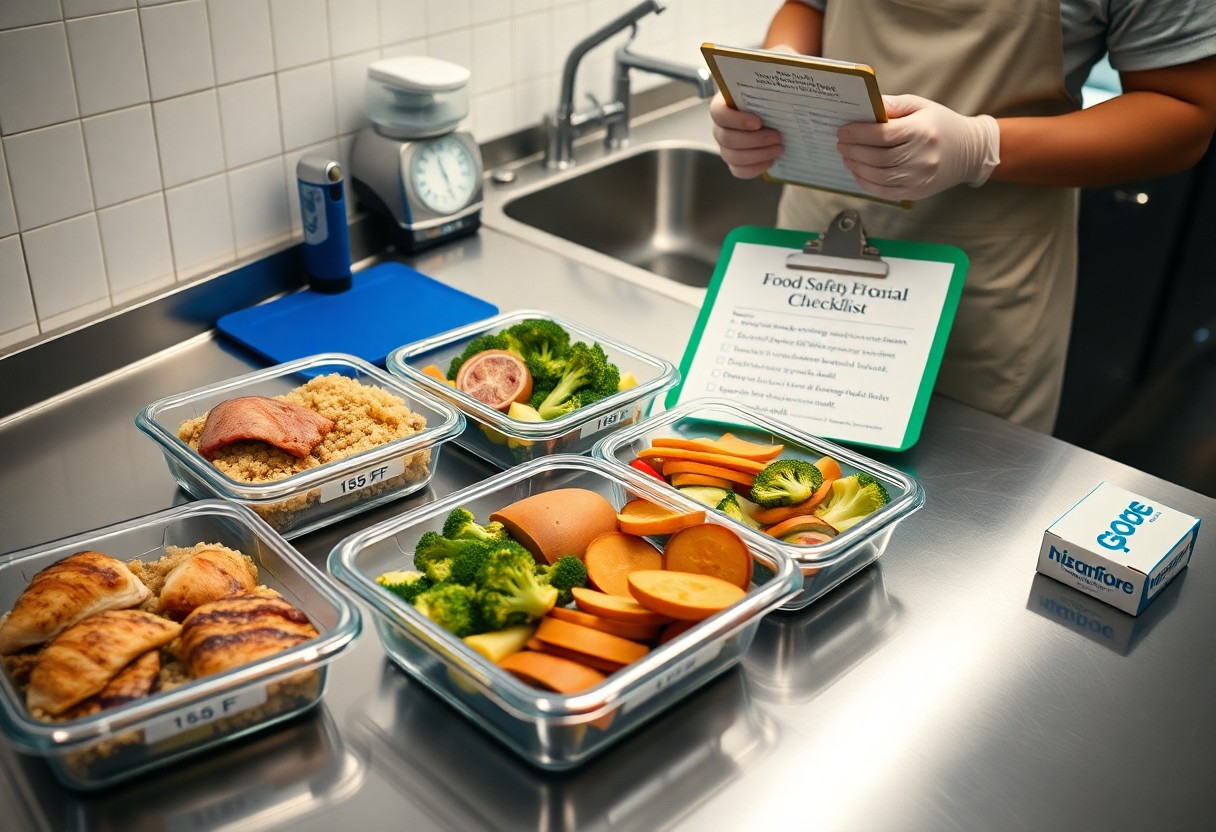
MealPrep gives you more free time and healthier meals, but to protect your health you must follow proper cooling, storage, and reheating and prevent cross-contamination that can cause foodborne illness. With simple labeling, portioning, and balanced recipes you lock in the time-saving and nutritious benefits of batch cooking while keeping your kitchen safe.
Key Takeaways:
- Plan balanced meals and portion into airtight, labeled containers to save time and enable safe storage.
- Prevent cross-contamination: wash hands and surfaces, use separate utensils and cutting boards for raw meats and produce, and cook foods to recommended internal temperatures.
- Cool and store safely: refrigerate perishable foods within 2 hours (1 hour if ambient temp >90°F), keep at ≤40°F, reheat to 165°F, and discard after recommended holding times.
Benefits of Meal Prepping
Meal prepping delivers measurable wins: you can save 3-5 hours per week, cut food costs by an estimated 20-40% versus daily takeout, and reduce decision fatigue during busy evenings. By planning ingredients and portions ahead, you lower impulse purchases, streamline grocery trips, and make consistent progress toward nutrition goals with less daily effort.
Time Efficiency
Batch-cooking for 2 hours on a weekend can yield 8-10 ready meals, turning weekday dinners into 10-15 minute reheats. When you pre-cook proteins, grains and veg, assembly replaces full cooking-so you avoid repeated chopping, oven preheats and cleanup. Using multi-burner strategies and one-pan recipes multiplies throughput and slashes nightly prep time.
Healthier Eating Choices
Prepping lets you control portions, macros and ingredients so you avoid high-calorie takeout and excess sodium common in restaurant dishes (many exceed 1,200 mg sodium per entrée). You can prioritize fiber and lean protein-e.g., 4-6 oz grilled chicken with 1 cup quinoa and 1-2 cups roasted vegetables gives ~25-35 g protein and sustained fullness.
Use labeled containers to track servings, pack snacks to prevent vending-machine choices, and swap ingredients easily-lentils for rice boosts fiber, Greek yogurt for sour cream adds protein. Also follow safety steps: cool cooked food within 2 hours and refrigerate at or below 40°F (4°C), and consume meals within 3-4 days or freeze for longer storage to avoid bacterial risk.

Essential Meal Prep Techniques
Mastering techniques like batch-cooking, safe cooling and portioning can help you save 3-5 hours per week and cut food costs by up to 30%. When you need quick ideas, consult Timesaving tips for cooking healthy meals. Also make safety a habit: cool foods within two hours and reheat to 165°F (74°C) to reduce the risk of foodborne illness.
Planning Your Meals
Plan dinners for 3-4 nights and repeat ingredients so you shop once and cook less; batch-cook two proteins on prep day (e.g., roasted chicken and a bean chili), add 30-minute sides, and portion into labeled containers for 3-5 lunches. You should portion proteins to about 4-6 oz and vegetables to 1 cup per meal, then schedule thawing and reheating on a simple weekly calendar to avoid last-minute takeout.
Grocery Shopping Strategies
Create a list grouped by store sections, buy staples in bulk, and check unit prices to save up to 20% on pantry items. Favor seasonal produce and frozen vegetables, aim to stock about 10 versatile items (rice, canned beans, eggs, frozen veg, chicken, yogurt, onions, garlic, olive oil, lemons) that combine into 10+ meals, and use online pickup to cut shopping time to under 30 minutes.
After purchasing, organize immediately: put perishables away within two hours, freeze items you won’t eat within 48 hours, and label containers with prep dates. Maintain your fridge at or below 40°F (4°C) and your freezer at 0°F (-18°C), separate and seal raw meat to avoid cross-contamination, and follow first-in, first-out rotation to minimize waste and food-safety risks.
Safety Considerations in Meal Prepping
Food Safety Practices
You’ll wash hands for at least 20 seconds, sanitize cutting boards and keep raw proteins separate from ready-to-eat foods. Use a thermometer – cook poultry to 165°F (74°C), ground meat to 160°F (71°C), and fish to 145°F (63°C). Cool cooked food within 2 hours (1 hour if ambient is over 90°F/32°C) and avoid the 40-140°F (4-60°C) danger zone. Reheat leftovers to 165°F (74°C) before eating.
Storage Guidelines for Prepared Meals
You should keep your refrigerator at or below 40°F (4°C) and your freezer at 0°F (-18°C). Store meals in shallow, airtight containers to cool quickly, label with contents and date, and eat refrigerated meals within 3-4 days. Freeze single-meal portions to extend life and speed reheating; dividing large batches into 1-2 cup portions helps reduce time in the danger zone.
When freezing, leave headspace for liquids and aim for best quality by using most cooked meals within 2-3 months; vacuum sealing can extend that. Thaw in the refrigerator, under cold running water, or in the microwave – never at room temperature. Reheat thoroughly, stirring to eliminate cold spots, and confirm the center reaches 165°F (74°C) before serving.
Quick and Healthy Meal Prep Ideas
Batch-cooking staples-rice, quinoa, roasted vegetables-lets you assemble meals in minutes and save 4-6 hours per week. Cook 2 cups dry quinoa (15 minutes) to yield about 6 cups cooked; roast two sheet pans of veggies in 25-30 minutes. After cooking, cool and refrigerate within 2 hours, noting foodborne bacteria grow rapidly in the 40°F-140°F danger zone; freeze portions up to 3 months.
Breakfast Options
Overnight oats are simple: mix 1/2 cup oats, 1 cup milk or yogurt, and berries for 4-5 days of breakfasts. You can also make 12 egg muffins in ~20 minutes using spinach, peppers, and 8 eggs for high-protein starts; store them refrigerated for up to 4 days and reheat to 165°F before eating.
Lunch and Dinner Recipes
Sheet-pan dinners (salmon or chicken with vegetables) finish in 20-30 minutes and scale easily: roast 4 portions at once. Grain bowls combine 1-2 cups cooked grains, 4-6 oz protein, and roasted veg for balanced meals. Use 3-compartment containers to prevent sogginess and label with dates; refrigerated meals generally stay safe for 3-4 days.
Plan a Sunday session: roast 2 whole chicken breasts (25-30 minutes), bake 1.5 lbs sweet potatoes (35-45 minutes) and steam a large batch of broccoli (5-7 minutes). Assemble five lunches with 1 cup grain, 4 oz chicken, and 1 cup veg each; pack dressings separately. Cool hot food quickly and cool to below 40°F within 2 hours, then reheat portions to 165°F when ready to eat.
Overcoming Meal Prep Challenges
You can beat common barriers-time, boredom, and food safety-by batching tasks: spend 1-2 hours on Sunday to cook 2-3 proteins, prepare 5 vegetable sides, and portion 5-7 meals. Use airtight containers and chill promptly to keep the fridge at 40°F (4°C) or below to limit bacterial growth. Swap to frozen vegetables or pre-chopped produce when time is tight to maintain healthy choices.
Staying Motivated
You’ll sustain meal prep by setting small wins: commit to 3 lunches and 2 dinners per week, photograph progress, and reward yourself after two successful weeks. Use calendar alerts and a tracking app to reduce friction, and prioritize consistency over perfection. If leftovers build up, freeze extras and cool food within 2 hours to reduce safety risks.
- Time blocks: reserve 60-120 minutes weekly to prep core ingredients.
- Micro-goals: aim for 5 consecutive prepped meals to form habit.
- Assume that feedback from week one will guide portion and flavor tweaks.
Tips for Keeping Variety
You can rotate ingredients to avoid boredom: pick 3 proteins, 4 grains, and 6 vegetables and mix-match for 36 combinations. Change textures by grilling, roasting, or sautéing, and alternate global flavors like Mexican, Thai, and Mediterranean each week. Label containers with dates and reheating notes to track freshness and quality.
When you build a 4-week rotation, list 20 recipes and assign them to days: for example, grilled salmon with farro and asparagus, chipotle chicken bowls, and vegetarian lentil stew. Transform bases with spices-cumin for Mexican, curry powder for Indian, za’atar for Mediterranean-and always reheat to 165°F (74°C) for safety and best texture.
- Rotate proteins: cycle chicken, tofu, fish, and beef across weeks.
- Spice strategy: keep 5 blends to change flavor profiles quickly.
- Assume that four-week rotations with 20 recipes will cut repetition and boost adherence.
Summing up
Drawing together the safety talk on meal prepping, you streamline time and boost nutrition by planning menus, controlling portions, and using safe food-handling practices. You should wash hands and surfaces, separate raw and cooked foods, cool and store meals promptly to proper temperatures, and label containers with dates. With consistent reheating and inspection before eating, you protect your health while making meal prep efficient and reliable.
FAQ
Q: How should I handle temperature control when meal prepping to prevent foodborne illness?
A: Cook proteins to safe internal temperatures (165°F/74°C for poultry, 160°F/71°C for ground meats, 145°F/63°C plus rest for whole cuts), cool cooked foods quickly by dividing into shallow containers, and refrigerate within 2 hours (1 hour if ambient temperature is above 90°F/32°C). Keep refrigerators at or below 40°F (4°C) and freezers at 0°F (-18°C). Label containers with preparation dates and use refrigerated meals within 3-4 days; freeze for longer storage (quality best within 2-3 months). Avoid leaving perishable items in the temperature danger zone (40-140°F / 4-60°C).
Q: What practices reduce cross-contamination during meal prep?
A: Use separate cutting boards and knives for raw meats and produce, or wash and sanitize boards and utensils between uses. Wash hands for at least 20 seconds before and after handling raw proteins, and clean work surfaces with hot, soapy water or a food-safe sanitizer. Store raw meats on lower refrigerator shelves to prevent drips, keep prepared ready-to-eat foods covered and separate, and marinate only in the refrigerator. Use color-coded containers or labels for allergen separation when prepping multiple meals.
Q: How should prepped meals be reheated and handled at serving to ensure safety?
A: Reheat foods to an internal temperature of 165°F (74°C) and verify with a food thermometer; microwaved food should be stirred and allowed to stand to eliminate cold spots. Thaw frozen meals safely in the refrigerator, under cold running water, or in the microwave and cook immediately after thawing. Do not refreeze thawed meals unless they were thawed in the refrigerator and have not been reheated. Discard any meal that smells off, has visible spoilage, or has been left out at room temperature for more than 2 hours (1 hour over 90°F/32°C). Clearly label containers with ingredients and allergen information to protect anyone with food sensitivities.