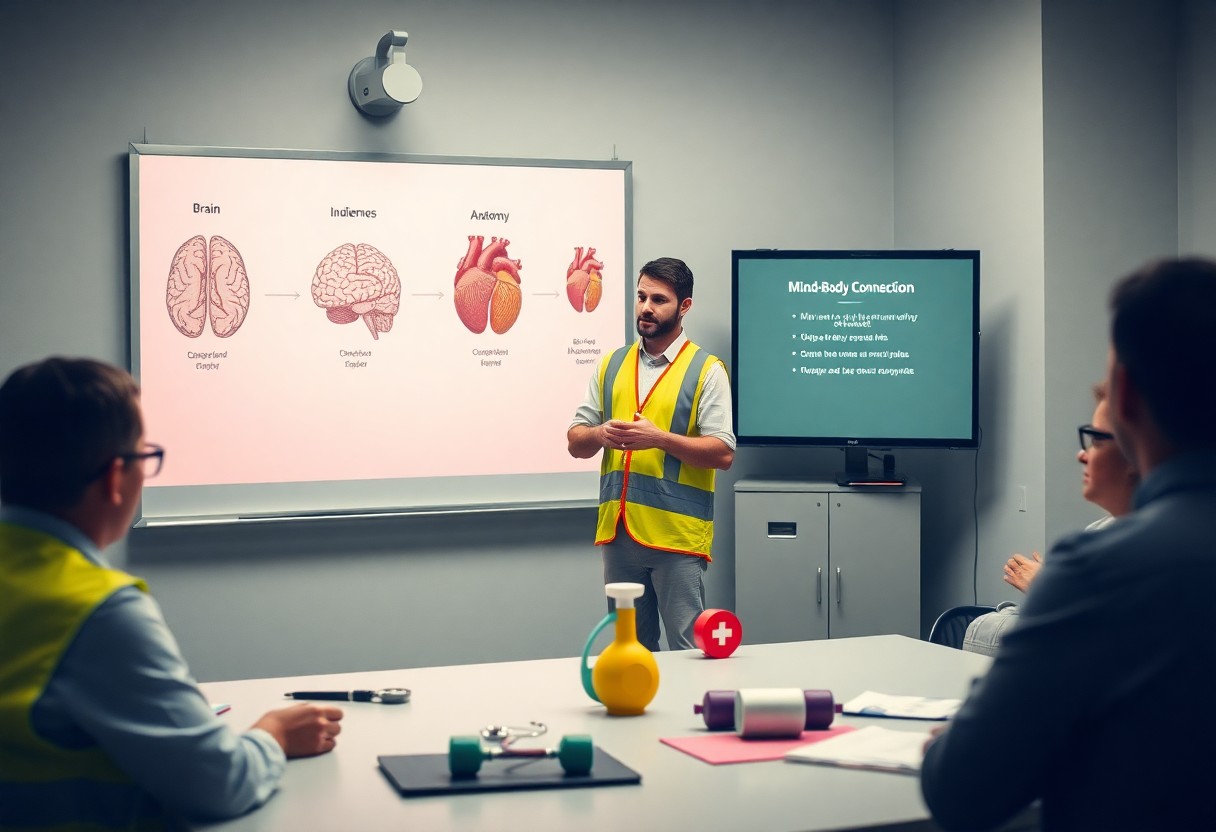
Most people underestimate how your mental state alters physical safety: anxiety, chronic stress, and sleep loss can worsen pain and increase accidents. You should treat the mind-body link as a safety priority – unmanaged stress and poor sleep are especially dangerous, while evidence-based practices like mindfulness, movement, and social support deliver clear, positive improvements in resilience and recovery.
Key Takeaways:
- Mental and physical health are interconnected: stress, fatigue, and mood affect focus, reaction time, and injury risk, while pain or illness can worsen mental wellbeing.
- Watch for early signs-poor concentration, sleep changes, persistent tension-and take action by taking breaks, adjusting tasks, and seeking support or medical care.
- Supportive workplace practices-open communication, access to mental-health resources, regular breaks, ergonomics, and movement-reduce incidents and improve overall safety.

Understanding the Mind-Body Connection
Chronic stress elevates cortisol, suppresses immunity, and worsens metabolic risk; you often see higher blood pressure, impaired glucose control, and slower healing as a result. Studies link stress-related issues to 75-90% of primary care visits and a 1.5-2× higher cardiovascular risk in depressed patients. Behavioral interventions like CBT and regular aerobic exercise can reduce symptoms by 20-30% and lower inflammatory markers. The most dangerous pattern is prolonged stress with poor sleep; the most positive factor is consistent mind-body therapy.
Definition and Importance
In practice the mind-body link means your thoughts, emotions and behaviors directly shape physiology via the HPA axis, autonomic nervous system and immune signals; HPA activation raises cortisol within minutes. You can trace effects to measurable outcomes-elevated IL-6, CRP and blood pressure changes-so psychological factors alter disease trajectories. Dysregulation of these pathways increases risk for hypertension and diabetes, while positive interventions such as mindfulness, sleep hygiene and graded exercise lower cortisol and inflammatory markers.
Historical Perspectives
Ancient physicians like Hippocrates (~400 BCE) tied lifestyle to illness, then Descartes’ 17th-century mind-body dualism separated psychological and physical care, a dangerous split that persisted into modern medicine. George Engel’s 1977 biopsychosocial model reconnected those domains, prompting integrated approaches in primary care, pain medicine and psychiatry. You can see effects in training curricula and policy: integration rose notably from the 1980s onward as evidence accumulated.
The H. pylori discovery by Barry Marshall and Robin Warren in the early 1980s overturned decades of psychosomatic ulcer theory and led to antibiotics replacing long-term acid suppression for many patients; you can point to the 2005 Nobel Prize that cemented the change. Still, stress, sleep and behavior modify relapse and healing rates, so modern treatment combines antimicrobials with stress management and lifestyle-an example of historical correction plus ongoing mind-body integration.
Effects of Mental Health on Physical Health
Your mental state directly alters physiology: chronic stress, anxiety, and depression activate the HPA axis and sympathetic nervous system, raising cortisol and catecholamines and driving chronic inflammation and sleep disruption. Clinical reviews and resources (see Mind & Body: The Link Between Mental and Physical Health) link these changes to insulin resistance, delayed wound healing (up to 40% slower in some studies), and higher infection rates, so you should watch for early signs.
Stress and its Physical Manifestations
Stress triggers repeated fight-or-flight responses that raise heart rate and constrict blood vessels, commonly increasing systolic blood pressure by 10-20 mmHg during acute episodes. You may notice tension headaches, jaw or neck pain, reflux, or bowel changes; persistent exposure promotes muscle tension, sleep loss, and immune suppression, all of which raise your long-term risk of hypertension and cardiovascular complications.
Anxiety and Chronic Illnesses
Anxiety disorders worsen the course of chronic conditions by sustaining sympathetic tone and inflammation, which can impair glucose control in diabetes and complicate recovery after cardiac events. Multiple cohort studies associate anxiety with roughly a 20-40% higher incidence of cardiovascular events, so you should treat anxiety as a factor that directly affects disease progression and outcomes.
Mechanistically, anxiety produces sustained sympathetic overactivity and HPA-axis dysregulation, elevating markers like CRP and IL-6 and promoting endothelial dysfunction; behaviorally, you may skip medications, sleep 1-2 fewer hours per night, or increase tobacco and alcohol use, each amplifying risk. Meta-analyses report about a 30% higher rehospitalization rate after acute coronary syndrome in anxious patients, and integrated treatment (psychotherapy plus medication when indicated) can reduce symptoms, lower blood pressure, and decrease inflammatory markers within months.
Effects of Physical Health on Mental Well-being
When your body struggles-chronic pain, poor sleep, or metabolic issues-you face a much higher chance of mood disorders; people with long-term conditions are about twice as likely to experience depression. Inflammation and dysregulated stress hormones drive biology that worsens cognition and affect, and studies show interventions targeting physical health, like regular activity, can reduce depressive symptoms by roughly 30%, cutting biological risk factors that pull your mental state down.
Exercise and Mood Enhancement
When you engage in consistent moderate exercise-about 30 minutes, 3-5 times weekly-you boost BDNF, endorphins, and sleep quality, which together lift mood and cognitive function. Randomized trials report exercise producing symptom reductions comparable to antidepressants for mild-to-moderate depression, and brief walks or interval sessions reliably lower acute anxiety; if you remain sedentary, your likelihood of mood disorders increases, so prioritize movement as a therapeutic strategy.
Nutrition’s Role in Mental Health
You alter neurotransmitter precursors and inflammation through diet: a Mediterranean-style diet-rich in vegetables, whole grains, legumes, olive oil, and fatty fish-has been linked to about a 30% lower risk of depression in cohort studies. Omega-3s (EPA/DHA), fiber, and fermented foods support the gut-brain axis, whereas high-sugar, ultra-processed foods drive inflammation and higher rates of anxiety and low mood.
In the SMILES trial, participants with moderate-to-severe depression who adopted a tailored Mediterranean-style diet achieved significantly greater symptom improvement, with 32% remission versus 8% in the control group. You should monitor nutrients-low vitamin D, B12, and folate correlate with poorer outcomes-and some trials use EPA-rich supplements (~1 g/day) as adjunctive therapy; practical swaps (sugary snacks for oily fish and greens) often yield measurable mood gains within weeks.
Techniques to Enhance the Mind-Body Connection
Mindfulness and Meditation
Set aside 10-20 minutes daily for breath-focused meditation; an 8-week MBSR program has produced reliable reductions in perceived stress and anxiety. Use body-scan, mindful-breathing, or focused-attention practices, track progress with a daily log or guided app, and insert 3-5 minute mindful pauses before meetings to lower reactivity and sharpen decision-making.
Physical Activities for Mental Health
Start brisk walking, swimming, or cycling aiming for 150 minutes of moderate aerobic activity per week per public-health guidelines; randomized trials show exercise can reduce depressive symptoms comparably to some therapies. Add strength training twice weekly to boost mood and cognition, and monitor intensity at about 50-70% of your max heart rate for effectiveness.
For a practical plan, schedule five 30-minute brisk walks to reach 150 minutes/week, or combine three 40-minute aerobic sessions with two 20-minute resistance workouts using bands or weights to improve sleep and executive function. If you have hypertension or cardiac history, obtain medical clearance before starting high-intensity intervals; supervised programs show higher adherence and greater symptom reduction in clinical studies.
Case Studies and Research Findings
You can see direct effects when programs pair mind-body practices with safety protocols: measured drops in incidents, faster recovery, and better mental health metrics. Multiple case studies show objective gains-reduced absenteeism, lower medical costs, and improved productivity-when you prioritize both the psychological and physical sides of safety. Below are detailed examples with sample sizes and concrete outcomes you can use to justify similar interventions.
- Hospital MBSR Program (n=150): 8-week program produced a 34% reduction in perceived stress scores, a 22% fall in sick days, and 18% fewer patient-safety incidents on participating units.
- Manufacturing Integrated Mental Health (n=450, 12 months): combined counseling, fatigue management and ergonomics led to a 28% reduction in workplace injuries, 35% fewer lost-time incidents, and an estimated 3:1 ROI from reduced claims and downtime.
- Exercise vs. Depression RCT (n=300): supervised aerobic training produced a 40% mean drop in depression scores and a 25% improvement in physical-function tests compared with control.
- Firefighter Resilience Initiative (n=200): resilience training plus peer support showed a 45% reduction in PTSD symptom severity and an 18% decrease in related medical visits over 9 months.
- Corporate Mindfulness Rollout (n=1,200, 1 year): brief daily practices and manager coaching reported a 30% drop in self-reported stress, 15% productivity gains, and 12% lower turnover.
- Construction Ergonomics + CBT (n=320): combined training reduced musculoskeletal injuries by 38% and opioid prescriptions for pain by 20% within 6-12 months.
Success Stories
You’ll find rapid wins when organizations commit: a small tech company (n=80) cut sick days by 40% after adding on-site counseling and daily stretch breaks, and a surgical unit shortened patient recovery time by 18% following staff stress-reduction workshops – outcomes that directly improved both physical safety and operational performance.
Scientific Research Supporting the Connection
Multiple trials and meta-analyses link psychological interventions to measurable physiological changes: you’ll see moderate effect sizes (~0.4-0.7) for stress and anxiety reduction, consistent heart-rate variability improvements, and average cortisol declines reported across studies, all of which correlate with fewer injuries and faster recovery.
Deeper mechanisms explain why your programs work: interventions that lower HPA-axis activation reduce inflammatory markers (several trials report CRP and cytokine decreases), improve sleep quality by up to 30%, and enhance cognitive control-translating to better hazard recognition and safer behavior. When you track both subjective scores and objective outcomes (incidents, sick days, biomarkers), the evidence shows the mind-body approach yields quantifiable gains for safety and health.
Practical Tips for Daily Life
You can use short, evidence-based routines to support mind-body balance: 5-10 minutes of diaphragmatic breathing lowers heart rate, and 30 minutes of moderate exercise 3 times weekly improves mental health and physical health. Track stress with a 0-10 scale and schedule recovery breaks every 90 minutes; try micro-breaks of 2-3 minutes. Any small habit repeated daily produces measurable gains in 3-8 weeks.
- Practice 5-10 minutes of diaphragmatic breathing each morning to reduce acute stress.
- Prioritize 30 minutes of moderate activity 3x/week for mood and cardiovascular benefits.
- Do a 3-minute body scan before bed to improve sleep continuity.
- If you have chronic conditions, consult your clinician before major changes; seek emergency care for chest pain or severe symptoms.
Integrating Mind-Body Practices
You can layer brief practices: start with 5 deep breaths on waking, add 10-15 minutes of gentle yoga or stretching 2-3 times weekly, and use a 3-minute grounding check-in hourly during high-demand periods. An 8-week MBSR program is a common next step if you want structured learning; many people notice reduced reactivity within 2-6 weeks when you maintain short, regular routines.
Resources for Further Learning
Use established programs and vetted apps: an 8-week MBSR course, NHS/CDC activity guidelines (150 minutes/week), and apps like Headspace, Calm, or free Insight Timer for guided practice. Read “Full Catastrophe Living” for foundational methods and search PubMed for randomized trials. If you experience severe mental-health symptoms or suicidal thoughts, contact a professional immediately; urgent help may be required.
When you choose resources, prioritize randomized controlled trials and instructors with formal training-look for MBSR teachers certified by recognized centers and trauma-informed yoga teachers. Favor studies with sample sizes n>50 and peer-reviewed journals (e.g., Journal of Psychosomatic Research, Mindfulness). Combine free tools for daily access with structured courses for lasting change, and check app privacy policies before sharing sensitive health data.
To wrap up
Following this safety talk, you should understand how stress, sleep, posture, and activity interact to shape both your mental and physical health, and how practical habits-regular breaks, correct body mechanics, mindfulness, and seeking help-lower risk and boost resilience; put these practices into daily routines, report hazards promptly, and support coworkers to maintain a safer, healthier workplace.
FAQ
Q: What is the mind-body connection and why does it matter for workplace safety?
A: The mind-body connection describes how mental states (stress, anxiety, depression, fatigue) influence physical function and behavior, and vice versa. Acute stress triggers fight-or-flight responses-elevated heart rate, narrowed attention, faster muscle tension-that can reduce situational awareness and increase the likelihood of errors or accidents. Chronic mental strain contributes to musculoskeletal pain, slower reaction times, impaired decision-making, and weakened immunity, all of which affect attendance, task performance, and recovery after injury. Integrating mental-health awareness into safety programs helps identify risks before they become incidents and supports faster, more complete return-to-work outcomes.
Q: What signs indicate someone’s mental health is affecting their physical performance or safety?
A: Warning signs span behavior, cognition, and physical symptoms. Behavioral indicators: increased near-misses, missed safety steps, declines in housekeeping, social withdrawal, lateness or absenteeism, substance use on- or off-site. Cognitive and performance indicators: reduced concentration, indecision, slower reaction times, more errors, difficulty following procedures. Physical and somatic signs: persistent fatigue, headaches, muscle tension or pain, sleep disturbances, gastrointestinal complaints. If several signs appear together or persist, a private, nonjudgmental check-in and appropriate referral (supervisor, occupational health, EAP) are warranted.
Q: What practical steps can supervisors and teams take to support the mind-body connection and reduce injury risk?
A: Combine organizational actions and personal practices. Organizational: include mental-health topics in regular safety talks, train leaders to spot warning signs and conduct supportive conversations, provide access to EAPs or occupational health, manage workloads and schedules to reduce fatigue, implement fit-for-duty checks and clear reporting processes for hazards and near-misses. On-the-job practices: enforce ergonomic assessments and task rotation, encourage scheduled breaks, hydration and nutritious meals, and warm-up/stretch routines before physical tasks. Brief tools and techniques: teach simple breathing or grounding exercises for acute stress, promote sleep hygiene and regular physical activity, and hold debriefs after incidents to address both emotional and physical impacts. Confidentiality, nonpunitive responses, and visible resource pathways increase the likelihood that workers will seek help early, lowering both mental strain and physical risk.