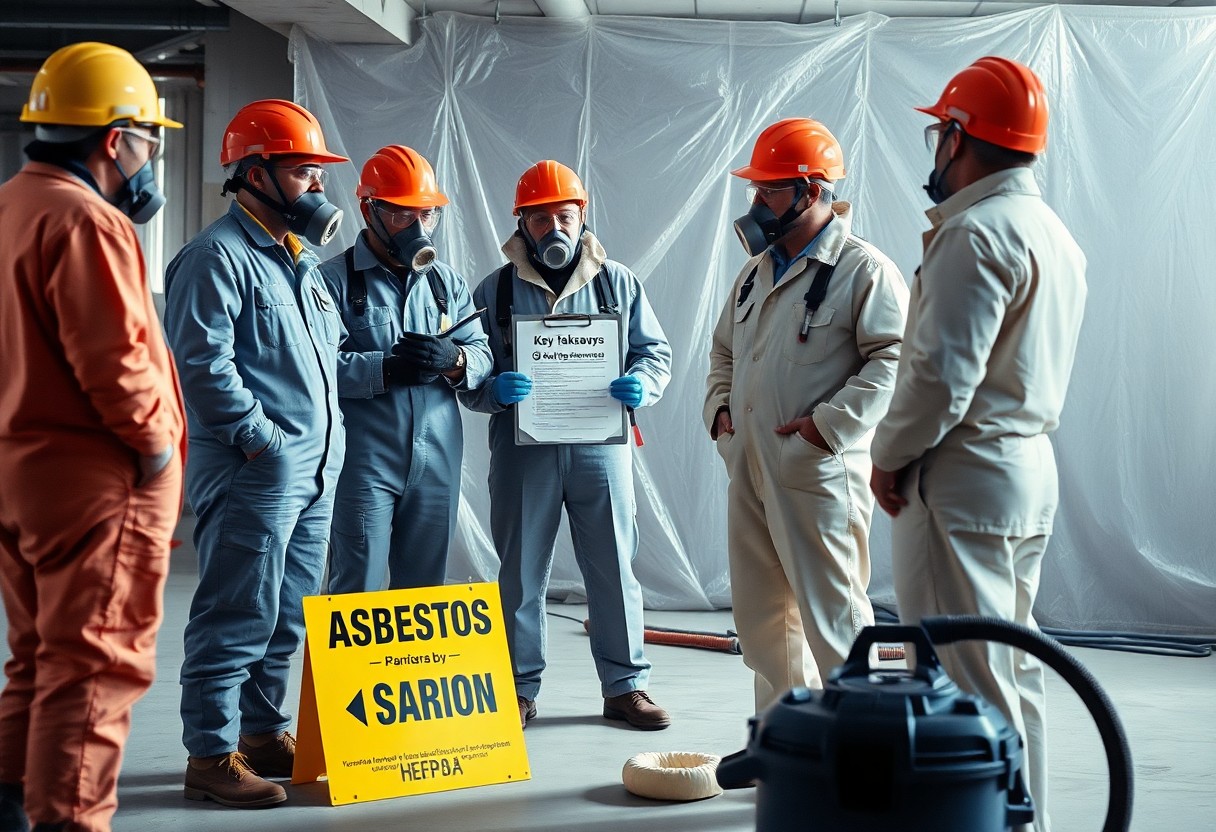
Overexposure to asbestos causes mesothelioma and lung cancer; you should follow safety procedures and training to protect yourself and limit contamination.
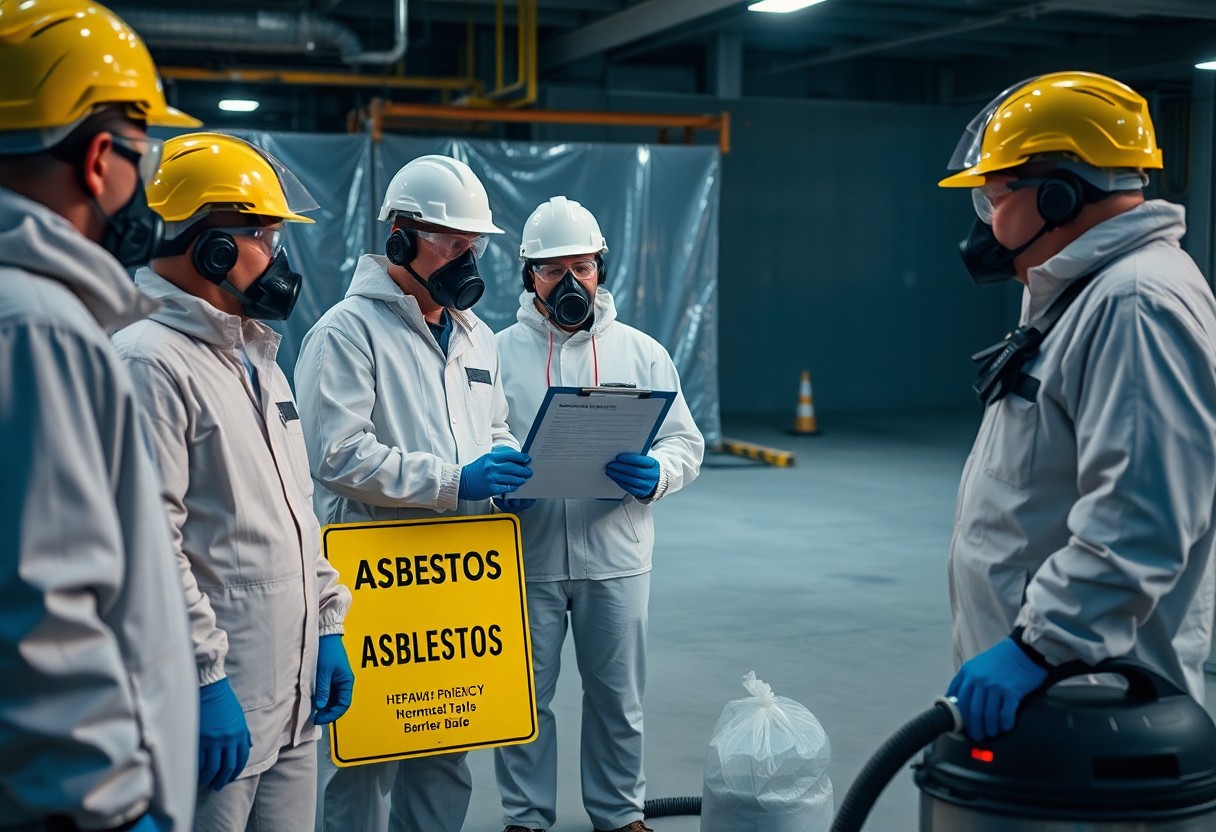
Key Takeaways:
- Identify potential asbestos-containing materials (ACMs) before work begins; common locations include insulation, pipe lagging, floor and ceiling tiles, roofing, and gaskets-do not cut, drill, or disturb suspect materials and report them to a supervisor.
- Health effects from inhaled asbestos fibers include asbestosis, lung cancer, and mesothelioma, with symptoms often appearing decades after exposure.
- Control measures and legal requirements include stopping work if ACMs are suspected, using trained or licensed abatement contractors, employing wet methods, HEPA filtration, and appropriate respirators/PPE, and following local labeling, handling, and disposal regulations.
Health Hazards and Pathophysiology
Exposure to asbestos causes persistent lung inflammation and DNA damage when you inhale friable fibers, increasing risk for long-term conditions; medical surveillance and avoiding further exposure are vital.
Mechanism of respiratory damage and latency periods
Fibers penetrate deep airways, lodging in alveoli where they trigger chronic inflammation; you may not see symptoms for decades because of a decades-long latency between exposure and disease.
Analysis of Asbestosis, Mesothelioma, and Lung Cancer
Disease from asbestos manifests as asbestosis (fibrotic scarring), aggressive mesothelioma, or lung cancer, and you should report past exposures for proper diagnosis and monitoring.
Chronic exposure raises dose-dependent risk; you benefit from occupational records, smoking cessation, and low-dose CT screening to detect asbestos-related lung cancer earlier, though mesothelioma often presents late.
Identification of Asbestos-Containing Materials (ACMs)
Inspection of suspect materials uses age, texture and location; you should treat unknown panels, pipe insulation, and ceiling tiles as potential ACMs and avoid disturbing them until certified testing confirms composition.
Common applications in historical construction and insulation
Many older buildings used asbestos in roofing, floor tiles, cement, pipe lagging, boilers, and sprayed insulation; you should assume materials installed before 1980 may contain asbestos and treat them cautiously.
Differentiating between friable and non-friable materials
Friable materials crumble easily and can release dangerous airborne fibers, whereas non-friable products are bonded and only pose higher risk if cut, sanded, or damaged; you must treat friable ACMs as the greatest inhalation hazard.
Sampling and lab analysis are required to confirm ACM type; you should never disturb suspect friable material-use containment and certified contractors with respirators and HEPA controls to prevent fiber release and protect against long-term health risks.
Risk Assessment and Exposure Monitoring
Assessment should focus on identifying asbestos locations, worker tasks, and potential for airborne fibres, so you prioritize controls and monitoring.
Establishing Permissible Exposure Limits (PEL)
Regulators set PELs, but you must verify that site conditions and task-specific exposures stay below the legal limits using objective data.
Protocols for air sampling and site surveys
Sampling plans require baseline surveys, task-based sampling, and background checks to detect any asbestos fibre spikes; you follow chain-of-custody and accredited labs for results.
Ensure you collect both personal and area samples with calibrated pumps and specified flow rates, choose TEM for regulatory confirmation and PCM for screening, and log sample locations, weather, and tasks. If results show exposures above PEL you must stop work, implement controls, and notify authorities while arranging clearance testing.
Control Measures and Safe Work Practices
Controls you apply must prioritize containment, HEPA filtration, and work sequencing to limit asbestos fiber release; always follow regulated procedures and restrict access to high-risk areas.
Implementation of engineering controls and containment
Containment systems you install-negative-pressure enclosures and local exhaust-reduce airborne fibers and protect surrounding areas; maintain HEPA filtration and double-bag waste for safe removal.
Selection and maintenance of Personal Protective Equipment (PPE)
PPE you select must include fitted respirators, disposable coveralls, and gloves; inspect before use and replace contaminated items to prevent fiber transfer to skin or surroundings.
Inspect respirators for seal integrity, store clean PPE in sealed containers, and follow manufacturer cleaning protocols; after use, you must bag disposable gear to prevent cross-contamination and limit exposure during removal.
Regulatory Compliance and Legal Obligations
You must follow federal and state asbestos rules, provide training, and keep records; consult Asbestos Awareness Toolbox Talks for sample scripts and compliance tips. Violations can lead to significant fines and serious health risks.
Overview of OSHA and EPA standards
When you work with asbestos, OSHA enforces exposure limits, PPE, and training while EPA governs removal and disposal under NESHAP; follow both agencies to reduce fatal exposure risks and avoid citations.
Documentation, labeling, and disposal requirements
Label asbestos materials clearly and maintain written records of training, monitoring, and disposal; you must use approved disposal channels to prevent environmental contamination.
Records you keep should include training certificates, air-monitoring results, work plans, and disposal manifests. Labels must clearly mark asbestos with warning language and durable tags on containers and affected areas. For disposal, you must wet, double-bag or seal waste, use leak-tight containers, transport with manifests, and send waste to permitted facilities via licensed haulers; noncompliance can trigger criminal fines, mandatory cleanup, and long-term community exposure.
Conclusion
From above, you must apply asbestos-awareness safety talk guidance: identify suspect materials, stop work when exposure risk exists, use certified PPE and controls, report findings, and follow cleanup and medical protocols to protect yourself and coworkers.
FAQ
Q: What is asbestos and what health risks does it pose?
A: Asbestos is a group of naturally occurring fibrous minerals that were widely used for insulation, fireproofing, and construction products. Inhalation of microscopic asbestos fibers can cause asbestosis, lung cancer, and mesothelioma, with symptoms often appearing decades after exposure. Workers most at risk include those in construction, demolition, renovation, shipbuilding, and building maintenance who handle or disturb older materials. Awareness helps identify likely asbestos-containing materials, limit unnecessary disturbance, and apply appropriate controls such as containment, wet methods, HEPA filtration, and licensed removal. Regulatory exposure limits, training requirements, and medical surveillance vary by jurisdiction, so follow local regulations and your employer’s asbestos program.
Q: What topics should a Safety Talk on Asbestos Awareness cover?
A: A comprehensive Safety Talk should explain what asbestos is, common locations of asbestos-containing materials, and how fibers become airborne. The session should review health effects, latency periods, and the procedure for reporting suspected asbestos to a supervisor or competent person. Control measures to describe include the hierarchy of controls, wet work techniques, local exhaust ventilation with HEPA filtration, correct respirator selection and fit, PPE handling, waste containment, and decontamination procedures. Practical demonstrations of respirator fit-checks, donning and doffing PPE, and safe tool choices increase worker competence. Training should also cover site signage, restricted access, permit-to-work requirements, emergency disturbance procedures, and documentation and recordkeeping obligations.
Q: What immediate actions should workers take if they suspect they have disturbed asbestos-containing material?
A: Stop work immediately and prevent others from entering the area. Avoid further disturbance, do not sweep, and do not use compressed air or power tools on the material. Notify your supervisor and the site competent person so that a proper assessment, sampling, and air monitoring can be arranged. Follow site containment procedures such as sealing the area, applying wet methods if appropriate, and arranging licensed abatement when required by regulation. Report any potential exposure for occupational health evaluation and comply with employer incident reporting and medical surveillance processes.