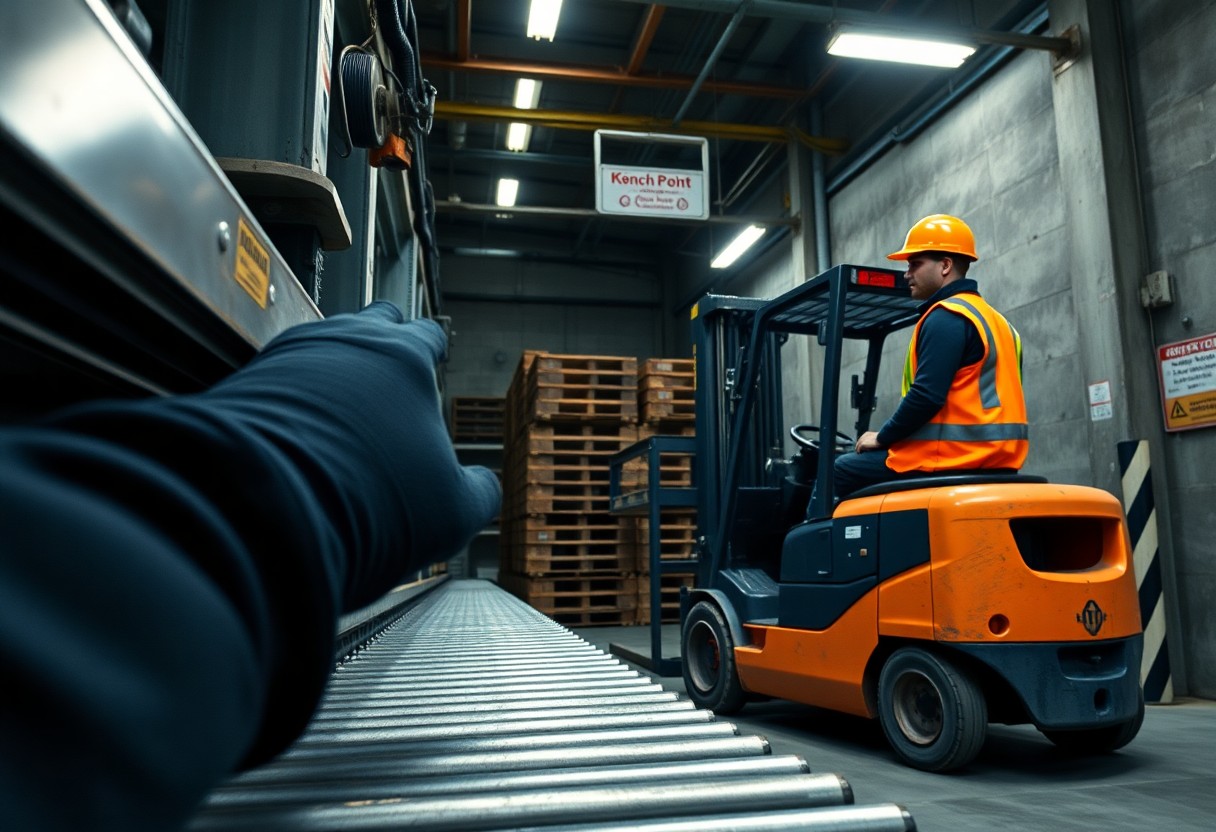
Over the course of operations, you encounter caught-in and caught-between hazards that can cause crushing injuries; use proper guarding, lockout/tagout, and clear training to prevent incidents.
Key Takeaways:
- Caught-in and caught-between hazards occur when workers are trapped, compressed, or crushed by moving equipment, collapsing trenches, or material-handling operations.
- Machine guarding, lockout/tagout, trench shoring/sloping, and vehicle exclusion zones remove or isolate pinch points and entrapment sources.
- Training on hazard recognition, use of spotters, clear communication, PPE, and emergency rescue procedures reduces incident frequency and severity.
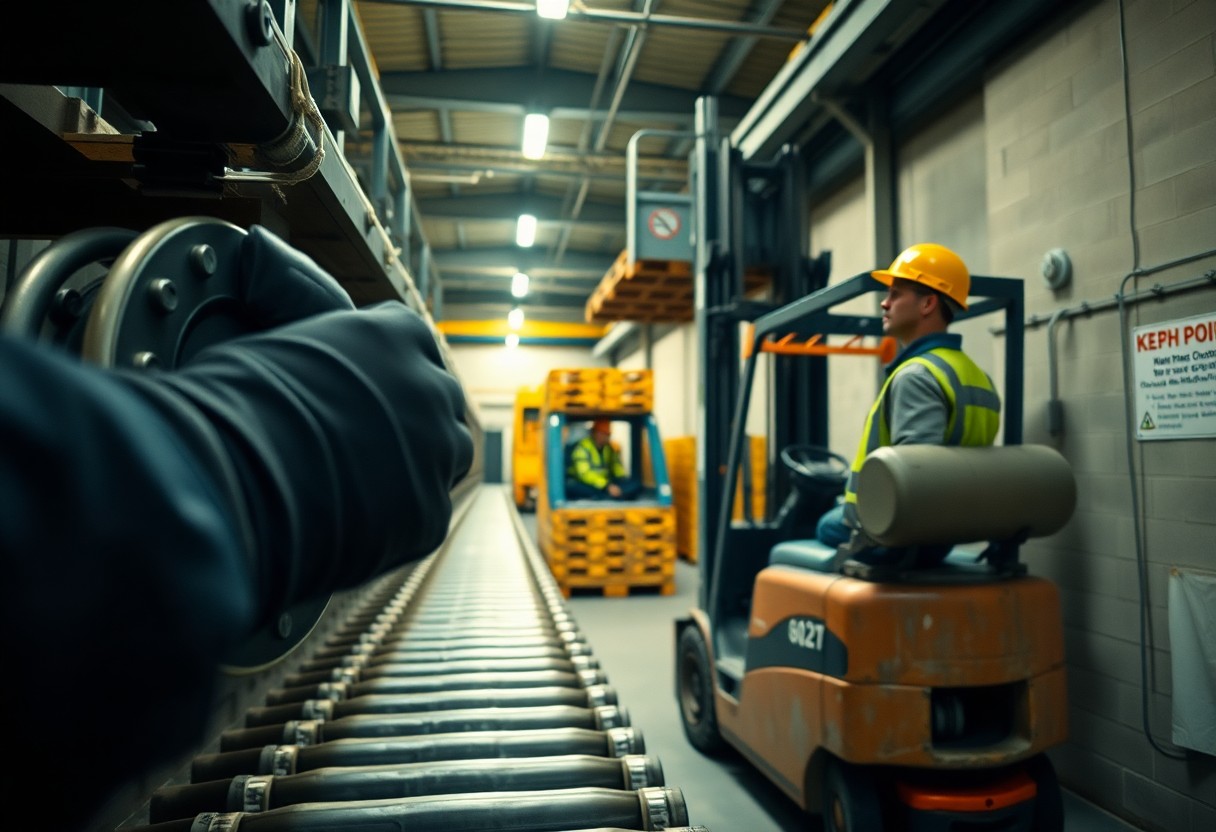
Identifying High-Risk Machinery and Equipment
Inspect machines and flag pinch, shear, and crush points; you must prioritize guards, lockout, and training. Use the Caught In/Between Toolbox Talk | 1926 Subpart P Guide to align procedures and keep crews aware of high-risk zones.
Unguarded Moving Parts and Points of Operation
Exposed moving parts can pull you in; lockable guards and interlocks reduce risk. Train your team on safe clearing and never bypass safety devices.
Rotating Components and In-Running Nip Points
Rotating shafts and belts create in-running nip points; you must maintain guards, enforce minimum approach distances, and lock out energy before work.
When you work near exposed couplings, sprockets, or pulleys, treat in-running nips as immediate hazards and stop machinery before servicing. You must implement fixed guards or adjustable barriers, verify zero energy with lockout/tagout, and enforce exclusion zones so workers cannot reach into rotating equipment.
Excavation and Trenching Safety
Excavation work exposes you to cave-ins, falling loads, and equipment strikes; control access, keep spoil piles back, and use barriers. Have a competent person inspect daily and after any events to lower your risk.
Soil Mechanics and Cave-In Prevention
Soil type, moisture, and vibration dictate stability; unstable soils and groundwater sharply increase your cave-in danger. Test, monitor, and follow the competent person‘s guidance before anyone enters the trench.
Protective Systems: Shoring, Shielding, and Sloping
Shoring, shielding, and sloping form your primary defenses-select the method that fits soil, depth, and nearby loads. Inspect systems daily and fix defects before you or coworkers enter to prevent trenching collapse.
Choose the protective system using soil classification, depth, and adjacent loads; apply shoring for unsupported walls, trench boxes for personnel protection, and sloping/benching when space permits. You must follow manufacturer specs and OSHA tables, have your competent person verify installation, and keep equipment and spoil away from trench edges to reduce collapse forces.
Operational Control Measures
Operational control measures require you to identify and isolate caught-in/caught-between hazards with job sequencing, exclusion zones, and active supervision to limit exposure and ensure safe task execution.
Lockout/Tagout (LOTO) Procedures
Lockout/Tagout procedures force you to de-energize and physically isolate equipment, using locks and tags verified by testing and authorized personnel to prevent unexpected movement or release of stored energy.
Effective Machine Guarding Standards
Effective machine guarding ensures you have fixed, interlocked, or adjustable barriers that prevent access to pinch points and nip zones, maintaining barrier integrity during operation and maintenance.
Guarding upgrades require you to match guard type to specific hazards, using fixed guards for access prevention, interlocks where controlled access is needed, and adjustable guards for variable tasks. You must conduct risk assessments, schedule inspections, and ensure guards cannot be bypassed. Highlight exposed nip points, rotating shafts, and crushing zones for immediate action and prioritize retrofits and worker training to sustain safe operation.
Safe Work Practices and Site Awareness
You must maintain constant situational awareness, keeping clear sightlines and using spotters when you approach pinch points or moving equipment; mark hazards and wear high-visibility PPE so you reduce the risk of caught-in/caught-between incidents and protect your crew.
Establishing Controlled Access Zones
Set clear exclusion boundaries with signage, barriers, and a single-entry point so you keep non-imperative personnel away; use flaggers and lockout/tagout where mechanical hazards exist to prevent entrapment and uncontrolled access.
Communication Protocols for Heavy Equipment Operators
Use standardized hand signals and concise radio phrases so you maintain clear control near equipment; require positive acknowledgement before any movement and log all shifts to reduce struck-by and crush risks.
Train your crew on equipment blind spots, pre-shift briefings, and the mandatory two-way confirmation rule; you must stop all motion until a clear signal is repeated, maintain radio checks, and document near-misses to reduce fatal and severe injury potential.
Conclusion
To wrap up, you must recognize caught-in and caught-between hazards, enforce machine guarding and lockout/tagout, maintain clear workspaces, wear appropriate PPE, and stop unsafe work; regular training and open communication keep you and coworkers safe.
FAQ
Q: What are caught-in and caught-between hazards, and how do they differ from struck-by hazards?
A: Caught-in and caught-between hazards occur when a worker is pinched, crushed, trapped, or compressed between moving parts, equipment, materials, or collapsing structures. Common examples include getting entangled in rotating machinery or conveyors, being trapped between a vehicle and a fixed object, becoming caught in rollers, and burial or crushing from trench or excavation collapse. Struck-by hazards involve an object or equipment striking the worker, while caught-in/caught-between hazards involve entrapment or compression that can cause amputations, crush injuries, asphyxiation, severe fractures, or death. High-risk activities include clearing jams on energized machinery, working near moving equipment, entering unprotected trenches, and working in close quarters with powered components.
Q: What controls and procedures prevent caught-in and caught-between incidents?
A: Implement the hierarchy of controls starting with elimination or substitution where possible, then engineering controls, administrative controls, and PPE. Engineering controls include fixed guards, interlocks, machine enclosures, two-hand controls, emergency-stop systems, and physical barriers that separate workers from moving parts and pinch points. Lockout/tagout and energy control procedures must be used for maintenance and clearing jams; blocking and mechanical supports should be installed before entry into confined or elevated spaces. Excavation controls include sloping, benching, shoring, use of trench boxes, keeping spoils and equipment at least 2 feet from edges, and daily inspections by a competent person and after any water or vibration event. Administrative controls include written safe work procedures, pre-task hazard assessments, spotters for mobile equipment, exclusion zones, operator training, and clear communication and signaling. PPE such as gloves and protective footwear reduces injury severity but does not replace engineering or administrative controls. Emergency planning should include a rescue plan, trained rescue personnel, immediate de-energizing or stabilization of equipment when safe, and prompt medical response.
Q: How should a short safety talk (toolbox talk) on caught-in/caught-between hazards be structured for maximum effectiveness?
A: Begin with a clear objective: identify specific caught-in/caught-between hazards on-site and review controls workers must use that day. Keep the talk 10-20 minutes with hands-on demonstration where possible: point out machine guards and pinch points, demonstrate proper lockout/tagout steps, and show excavation protective systems. Use site-specific examples and any recent near-misses or incidents to make the message concrete. Cover key checklist items: verify guards and interlocks are in place, confirm LOTO before maintenance, maintain exclusion zones around mobile equipment, ensure trenches have protective systems and safe access, place spoils away from edges, and use spotters for blind spots. Assign a competent person for inspections, document attendance, require worker questions and return demonstrations, and reinforce stop-work authority for unsafe conditions. Repeat the talk before high-risk tasks, after any change in conditions, and at regular intervals to keep awareness current.