

Evacuation procedures instruct you to locate exits, avoid smoke and fire, report blocked exits, follow posted routes, and practice regular drills to ensure a quick, orderly exit that protects lives.
Key Takeaways:
- Evacuation routes and exit signage must be clearly marked, unobstructed, and included in regular drills to ensure quick, orderly egress.
- Designated assembly points and assigned roles (wardens, sweepers) enable accurate head counts and accountability after evacuation.
- Alarm systems and preplanned communication procedures deliver timely alerts and instructions; include provisions for occupants with mobility or sensory impairments.
Understanding the Emergency Action Plan (EAP)
Your EAP outlines who does what, where to go, and how to notify responders; you must know primary and alternate evacuation routes, assembly areas, and assigned roles to reduce risk during a fire or other emergency.
Regulatory Compliance and Legal Requirements
Compliance with OSHA and local codes requires that you maintain a written EAP, track training, and run regular drills, ensuring inspections confirm readiness and legal protection.
Essential Components of an Effective Plan
Key elements include clear evacuation routes, designated assembly areas, communication protocols, role assignments, and accessible maps so you can act quickly under pressure.
Training ensures you follow procedures, practice alternate exits, use evacuation equipment, and support coworkers with mobility issues; schedule drills and update plans after each post-incident review.
Mapping Exit Routes and Assembly Points
Map exit routes on accessible floor plans so you can visualize primary and backup paths, mark blocked areas, and show assembly points outside hazards. Keep routes clear, post maps at key locations, and train staff to follow alternate corridors when primary paths are compromised.
Identifying Primary and Secondary Evacuation Paths
Identify primary corridors and mark at least one secondary path per area so you can avoid blocked exits during events. Test each route for accessibility, lighting, and obstacles; update signage and inform staff of route changes after drills.
Establishing Secure Designated Gathering Areas
Set designated assembly points that keep you clear of building hazards, emergency vehicle lanes, and falling debris; mark each assembly area on maps and signs, and assign leaders to account for personnel quickly after evacuation.
Ensure designated gathering areas provide clear sightlines, sufficient capacity, and safe distance from fire, collapse zones, and traffic; place them on firm ground with good lighting and visible signage. You should verify accessibility for mobility-impaired staff, keep routes free of falling debris and vehicle paths, equip leaders with communication devices, and rehearse accounting procedures regularly.
Communication Systems and Emergency Alerts
Communication systems deliver immediate alerts so you act fast; follow posted routes, obey instructions, and check multiple channels to confirm messages.
Interpreting Audio and Visual Warning Signals
You must learn tones and flashes so you respond correctly; recognize evacuation tones, follow directional strobes, and treat any prolonged alarm as a real emergency.
Standard Protocols for Reporting an Emergency
Report emergencies immediately by calling the designated number, alerting your supervisor, stating location and hazard, and following dispatcher instructions; you must give clear, concise information to speed response.
If you report, give the exact location, hazard type, number of people affected, and any immediate threats; stay on the line until the dispatcher ends the call, follow instructions, and only perform life-saving moves if the scene is safe. Use alternate channels (text, radio) if voice fails, and log the report for after-action review.
Roles and Responsibilities During Evacuation
You must follow assigned roles during evacuation: obey wardens, use designated exits, avoid elevators, assist colleagues with mobility needs, and report directly to the assembly point for roll call.
Duties of Safety Wardens and Floor Marshals
Wardens guide you through exits, conduct sweeps, secure routes, and coordinate with responders while ensuring no one is left behind and hazardous areas are reported immediately.
Employee Accountability and Roll Call Procedures
During evacuation you perform head counts at the assembly area using assigned rosters or radios, then report missing persons immediately to the incident commander for search and rescue.
Detailed roll-call procedures require you to carry an up-to-date list, mark arrivals methodically, log times and communications, and use radios or mobile check-ins to prevent confusion; if someone is unaccounted for you must notify command immediately and not re-enter the building until cleared, while designated search teams coordinate with emergency services.
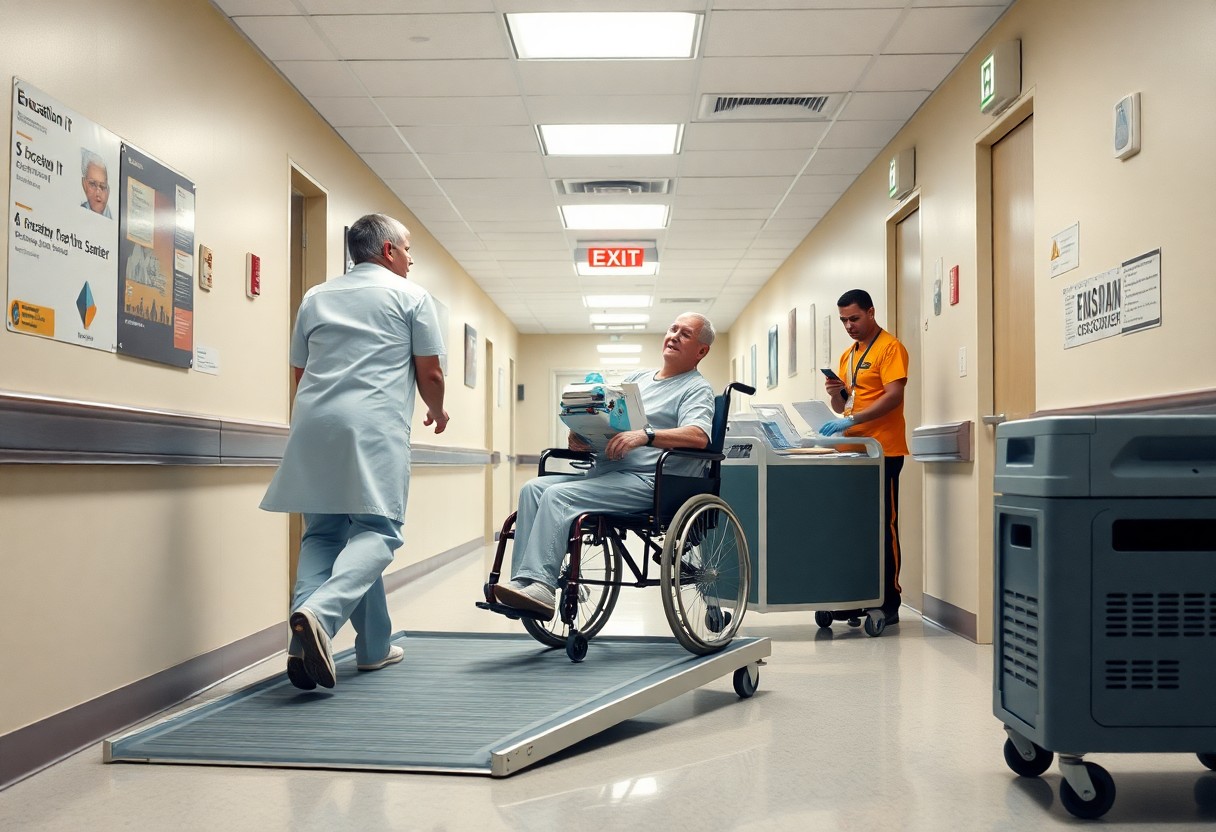
Procedures for Vulnerable Populations and Critical Assets
You must prioritize pre-registered lists and designated rescuers for those with limited mobility; keep critical assets labeled and mapped, and follow institutional steps in the Evacuation Procedure – Stanford Environmental Health & Safety for consistent action. Protect people and key systems first.
Assisting Individuals with Disabilities or Limited Mobility
Assign trained helpers so you can evacuate people with disabilities; keep wheeled chairs and evacuation chairs accessible, maintain clear egress, and update assistance lists regularly.
Protocols for Securing Hazardous Equipment and Data
Lock down and tag hazardous machinery so you can isolate risks quickly; disconnect power where safe, back up sensitive data, and seal chemicals in secured containment before exiting.
Document equipment shutdown steps so you can restart safely; store shutdown logs off-site, label emergency contacts, and train staff on data-encryption and physical locks to reduce the chance of catastrophic release or data loss.
Training, Drills, and Evaluation
You train staff on roles, run realistic drills, and evaluate performance to keep evacuation plans current. Emphasize clear roles, audible alarms, and mapped exits so you expose hazards, reduce confusion, and maintain readiness.
Frequency and Implementation of Evacuation Drills
Schedule drills quarterly and after major changes; vary scenarios so you test blocked exits and power loss. Record timing, participation, and outcomes to measure response and compliance.
Post-Drill Feedback and Plan Refinement
Collect immediate feedback from participants and observers, focusing on delays, communication failures, and unsafe actions; use measurable metrics to prioritize corrections and update procedures.
Review drill data in a structured debrief where you compare evacuation times, assembly accuracy, and communication logs. Use anonymous surveys to capture staff concerns and identify blocked routes, delayed alarms, or leadership lapses. Assign corrective actions with owners and deadlines. Update floor plans and procedures, retrain affected teams, and schedule targeted retests so you confirm fixes and demonstrate reduced evacuation time and improved accountability.

Final Words
You should review evacuation routes, practice exits, and follow alarms and signage during drills and actual events to exit safely, assist others when possible, and report to the designated assembly area for headcount and further instructions.
FAQ
Q: What key steps should employees follow during an emergency evacuation?
A: Employees must immediately stop work and leave personal belongings behind. When an alarm sounds, begin evacuation immediately and use the nearest marked exit; do not use elevators. Assist coworkers who need help only if it is safe to do so and summon professional assistance for those who cannot evacuate independently. Close doors when leaving rooms to slow smoke spread and avoid re-entering the building until emergency personnel declare it safe. Report to the designated assembly point and check in with your supervisor or evacuation warden for headcount.
Q: How should supervisors manage headcounts and accountability after evacuation?
A: Supervisors should maintain up-to-date personnel lists and assign evacuation wardens for each area before an emergency. Conduct an immediate headcount at the assembly point and record any missing persons; notify emergency responders and emergency coordinators if someone is unaccounted for. Use radios or mobile phones to report status while maintaining clear lines of communication with incident command. Keep a written log of actions taken during and after the evacuation for debriefing and investigation.
Q: How often should evacuation drills be conducted and how are employees with special needs accommodated?
A: Conduct evacuation drills at least annually, with higher frequency for high-risk areas, major process changes, or after changes to building layout. Train new employees within 30 days of hire and provide refresher training whenever procedures change. Develop Personal Emergency Evacuation Plans (PEEPs) for employees with mobility, sensory, or cognitive limitations and assign trained buddies or evacuation assistants. Equip stairwells and exit routes with evacuation chairs where needed and ensure alarms include visual and audible signals. Review and update accommodations after drills and incidents to address gaps.