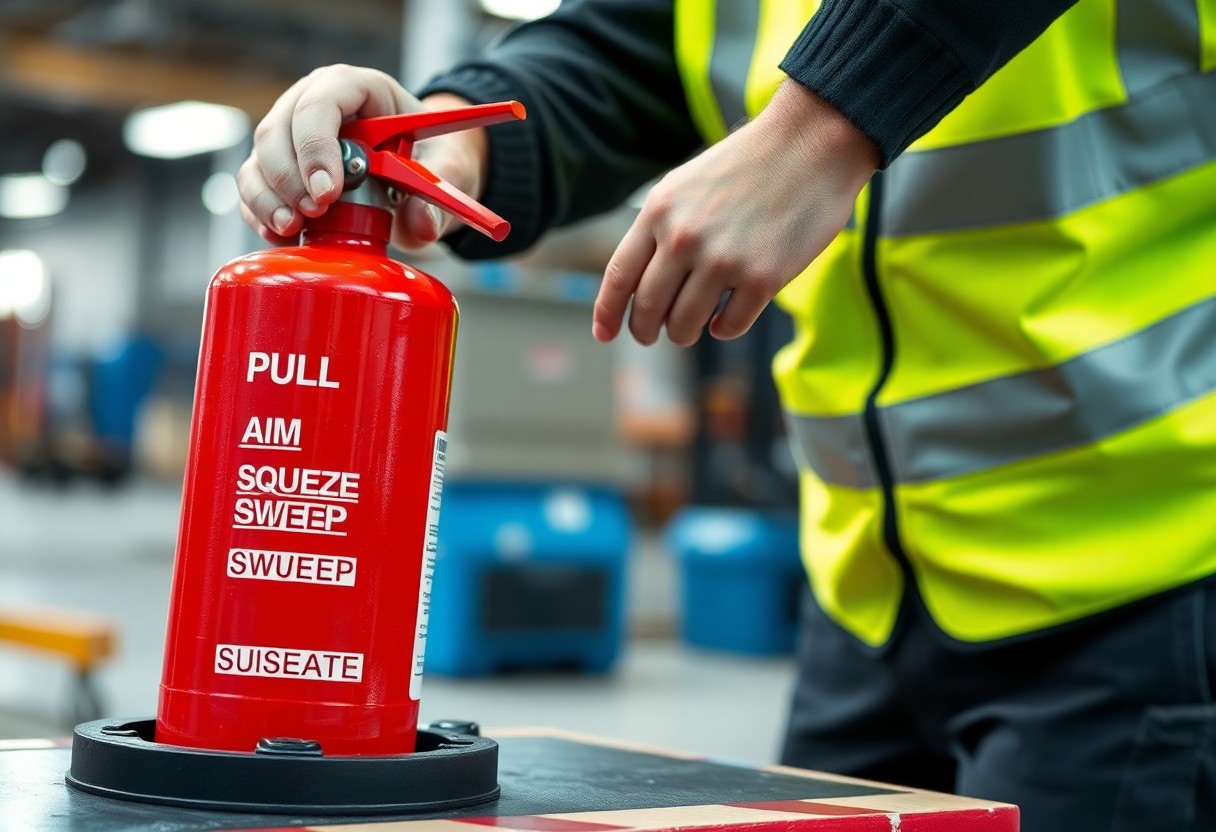
Safety brief explains how you use the PASS method to stop small fires; you learn to pull, aim, squeeze, sweep and avoid the rapid spread that makes fires deadly.
Key Takeaways:
- PASS mnemonic: Pull the pin, Aim low at the base, Squeeze the handle, Sweep side-to-side to extinguish the flame.
- Training covers fire classes and selecting the correct extinguisher for different fuel types (A, B, C, D, K) plus inspection and maintenance procedures.
- Practice stresses safe operation: keep a clear escape route, maintain recommended distance, and evacuate and call emergency services if the fire grows or conditions worsen.
Fire Classifications and Agent Compatibility
Fire classifications tell you which fuels are involved so you can select the correct extinguisher. Knowing Classes A, B, C, D, and K helps you avoid using the wrong agent that could make a fire more dangerous or cause electric shock or re-ignition.
Categorizing Hazards by Fuel Source (Classes A, B, C, D, and K)
Classes identify fuel types so you can assess risk quickly: Class A for combustibles, Class B for flammable liquids, Class C for energized electrical equipment, Class D for metals, and Class K for cooking oils and grease.
Matching Extinguishing Agents to Specific Fire Risks
Match agents precisely: water for Class A; foam, CO2, or dry chemical for Class B; non-conductive agents for Class C; specialized powders for Class D; and wet-chemical suppressants for Class K grease fires to prevent re-ignition.
Choose agents based on fuel, environment, and your training: never use water on Class B liquids or Class K grease since it can spread fires; use CO2 or dry chemical for energized Class C hazards only if you cannot de-energize equipment; call trained responders for Class D metal fires; and prefer wet-chemical or Class K-rated extinguishers in kitchens because they cool and saponify oils, reducing re-ignition risk.
Equipment Readiness and Inspection Standards
Check your extinguishers are physically intact, labeled, and stored for immediate use; document every inspection and tag units as serviceable or out of service to prevent accidental deployment of damaged equipment.
Monthly Visual Inspection Protocols and Pressure Verification
Inspect monthly for dents, corrosion, and proper seals; verify the gauge reads in the green and log any deviations so you remove undercharged or damaged units before they fail.
Ensuring Unobstructed Access and Proper Mounting Height
Position extinguishers where cabinets and equipment won’t block access, and keep walkways clear so you can reach units within seconds; mark routes and maintain unobstructed clearance to reduce response time.
Mounting should follow manufacturer and NFPA guidance: place extinguishers with the carrying handle no higher than 5 ft (1.5 m) above the floor for units 40 lb or less, and no higher than 3.5 ft (1.06 m) for heavier units; keep the bottom at least 4 in (10 cm) off the floor and allow a clear working space of about 3 ft (1 m) in front so you can operate safely.
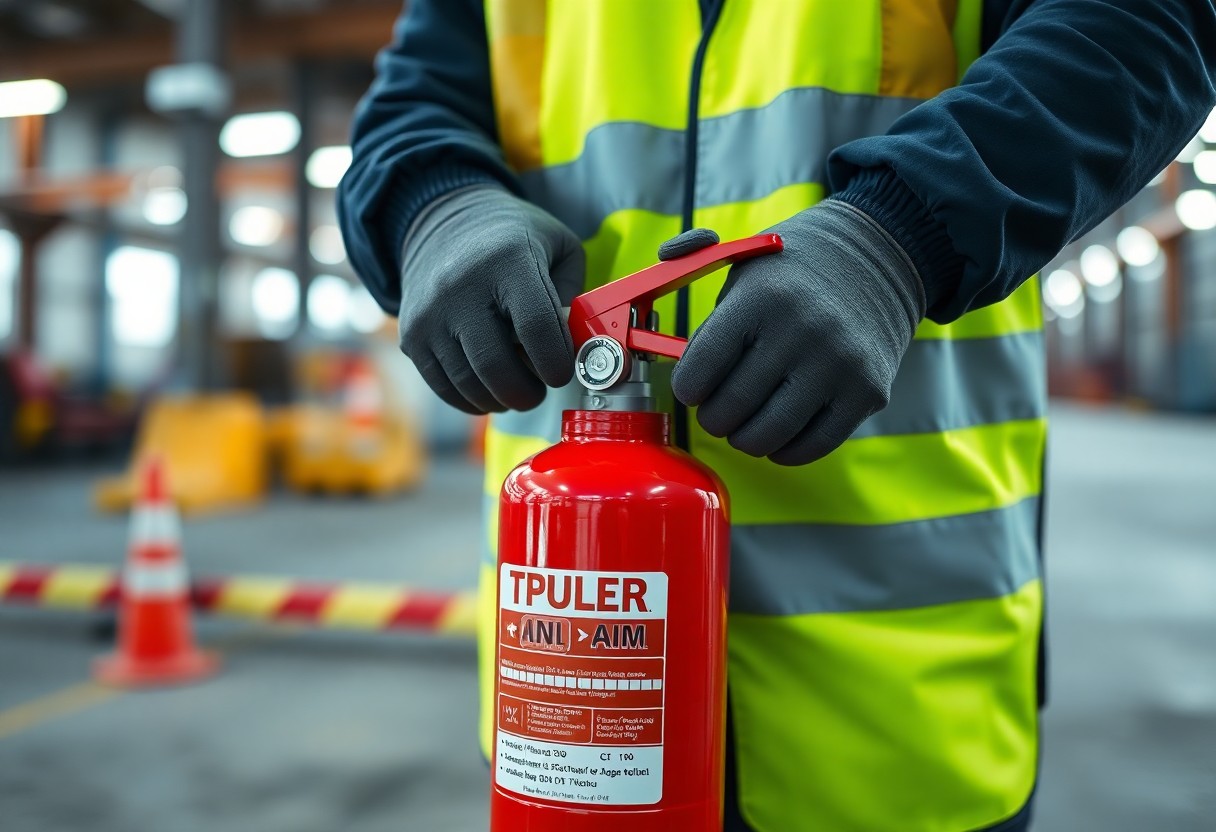
The PASS Method: Operational Procedures
Practice the PASS steps during drills so you can act quickly: Pull the pin, Aim at the fire’s base, Squeeze the handle, and Sweep side-to-side while maintaining an exit path and safe distance.
Executing the Pull, Aim, Squeeze, and Sweep Sequence
You pull the pin, aim low at the base, squeeze the lever with steady pressure, then sweep across the base until flames subside, watching for hot spots.
Tactical Positioning and Effective Discharge Distance
Maintain your position with a clear exit behind you, keeping 2-3 meters for most small fires; you must retreat if heat or smoke intensifies beyond safe limits.
Position yourself about 1.5-3 meters from the seat of a small fire depending on extinguisher type-dry chemical and CO2 have different effective ranges-angle the nozzle at the base, keep low to avoid smoke, and have a second person monitor for re-ignition; back away immediately if heat becomes unbearable.
Post-Incident Management and Documentation
Document the incident, actions taken, and extinguisher status so you can support investigations and insurance claims; keep clear records and photos for legal and safety review.
Mandatory Recharging and Service Requirements
Inspect discharged extinguishers immediately and tag them out of service; you must have them recharged or replaced by qualified technicians before returning to use.
Reporting Procedures and Safety Debriefing
Report every use to your supervisor and log details so you and others can learn; include location, time, extinguisher type, and any injuries or hazards.
Provide a formal report that includes cause assessment, operator names, extinguisher serial numbers, and photos so you create a clear audit trail. You should also lead a short safety debrief to discuss what went well, what failed, and immediate corrective actions, emphasizing fire containment and any medical responses. Keep records for regulatory compliance and future training.
Summing up
You master the PASS method so you can quickly assess, pull, aim, squeeze, and sweep, reduce fire spread, and protect people and property; regular drills maintain competence and ensure you act decisively and safely when incidents occur.
FAQ
Q: What does the PASS method stand for and how do I apply it correctly during a fire?
A: PASS stands for Pull, Aim, Squeeze, Sweep. Pull the pin to break the tamper seal and free the operating lever. Aim the nozzle or hose at the base of the fire, where the fuel source is located, not at the flames. Squeeze the handle slowly and firmly to discharge the extinguishing agent while keeping control of the nozzle. Sweep the nozzle in a controlled side-to-side motion across the base of the fire until the flames are extinguished, then watch the area for reflash. Keep a safe distance-typically 6 to 10 feet depending on extinguisher rating-and back away if the fire spreads or conditions worsen; call emergency services even if the fire appears out.
Q: When is it appropriate to use a portable fire extinguisher and when should I evacuate instead?
A: Use a portable extinguisher only on small, contained fires that are confined to a limited area and not spreading rapidly. Confirm that the extinguisher type matches the class of fire (A, B, C, D, K) before attempting to fight it. Maintain a clear escape route with your back to the exit so you can leave quickly if needed. Evacuate immediately if smoke, heat, or flames increase, if the fire produces toxic fumes, or if you are unsure which extinguisher to use. After any attempt to extinguish a fire, notify the fire department so they can verify the scene is safe and inspect for hidden hotspots.
Q: What inspection, maintenance, and training practices should workplaces follow for extinguisher safety?
A: Conduct monthly visual inspections to verify extinguishers are present, unobstructed, properly mounted, and show full charge on the pressure gauge. Arrange annual maintenance by a qualified service technician and perform hydrostatic testing as required by manufacturer guidelines and local codes. Provide hands-on training that includes practice with the PASS method, size-up of small fires, extinguisher selection by class, and decision-making about when to evacuate. Keep records of inspections, maintenance, and employee training sessions. Tag and remove from service any extinguisher used in a fire until it has been serviced or replaced, and incorporate extinguisher drills into broader emergency response training.