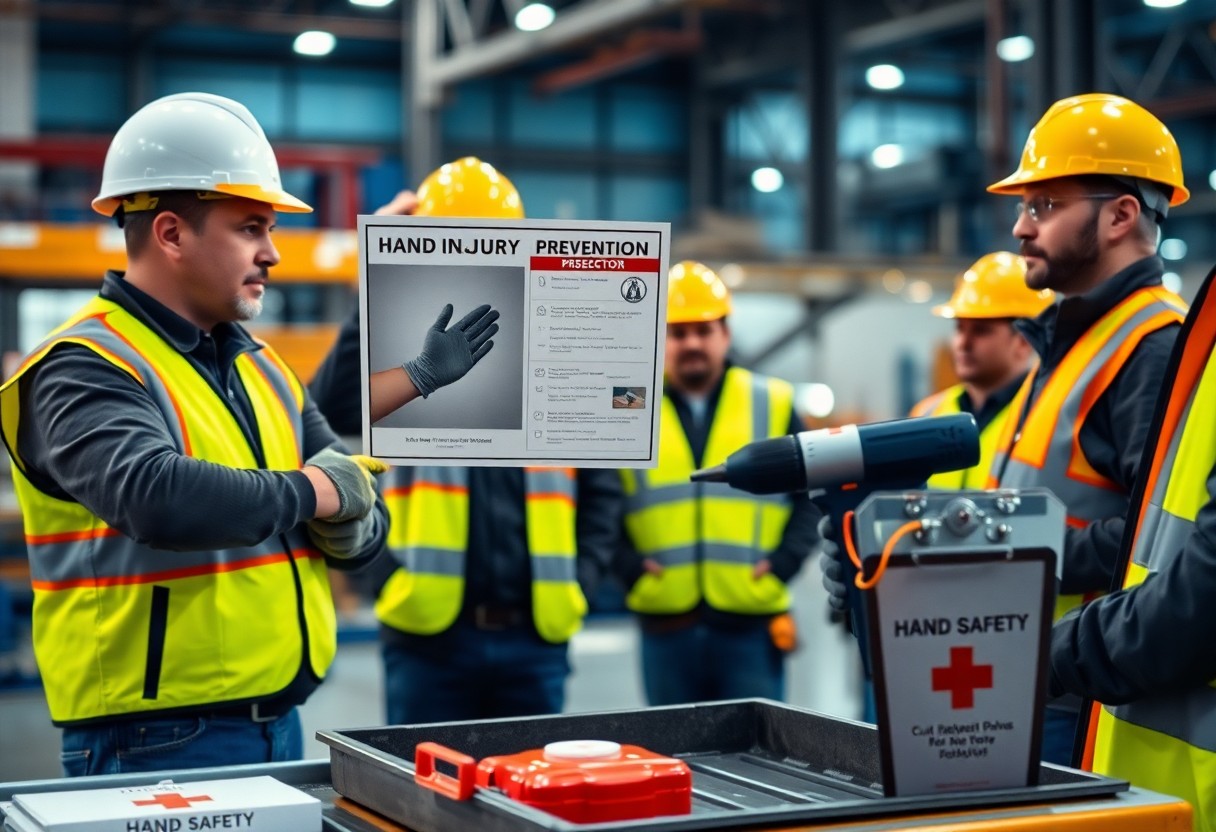
Many workplace hand injuries occur from cuts, crushes and amputations; you must recognize hazards, use proper gloves and follow safe procedures to reduce risk.
Key Takeaways:
- Use task-appropriate gloves and PPE to protect hands from cuts, punctures, chemicals, and heat; match glove type to the hazard and replace damaged gloves promptly.
- Follow safe work procedures, keep hands clear of pinch points and moving parts, and apply lockout/tagout before servicing or adjusting equipment.
- Conduct regular safety talks and hands-on training, inspect tools and work areas for hazards, and report near misses to prevent future injuries.
Identification of Workplace Hand Hazards
You must scan work areas for moving parts, exposed blades, hot surfaces, and pinch points; mark any high-risk zones and control access with guards, signage, and procedures.
Recognizing Pinch Points and Crush Zones
Inspect rotating shafts, conveyor nip points, and areas where materials converge; lockout, guarding, and safe distances reduce crush and amputation risks.
Assessing Risks from Sharp Edges and Abrasive Surfaces
Examine blades, burrs, and worn tooling for jagged edges; document locations, require cut-resistant PPE, and plan deburring or edge guards to lower laceration exposure.
Wear gloves rated for the hazard, inspect them before each shift, and replace damaged pairs immediately; combine PPE with machine guards and scheduled deburring to remove persistent laceration sources.
Selection and Use of Personal Protective Equipment (PPE)
PPE selection must match task hazards; you should choose gloves with appropriate materials, correct fit, and maintenance to prevent slips and cuts. Always remove damaged gloves and follow donning protocols to reduce hand-injury risk.
Technical Specifications and Cut-Resistance Ratings
Know the ANSI/EN cut ratings and match them to blade exposure; higher numbers mean greater protection. For high-risk tasks, you should select gloves with verified cut-resistance and adequate abrasion ratings.
Protocols for Inspection and Replacement
Inspect gloves before use for tears, punctures, chemical degradation, or stretched knit; if you find defects, replace immediately and log the issue to prevent recurrence.
Establish a routine inspection schedule, record wear patterns, set clear replacement thresholds, and train your team to report damage. Discard any compromised PPE even for minor flaws, because continued use multiplies the chance of a severe hand injury.
Safety Protocols for Machinery and Power Tools
Your adherence to protocols around machinery and power tools prevents hand injuries; you must follow lockout/tagout, wear appropriate PPE, and perform pre-use checks to avoid cuts, crushes, and amputations.
Proper Use of Guards and Safety Interlocks
Guards must stay in place and safety interlocks should never be overridden; you inspect mounts and fasteners before use to prevent contact with blades or rotating parts.
Ergonomic Handling and Vibration Mitigation
Position tools and materials so you keep wrists neutral, use secure grips, and avoid awkward reaches; maintain tool balance and rotate tasks to reduce repetitive strain.
Alternate tasks every 30-60 minutes and you should use anti-vibration gloves, vibration-damping handles, and properly maintained, balanced tools; these measures cut exposure to hand-arm vibration syndrome and lower long-term nerve and tendon injuries.
Administrative Controls and Workplace Organization
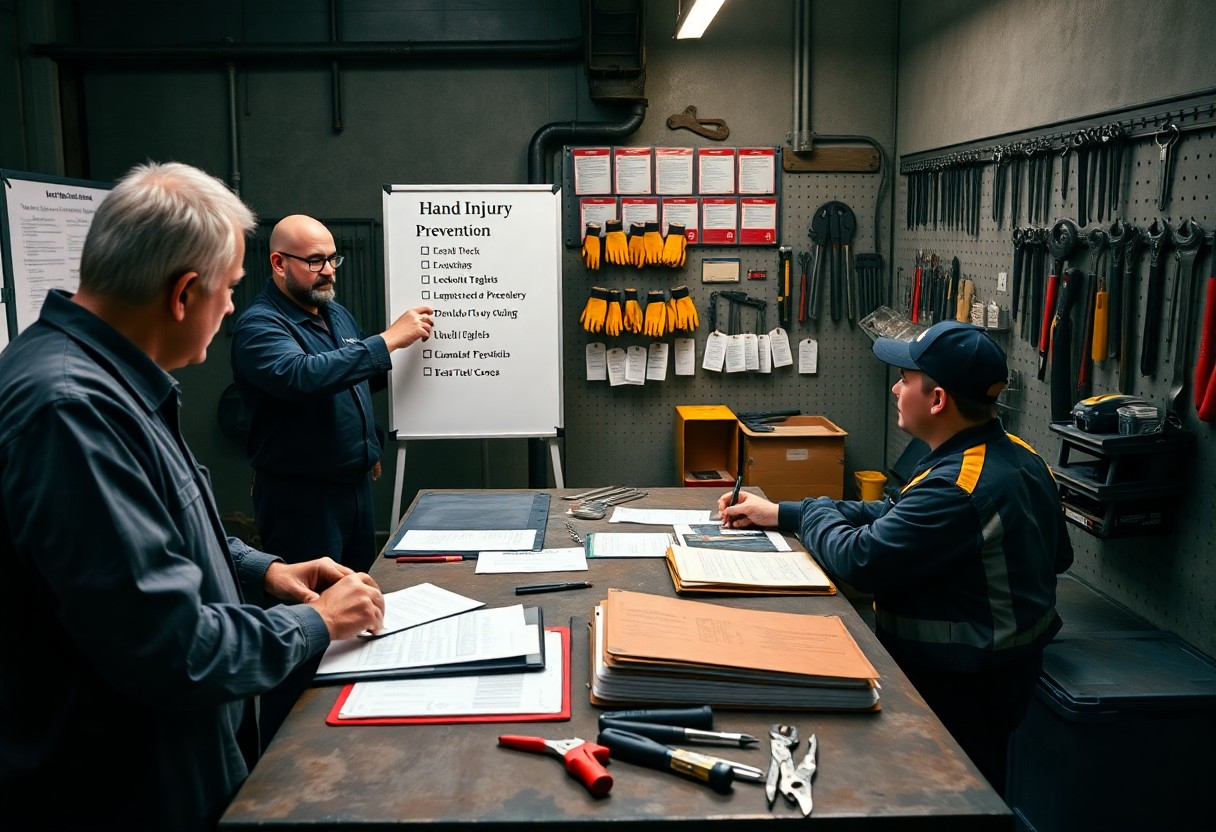
Organize your workspace to reduce hand hazards: enforce procedures, clear pathways, and designated tool stations. Use signage and training to lower contact risk; consult the Hand Safety and Injury Prevention Safety Talk for practical tips and emphasize glove selection and hazard marking.
Lockout/Tagout (LOTO) Compliance for Hand Safety
Follow LOTO procedures every time you service equipment: verify isolation, apply lockout/tagout devices, and test for stored energy. Single-step lapses cause severe hand injuries, so you must never bypass protocols and must keep authorized control over re-energizing.
Housekeeping Practices to Reduce Accidental Contact
Maintain tidy workstations by returning tools, covering moving parts, and removing debris to prevent accidental hand contact. Mark hot or sharp surfaces, keep floors dry, and enforce daily checks so you avoid unexpected exposures and injuries.
Schedule regular inspections and assign daily cleanup duties so you catch hazards before they harm your hands. Store blades and powered tools in locked, labeled areas, and clean spills immediately to prevent chemical burns or slips. Use checklists, repair damaged guards promptly, and require PPE near pinch points or exposed moving parts to minimize the risk of severe hand trauma.
Emergency Response and Incident Reporting
When an injury occurs you must secure the scene, provide immediate care, notify supervisors, and complete incident reports so hazards are contained and follow-up begins.
Immediate First Aid for Lacerations and Impact Injuries
Apply pressure to stop heavy bleeding, immobilize impacts, clean wounds, and seek medical help if you observe numbness, deformity, or persistent bleeding.
Post-Incident Investigation and Root Cause Analysis
Investigations should document what happened, collect witness statements, preserve evidence, and identify systemic failures so you can prevent similar hand injuries.
Collect evidence immediately: photos, timestamps, machine settings, tool condition, and PPE status. You should interview witnesses, map the sequence of events, and trace latent causes like missing guards or inadequate training. Then recommend engineering controls, procedural changes, and tracked corrective actions to lower exposure and reduce risks of severe outcomes such as amputation.
Summing up
As a reminder you must follow safety talks guidance: wear appropriate gloves, inspect tools, keep hands clear of pinch points, use guards and lockout/tagout, and stop work to report hazards to protect your hands.
FAQ
Q: What are the most common causes of hand injuries and how can safety talks help prevent them?
A: Common causes include cuts, lacerations, punctures, crush injuries, amputations, thermal burns, chemical exposures, and repetitive strain from forceful or awkward motions. Safety talks can raise awareness of these hazards, teach hazard recognition and control measures, and reinforce safe work practices such as machine guarding, lockout/tagout for maintenance, correct tool use, keeping hands clear of pinch points, and maintaining good housekeeping. Emphasize proper use of personal protective equipment and safe work methods through demonstrations and real-life examples. Involve workers in hazard identification and job hazard analysis so controls match actual tasks and conditions.
Q: What types of gloves should workers use and how do I choose the right glove for a task?
A: Glove selection depends on the specific hazard: cut-resistant gloves (rated by ANSI/ISEA or EN levels) for sharp edges, puncture-resistant for handling wire or sheet metal, chemical-resistant materials like nitrile, neoprene or butyl for solvent or corrosive exposures, and heat-resistant gloves for thermal tasks. Fit, dexterity, and material compatibility with the chemicals or temperatures encountered must be assessed; ill-fitting gloves reduce safety and increase risk. Inspect gloves before use, replace them when torn or contaminated, and avoid wearing gloves around unguarded rotating machinery; use engineering controls and guarding instead. Document glove standards in procedures and include selection criteria in toolbox talks.
Q: How should I structure an effective safety talk on hand injury prevention and measure its effectiveness?
A: Start by citing recent incidents, near misses, or site-specific data to make the topic relevant, then outline common hazards and controls for the tasks at hand. Use demonstrations of correct PPE use, tool handling techniques, and machine guarding, and provide hands-on practice or role play so workers can apply safe methods. Assign follow-up actions such as hazard correction, supervisor observations, and refresher sessions; track results with metrics like hand-injury rate, near-miss reports, and completion of corrective actions. Include first-aid steps for common hand injuries, reporting procedures for incidents, and clear escalation criteria for medical treatment to ensure timely care and accurate records.