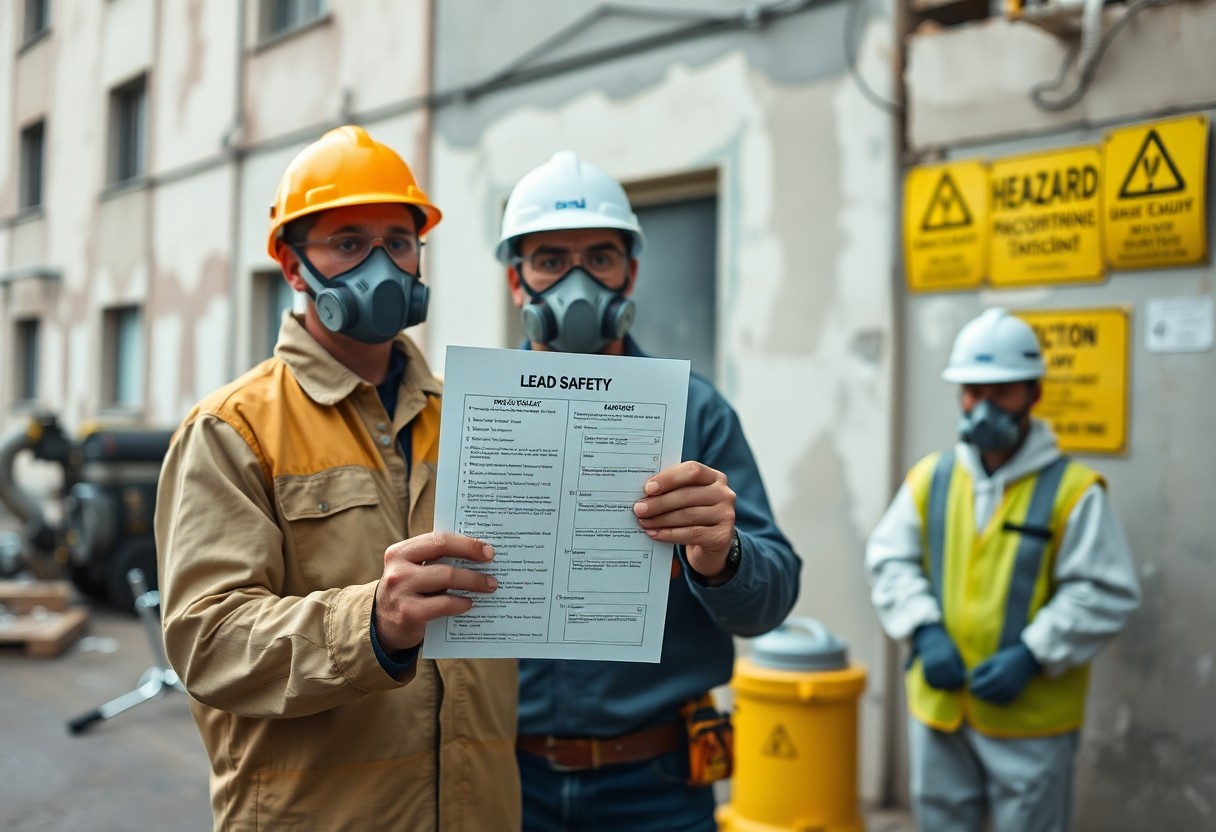
Just be aware that on construction sites lead dust and fumes cause irreversible neurological damage, and pregnant workers and children face the highest risk; you must use respirators, HEPA vacuums, and wet methods to reduce exposure.
Key Takeaways:
- Lead exposure causes nervous system damage, reproductive harm, kidney and cardiovascular problems; symptoms can be subtle and develop over time.
- Common construction tasks that generate lead dust and fumes include demolition, sanding, grinding, welding, cutting, abrasive blasting, and disturbance of lead-based paint or lead-containing materials.
- OSHA 1926.62 sets an action level of 30 µg/m3 and a PEL of 50 µg/m3; implement engineering controls (local exhaust, wet methods), HEPA vacuums, proper PPE and respirators, hygiene practices, air monitoring, worker training, and medical surveillance with removal at elevated blood lead levels (50 µg/dL) per the standard.
Identifying Lead Hazards on the Jobsite
Jobsite inspections reveal hidden sources-you must watch for peeling or chalking paint, contaminated soil, and lead dust from prior work; use testing and bulk sampling to confirm hazards and set controls.
Legacy Paints and Industrial Coatings
Older structures often contain lead-based paints; you should presume painted surfaces made before 1978 are suspect. Test layers before power sanding, and prioritize containment, wet methods, and HEPA cleanup to limit airborne lead exposure.
High-Risk Demolition and Renovation Activities
Demolition and renovation tasks like abrasive blasting, torch-cutting, or dry sanding generate high airborne lead; you must isolate zones, use local exhaust, and require respiratory protection to prevent worker exposure.
When you plan high-risk demolition, conduct pre-demolition lead testing and establish exclusion zones with negative pressure and HEPA-filtered ventilation. Provide fit-tested respirators, disposable coveralls, and on-site decontamination; stop work if you see chipped, pulverized, or intensely dusty materials and implement air monitoring and medical surveillance until exposures are controlled.
Regulatory Framework and OSHA Standards
Regulations require you to follow OSHA’s Lead in Construction standard; review official guidance at Lead in Construction guidance. You must comply with exposure limits, training, monitoring, and medical surveillance to reduce risk and legal penalties.
Permissible Exposure Limits (PEL) and Action Levels
Limits require you to keep air lead below a PEL of 50 µg/m³ (8‑hr TWA) and act when levels reach the 30 µg/m³ action level; prompt monitoring and controls protect your crew’s health.
Employer Obligations for Compliance
You must implement exposure monitoring, training, respiratory protection, medical surveillance, and written procedures; enforce hygiene and housekeeping to prevent hazardous lead take‑home exposure.
Compliance requires you to conduct exposure assessments, designate regulated areas, provide appropriate respirators and PPE, and supply hygiene facilities (change rooms, showers) to prevent take‑home contamination. You must maintain a written exposure control plan, offer medical surveillance with blood lead testing, implement medical removal protection when needed, and retain training and medical records per OSHA timelines.
Personal Protective Equipment (PPE) Protocols
PPE must be selected and enforced so you use NIOSH-approved respirators, gloves, and disposable coveralls to reduce lead inhalation and ingestion risks.
Respiratory Protection Selection and Fit Testing
Respirators must fit you properly and be NIOSH-certified; perform quantitative or qualitative fit testing and follow filter change schedules to prevent lead exposure.
Protective Clothing and On-site Decontamination
Coveralls and disposable boot covers should be worn and removed carefully so you avoid carrying lead dust offsite, with on-site laundering or safe disposal required.
After shifts you should remove contaminated clothing before entering clean zones and place items in sealed bags for laundering or disposal; treat soaked garments as hazardous waste. Use on-site decontamination stations equipped with HEPA vacuums, handwashing sinks, and designated changing areas so you limit cross-contamination. Ensure documented procedures for donning, doffing, and waste handling are enforced and you receive training on emergency spills.
Medical Surveillance and Training
Medical surveillance requires you to attend periodic medical exams, have exposure records kept, and receive employer-provided training so you can detect early symptoms and prevent permanent harm.
Biological Monitoring and Blood Lead Level Testing
Blood testing lets you track blood lead levels and triggers medical removal or work restrictions when thresholds are exceeded, protecting your long-term health.
Hazard Communication and Worker Education
Hazard communication ensures your access to labels, Safety Data Sheets, and site-specific training so you can identify lead tasks, required PPE, and exposure limits.
Training must be both initial and annual, delivered in a language you understand, covering health effects, proper PPE, hygiene (including handwashing and no eating or smoking in lead areas), decontamination, and how to read SDS and labels; supervisors should document attendance, give hands-on demonstrations, and enforce a written exposure control plan so you can minimize contamination and stay medically protected.
Final Words
The guidance here helps you identify lead hazards, use proper controls and PPE, follow monitoring and training, and protect workers’ health on every jobsite; apply these practices consistently to reduce exposure and legal risk.
FAQ
Q: What are the health risks and early signs of lead exposure for construction workers?
A: Lead exposure damages the nervous system, blood-forming system, kidneys, and reproductive organs. Early signs include headaches, fatigue, irritability, abdominal pain, constipation, and sleep disturbances; prolonged or high exposures can cause memory and concentration problems, peripheral neuropathy (numbness or tingling in hands and feet), anemia, kidney dysfunction, and impaired fertility. Pregnant workers face increased risk because lead crosses the placenta and can harm the fetus, causing developmental delays and low birth weight. Many workers have no obvious symptoms at low or moderate exposures, so periodic blood lead testing is the only reliable way to detect elevated body burden before serious harm occurs.
Q: What controls and work practices reduce lead exposure on construction sites?
A: Use the hierarchy of controls: eliminate or substitute lead-containing materials where feasible and apply engineering controls such as local exhaust ventilation, HEPA-filtered vacuums, and wet methods to suppress dust during demolition, cutting, grinding, or sanding. Isolate work areas with containment barriers and negative pressure where airborne lead dust or fumes can spread. Provide respiratory protection when controls cannot keep airborne lead below the OSHA action level of 30 µg/m3 and the PEL of 50 µg/m3 (8-hour TWA); ensure respirators are selected to the hazard, fit-tested annually, and used with a written program. Implement strict work practices and hygiene: prohibit eating, drinking, and smoking in work zones; set up clean change and shower facilities; require disposable or launderable protective clothing; and use gloves and impermeable footwear. Schedule regular housekeeping with HEPA vacuums and wet wiping rather than dry sweeping; segregate and label lead waste and follow local disposal rules. Conduct air monitoring and medical surveillance, post warning signs, and keep exposure and training records.
Q: What should a safety talk on lead exposure include, and how often should training and monitoring occur?
A: A safety talk should identify common job tasks that generate lead (paint removal, demolition, cutting, welding on painted steel, salvage), explain health effects and routes of exposure, describe the specific controls being used on the site, demonstrate proper respirator use and donning/doffing of protective clothing, and review hygiene, cleanup, emergency procedures, and waste handling. Deliver initial training before assignment to lead jobs, provide refresher training at least annually, and repeat training whenever work tasks, controls, or regulations change. Offer medical surveillance and blood lead testing to workers exposed at or above the action level for 30 or more days per year, and follow applicable regulations for removal from exposure when blood lead levels reach regulatory thresholds (for example, medical removal programs typically activate at a blood lead level of 50 µg/dL with return-to-work criteria based on lower consecutive tests). Conduct air monitoring when new lead tasks start, after changes that might affect exposures, and periodically to verify control effectiveness. Document trainings, monitoring results, medical exams, and corrective actions in site records.