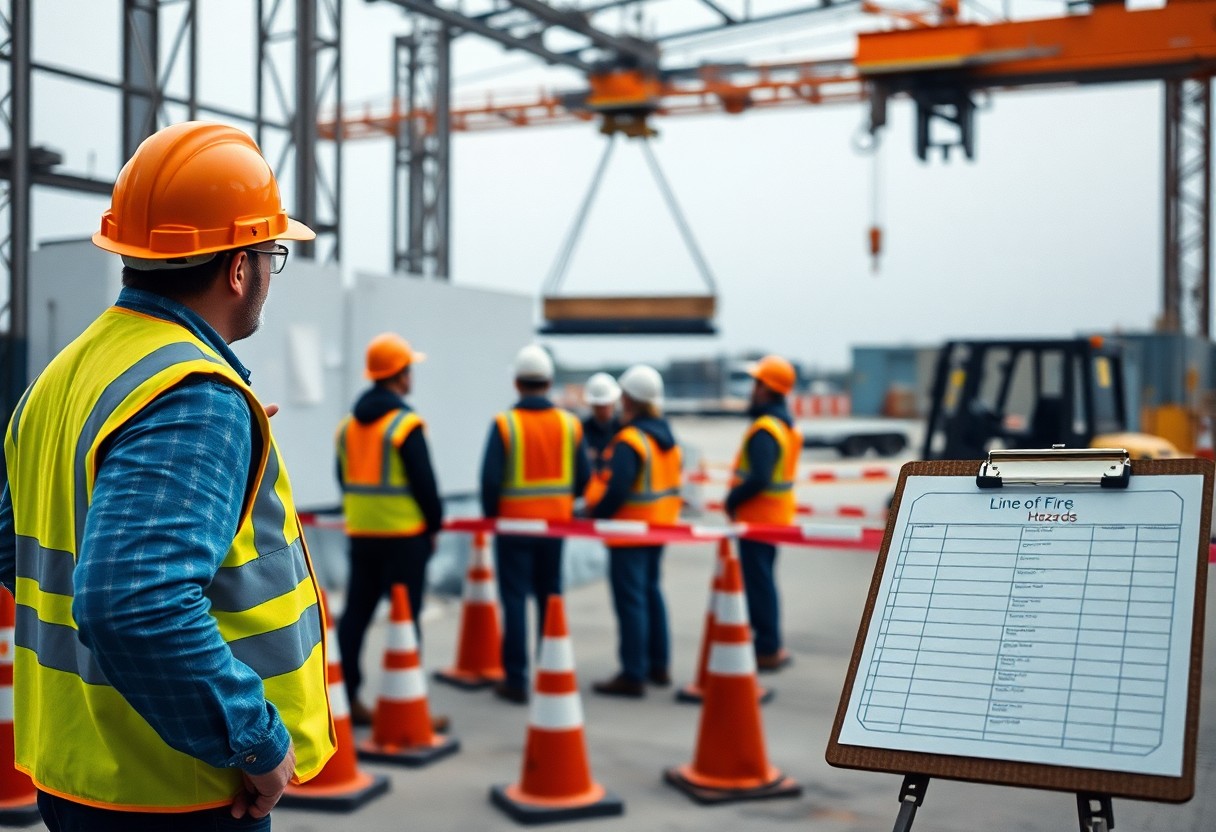
You must identify and control line-of-fire hazards that can cause serious injury or fatality, such as being struck by moving equipment, caught between objects, or hit by falling materials; use safe procedures, clear communication, and proper PPE to prevent incidents.
Key Takeaways:
- Line of fire hazards occur when workers are positioned in the path of moving tools, equipment, loads, or energy releases; identify situations such as swinging loads, rolling equipment, pinch points, falling objects, and pressurized releases before work begins.
- Control hazards by removing the exposure or creating physical separation: establish exclusion zones, use barriers and taglines, employ lockout/tagout and machine guarding, and assign trained spotters for moving loads.
- Workers must stay out of the line of fire, follow pre-task planning and communication procedures, wear appropriate PPE, and stop work if conditions change or controls fail.
Understanding Line of Fire Mechanics
Mechanics reveal how stored force, motion, and sudden releases create line-of-fire threats, so you must map energy sources, mark safe zones, and control exposures before work starts; prioritize removing people from potential impact paths.
Defining Stored Energy and Tension Release
Tension in springs, hydraulics, and compressed systems can release unexpectedly; you must lock out, bleed, and block sources of stored energy, then verify zero energy before touching components.
Identifying Moving Parts and Rotating Equipment
Rotating shafts, belts, and gears can entangle or eject parts; you must guard, isolate, and stop motion while keeping clear of pinch and strike zones.
Guards and interlocks reduce your exposure, but you must verify they are intact and never bypass them; inspect rotating equipment, control residual motion, secure loose items, and wear appropriate PPE to prevent entanglement, laceration, or being struck by ejected components.
Gravity Hazards and Falling Objects
Falling tools, materials, or components can hit without warning; you must establish overhead exclusion zones, tether tools, and avoid standing under loads to prevent impact and crush injuries.
Rigging failures and unsecured loads increase your risk, so you must use rated slings, confirm load paths, maintain edge protection, and inspect anchor points; plan lift routes, control pedestrian access, and require hard hats to reduce the chance of serious head and torso injuries.
High-Risk Operational Scenarios
Operations that involve moving parts, vehicles, or suspended loads put you closer to the line of fire; maintain situational awareness, controls, and clear communication to avoid strikes, crushes, or entanglement.
Working Around Mobile Equipment and Vehicles
Vehicles present blind zones and moving hazards, so you must keep eye contact with operators, wear high-visibility gear, and establish positive communication before entering travel paths.
Hand and Power Tool Safety Protocols
Tools require correct guards, grounded equipment, inspected cords, and strict adherence to lockout/tagout so you avoid cuts, shocks, and unexpected starts.
Inspect tools before each use, replace damaged guards, use correct PPE, and follow manufacturer torque and speed limits so you reduce kickback and fragment hazards.
Risks Associated with Suspended Loads
Loads suspended overhead create crush and impact hazards; you must stay out of fall zones, obey taglines, and verify rigging rated capacity before moving any suspended load.
Confirm slings, hooks, and hardware are inspected, tag limits are legible, and lifting plans are communicated so you prevent sudden drops and equipment failure.
Hazard Identification and Risk Assessment
Assess the worksite for line-of-fire dangers before you begin, focusing on moving equipment, suspended loads, and pinch points. Use task-based checklists to rank risk and assign controls so you and your team avoid serious injury from unexpected contact.
Conducting Pre-Task Hazard Analyses
Perform a brief pre-task analysis where you identify hazards, decide controls, and confirm PPE. Involve your crew, document findings, and apply engineering or administrative controls to remove or reduce the highest risks before work begins.
Recognizing Pinch Points and Crush Zones
Spot potential pinch points and crush zones around moving parts, between loads, and near equipment pivots. Keep clear passages, set exclusion zones, and communicate to ensure you never place hands or feet where they can be trapped.
Examine machinery and rigging paths for hidden pinch hazards, such as rotating shafts, closable gaps, and shifting loads that can trap limbs. You should enforce machine guarding, follow lockout/tagout during adjustments, and mark high-risk zones so everyone avoids exposure and reports near-misses.
Identifying Blind Spots in the Work Area
Scan for blind spots caused by equipment, structures, or load obstructions that hide you from operators. Use spotters, mirrors, and radio contact so you avoid unexpected contact with moving equipment while working near traffic paths.
Use layered controls: place trained spotters, mount convex mirrors or cameras, and require high-visibility clothing in low-visibility zones. You should designate clear pedestrian routes, enable audible alarms on reversing vehicles, and rehearse communication signals so everyone acts quickly when visibility is limited.
Implementing Engineering and Administrative Controls
Implementing engineering and administrative controls reduces line-of-fire risks by isolating hazards and controlling worker access. You must prioritize fixed guards, safer machine design, clear procedures and scheduled training to lower incidents. Combine controls to protect workers from moving parts and struck-by hazards.
Physical Guarding and Safety Barriers
Barriers and guards should block contact points so you cannot reach moving parts. Install interlocked guards, non-removable screens, and raised barriers; verify clearances and signage during inspections to prevent pinch, crush, or impact injuries.
Lock-out Tag-out (LOTO) Procedures
Lock-out Tag-out (LOTO) procedures force you to de-energize equipment and control stored energy before work. Use written permits, authorized locks, and verified zero-energy checks to eliminate unexpected startups and rescue scenarios.
Procedure plans must assign responsibilities, document each isolation step, and require verification by another trained person. You should physically lock energy sources, bleed stored pressure, and block mechanical motion; tagging alone is insufficient. Conduct regular audits, train affected employees, and maintain logs so you can demonstrate compliance and prevent catastrophic energizations.
Establishing Exclusion Zones and Spotter Protocols
Zones should be clearly marked and enforced so you stay out of high-risk areas where equipment moves or loads swing. Use flagging, barriers, and access controls plus radio or hand signals to prevent accidental entries.
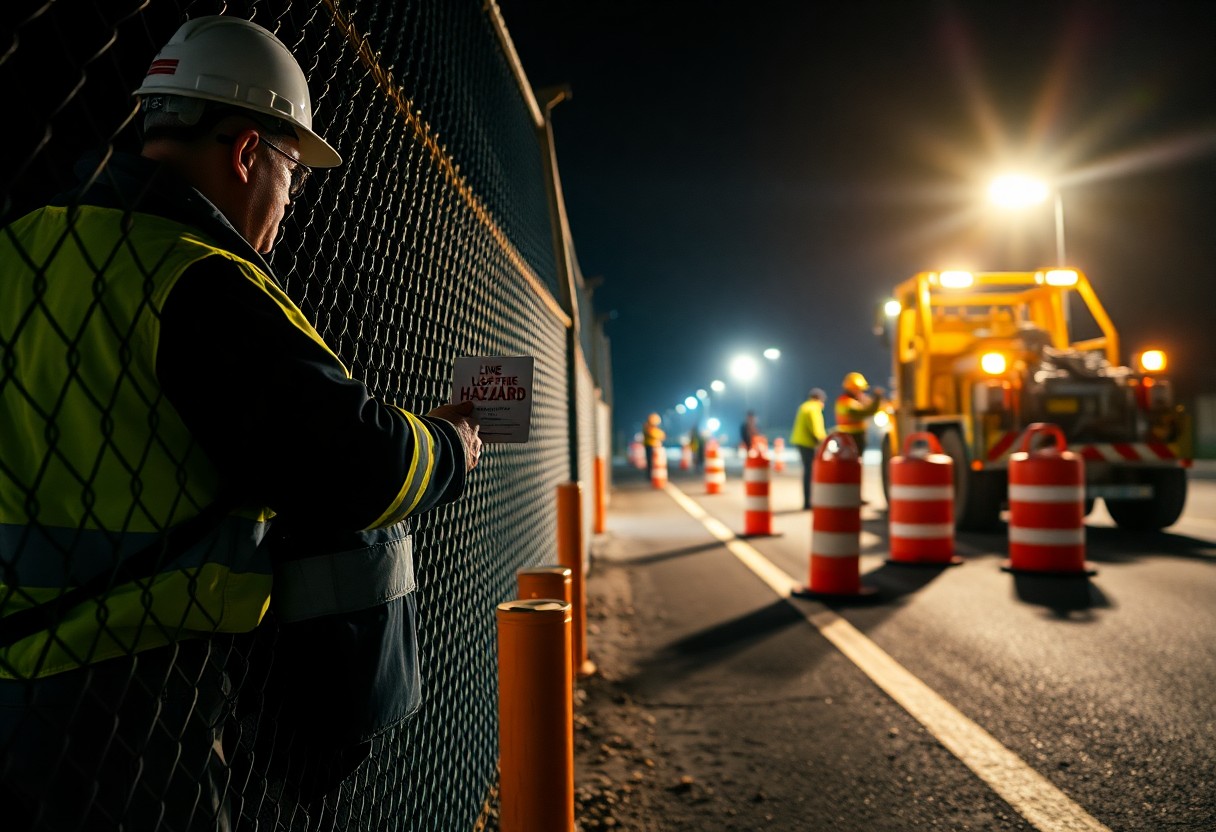
Spotters protect you by maintaining line-of-sight and clear communication during lifts, transits, or blind maneuvers; designate trained spotters with authority to stop work. You must follow written protocols for signals, distance limits, and emergency clearance, require high-visibility apparel, and hold pre-shift briefings so the team avoids being in the line of fire during critical moves.
Training and Communication
Train your crew with short drills and clear briefings so you can recognize moving equipment, maintain exclusion zones, and use stop work authority to prevent the line of fire.
Essential Elements of a Safety Toolbox Talk
Use brief toolbox talks to cover hazard recognition, correct PPE, exclusion zones, hand signals, and near-miss reporting so your team stays alert to line-of-fire dangers.
Incident Reporting and Near-Miss Documentation
Discuss your reporting process: immediate notification, concise forms, and preserving scene details so investigators capture root causes of near-misses and actual events involving swinging loads or equipment strikes.
Document every near-miss within your specified timeframe, include witness names, photos, and sequence of actions, and ensure confidentiality to encourage reporting while enabling prompt corrective steps.
Post-Incident Analysis and Corrective Actions
Analyze incidents with the crew, map contributing factors, test control effectiveness, and create assigned corrective actions to remove the line of fire exposure rather than simply papering over risks.
Implement corrective actions promptly, verify engineering or administrative controls, schedule follow-up audits, and track closure so you can confirm the hazard is eliminated and the work area is safer.
Summing up
Following this, you must stay aware of moving parts, pinch points, and swinging loads, stop unsafe actions, use clear communication and proper PPE, and keep escape paths clear to prevent line-of-fire incidents; consistent briefings and immediate corrective actions protect you and your team.
FAQ
Q: What are line of fire hazards and what sorts of incidents do they cause?
A: Line of fire hazards occur when a worker is positioned in the path of energy, motion, material, or equipment that can cause harm. Common examples include being struck by a swinging or moving load, caught between moving parts or pinch points, struck by a vehicle or mobile equipment, crushed by collapsing materials, and injured by sudden releases of stored energy such as pressurized lines or unexpected machine start-up. Consequences range from lacerations and fractures to amputations and fatalities, along with equipment damage and near-miss events that indicate systemic risk.
Q: How should a safety talk identify line of fire hazards on a specific job or worksite?
A: Begin the safety talk with a brief description of the task and ask workers to name potential line of fire exposures they see or have experienced. Use a simple job hazard analysis or checklist to walk through task steps and identify where motion, suspended loads, pinch points, vehicle routes, and stored energy are present. Review recent incident and near-miss reports for similar tasks, inspect the work area for confined or restricted escape routes, confirm swing and drop zones for cranes and hoists, and verify machine guarding and interlocks. Assign a spotter or competent observer for activities with limited visibility and discuss clear hand signals or radio commands for moving loads or equipment.
Q: What controls and specific safe work practices reduce line of fire incidents and what should a short toolbox talk include?
A: Apply the hierarchy of controls starting with elimination or substitution when possible, then engineering controls such as physical barriers, guards, automated restraints, interlocks, and positive stops for moving equipment. Use administrative controls including exclusion zones, designated walkways, traffic management plans, permit-to-work procedures, pre-shift inspections, and clear communications for crane lifts or vehicle movements. Implement lockout/tagout for energy isolation, use tag lines and landing zones for suspended loads, and enforce stop-work authority for unsafe conditions. Provide appropriate PPE such as hard hats, high-visibility clothing, and cut-resistant gloves as a final layer. A five-minute toolbox talk should state the specific hazard, show where the line of fire exists, list the controls in place, assign responsibilities (spotter, signal person, competent operator), review emergency steps and contacts, and secure verbal commitments from crew members to follow the controls before work begins.