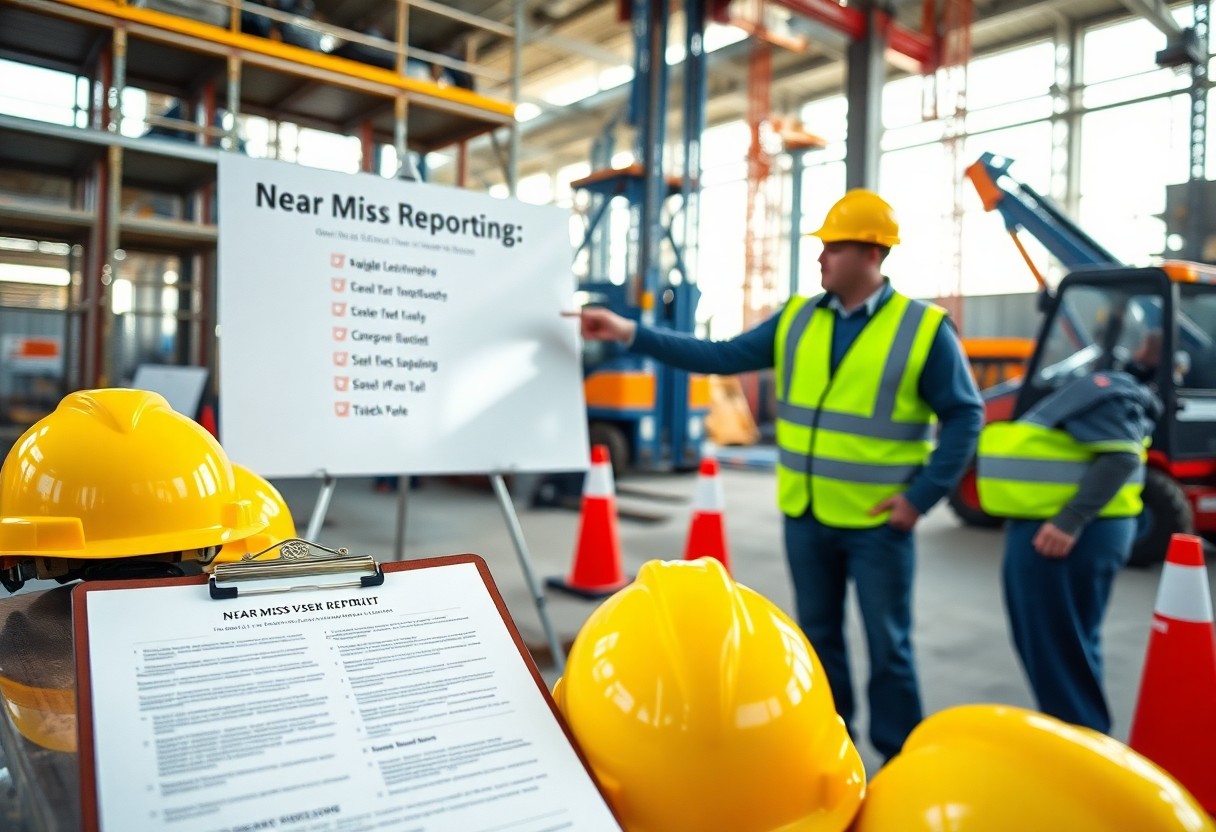
There’s a strict reporting workflow you must follow to log near misses, analyze causes, and implement controls that prevent injuries, lower risk, and create safer work practices.
Key Takeaways:
- Near-miss reporting uncovers hazards before they cause injuries and helps prioritize corrective actions.
- Non-punitive, easy-to-use reporting systems and anonymous options increase employee participation and report frequency.
- Systematic analysis of reports yields targeted prevention measures, training topics, and engineering controls while closing the feedback loop.
Defining the Near Miss in Industrial Safety
A near miss is an unplanned event that did not cause injury or damage but had clear potential to do so, and you should treat it as a warning to prevent recurrence; reporting and analysis turn that warning into actionable prevention.
Distinguishing Near Misses from Recordable Incidents
When a hazard actually causes injury or property loss, it becomes a recordable incident; you should still log near misses because they reveal conditions that could escalate into recordables if you ignore them.
The Safety Triangle: Understanding Potential Severity
You should view the safety triangle to gauge frequency versus severity, noting that many near misses at the base can predict rare but severe events at the top.
Consider tracking near miss types and locations so you can reduce base numbers; decreasing the base of the triangle lowers the chance of reaching the apex where catastrophic injuries occur.
The Value of Reporting Close Calls
Reporting close calls gives you actionable insights that prevent future harm; when you log a near miss you reveal trends that let your team fix hazards before they cause injury. Treat each entry as evidence for change and a chance to cut incident rates.
Identifying Latent Organizational Weaknesses
Spotting patterns in near-miss reports helps you expose latent weaknesses in procedures, training, or equipment, enabling corrective action before harm occurs.
Shifting from Reactive to Proactive Risk Management
Transitioning to proactive risk management means you prioritize near-miss analysis, turning reports into preventive measures that stop incidents rather than merely responding to them.
You reinforce a prevention culture by using near-miss data to prioritize fixes, train staff on recurring errors, and adjust procedures to remove hazards. Data-driven trend analysis uncovers high-risk tasks and faulty equipment, letting you implement targeted controls and measure outcomes. Sustained reporting reduces exposure and lowers the chance of serious incidents.
Overcoming Barriers to Transparent Reporting
Obstacles like blame culture and unclear procedures stop you from reporting; promote anonymity and a learning focus. Consult Near Miss Reporting for best practices that make proactive reporting a workplace habit.
Addressing the Fear of Disciplinary Action
When you worry about discipline, set clear non-punitive policies and guarantee anonymity so reporting focuses on fixes, not fault.
Streamlining Documentation and Reporting Tools
Simplifying forms and offering mobile apps helps you file quick, accurate reports; use templates and automatic prompts to capture hazards before details fade.
Adopt centralized digital systems that let you attach photos, tag locations, and track corrective actions so hazards are visible and high-risk issues receive immediate attention; provide short training and quick feedback loops to keep reporting active.
Standardized Procedures for Near Miss Reporting
Standardized procedures require you to follow one consistent reporting path, ensuring timely submission, uniform detail, and rapid review. Using a single form, clear criteria, and a non-punitive approach increases reporting rates and helps you turn near misses into effective prevention actions.
Essential Data Points for High-Quality Reports
Include date/time, exact location, sequence of events, equipment IDs, witness names, and photos so you capture the full context. Note contributing conditions, immediate hazards, and any near-miss outcome to enable accurate analysis and corrective planning.
Roles and Responsibilities of the Observer
You, as an observer, must document facts promptly, secure the scene when safe, report via the standard form, flag immediate hazards, avoid assigning blame, and follow through with updates so corrective actions are tracked.
Training prepares you to escalate dangerous hazards immediately, maintain confidentiality, coach peers on corrective steps, verify that fixes are implemented, and report back so the workforce sees improvements and reporting remains trusted.

Investigating Near Misses for Root Causes
You must investigate near misses thoroughly to identify root causes, document hazards, and implement fixes that stop recurrence by addressing both system gaps and unsafe acts.
Applying the Five Whys and Fishbone Analysis
Use the Five Whys to probe causes and a Fishbone diagram to map people, equipment, and environment so you uncover systemic failures instead of blaming individuals.
Developing Effective Corrective Action Plans
Draft corrective actions that are specific, measurable, time-bound, and assigned so you prioritize engineering fixes and tag high-risk controls for immediate implementation.
Assign clear owners, deadlines, and verification steps so you can track effectiveness; include monitoring metrics, training where needed, and a re-check schedule to ensure corrective actions persist.
Fostering a Culture of Safety Excellence
Safety excellence grows when you treat near‑miss reporting as a daily habit, encourage open dialogue, and act on reports quickly to remove hazards. Visible follow‑up builds trust and reduces serious incidents.
Leadership Commitment and Positive Reinforcement
You must show visible leadership commitment by praising reports, rewarding corrective actions, and allocating resources so staff feel safe reporting hazards. Consistent recognition turns reporting into a positive practice and cuts exposure to dangerous risks.
Communicating Lessons Learned to the Workforce
Share clear, timely summaries of near misses, highlight corrective actions, and name specific hazards to avoid repetition. Encourage questions so you make learning actionable and reduce recurrence of high‑risk events.
Regularly schedule brief safety talks where you present anonymized near‑miss cases, show where controls failed, and assign clear action owners. Use visuals and measurable follow‑up so workers can apply changes immediately. Track progress and report outcomes to reinforce positive behavior; when you acknowledge quick fixes, critical hazards are identified before they cause serious injury.
Final Words
With this in mind you must report near misses promptly, document causes, implement corrective actions, and brief your team so similar incidents are prevented and safety improves.
FAQ
Q: What is a near miss and why should employees report them?
A: A near miss is an unplanned event that did not result in injury, illness, or damage but had the potential to do so. Reporting near misses creates opportunities to correct hazards, controls, or unsafe behaviors before a more serious incident occurs. Examples include a dropped tool that narrowly missed a worker, a vehicle that almost struck a pedestrian in a loading area, and a minor chemical leak that was contained before exposure. Timely reporting reduces the chance of repeat incidents, lowers costs from medical treatment and downtime, and builds a proactive attention to safety. A non-punitive reporting policy and options for confidential submission increase willingness to report.
Q: How should a near miss be reported and what information is required?
A: Follow immediate controls first: stop operations if required, isolate the hazard, and attend to injured persons. Notify a supervisor or safety representative and submit a near-miss report through the company incident system, paper form, or mobile app. Include clear facts: date, time, exact location, sequence of events, people involved, equipment or materials, environmental conditions, and any immediate corrective actions taken. Attach photos, sketches, and witness contact details when available. Submit the report before the end of the shift or as soon as practical so investigators can gather accurate observations.
Q: What happens after a near miss is reported and how are incidents prevented in the future?
A: Investigators perform an initial risk assessment to determine severity and likelihood, then apply root-cause analysis techniques such as 5 Whys or fishbone diagrams when needed. Corrective actions prioritize hazard elimination, followed by engineering controls, administrative controls, and personal protective equipment as a last line of defense. Assigned actions include deadlines, responsible persons, and verification steps to confirm fixes are implemented and effective. Safety teams communicate lessons learned to affected crews, update procedures and training, and track near-miss metrics as leading indicators of risk reduction. Reporters receive feedback on closure and any changes so reporting contributes to ongoing improvement.