
It’s about recognizing pinch points where moving parts can trap you. You must stay clear of moving parts, use guards and lockout procedures, and report hazards immediately.
Key Takeaways:
- Pinch points are areas where body parts can be caught between moving, rotating, or fixed objects; common examples include conveyor belts, gears, rollers, hinges, and machine feed points.
- Hazards include crushing, amputation, and lacerations from unexpected machine movement or material pinch; assess tasks for exposure and restrict access during operation.
- Control measures include guards and barriers, lockout/tagout and energy isolation, proper hand tools and PPE, pre-use inspections, and targeted training plus clear communication for workers near pinch points.
Identifying Common Pinch Point Hazards
Identify common pinch points around hinges, rollers, presses and between moving parts; you must monitor for crushing and entanglement risks, restricted clearances, and pinch points near access doors, and use guards or barriers to keep your hands and clothing out of high-risk zones.
Rotating Equipment and Conveyor Systems
Machines with exposed shafts and belts create entanglement hazards; you must keep guards in place, avoid loose clothing, lock out before maintenance, and mark nip points so you don’t approach moving conveyors or pulleys.
Power Tools and Hand-Operated Machinery
Power tools with exposed gears, blades, or pinch surfaces demand that you use guards, secure workpieces, and disconnect power before servicing; pinch and laceration injuries occur in seconds.
Inspect blades, chucks, bearings and guards regularly; you should replace damaged guards, tighten fasteners, and verify switches to prevent unexpected engagement. Use two-handed techniques, push sticks, and personal protective equipment to reduce your exposure to severe pinch hazards.
Understanding the Mechanics of Crush Injuries
Pressure between moving parts compresses tissues, producing bone fractures, nerve compression, and vascular compromise; you should treat even brief pinches as potentially severe injuries that require assessment.
Force Distribution and Tissue Damage
Force concentrates at contact points, increasing the chance of deep muscle crush, torn connective tissue, and localized ischemia; you must monitor for signs of ongoing bleeding and loss of sensation.
Long-term Physiological Consequences
Chronic outcomes include persistent pain, numbness, reduced range of motion, and muscle wasting; you can develop nerve degeneration or joint contractures that limit function and work capacity.
Extended recovery often requires prolonged rehabilitation, possible reconstructive surgery, and vigilant wound care to prevent chronic infections or osteomyelitis; you may experience neuropathic pain, sustained edema, progressive joint degeneration, and an elevated risk of amputation or permanent disability without timely intervention.
Engineering Controls and Machine Guarding
Machine guards and fixed barriers keep your hands away from pinch points, reducing contact risks and machine downtime. You should inspect guards daily and ensure moving parts remain inaccessible. Lockout/tagout must accompany guarding when servicing to prevent unexpected startup.
Fixed Barriers and Perimeter Fencing
Perimeter fencing prevents inadvertent access to hazardous zones and forces you to route work through safe points. Perform daily checks for damage and keep access points locked. A well-maintained fence reduces accidental exposure to moving machinery and supports compliance.
Optical Sensors and Interlock Switches
Sensors stop machines when you enter a hazardous area, offering a non-contact safeguard. You must test beam alignments and interlock responses regularly to avoid false permissives. Properly adjusted systems deliver fast protection without obstructing operations.
Interlocks and light curtains require documented setup and routine verification so you can trust automatic stoppage. You should map sensor fields, configure muting only where necessary, and ensure interlock wiring prevents restart during access. Monitor fault indicators and address faults immediately; ignored failures expose operators to severe crushing and amputation hazards. Train staff on safe bypass and maintenance procedures.
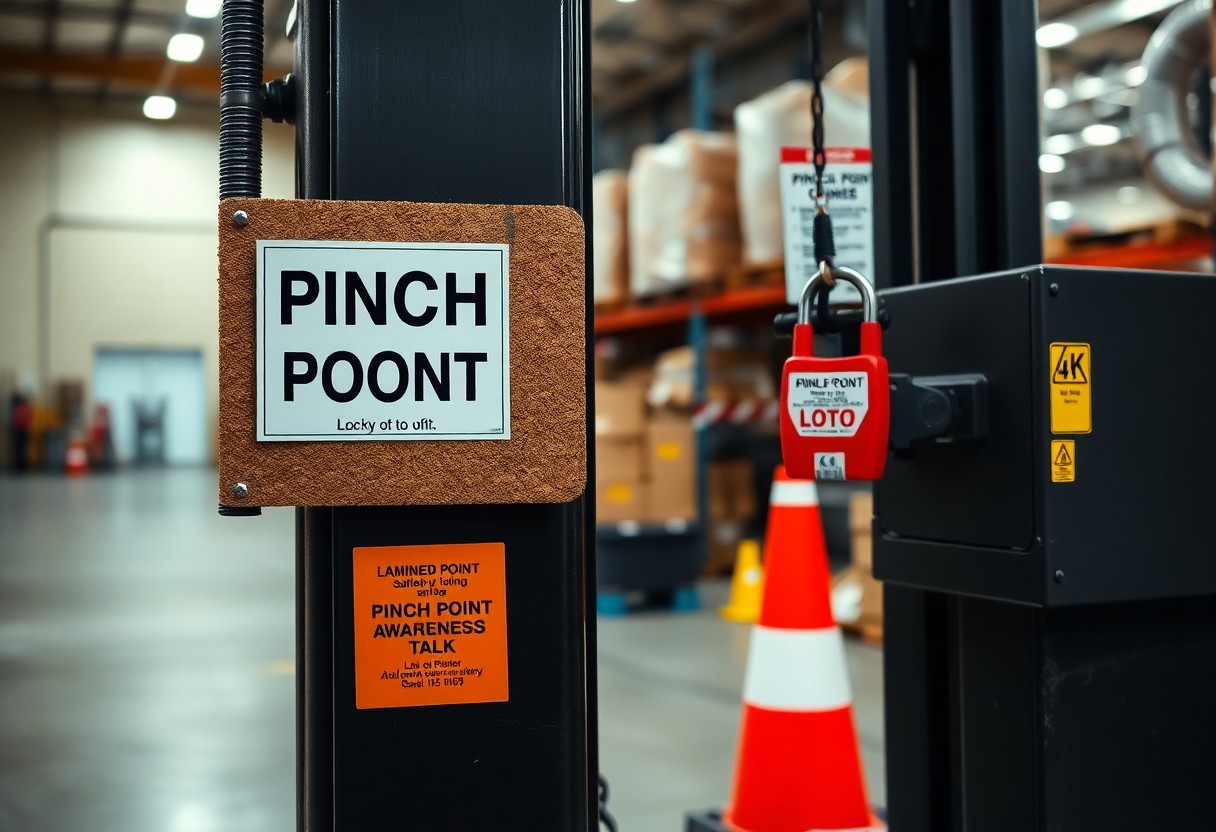
Administrative Protocols and Safe Work Practices
Administrative protocols require you to follow written rules, training, and permit controls that reduce exposure to pinch points and enforce safe work habits.
Lockout/Tagout (LOTO) Compliance
Adopt strict LOTO so you isolate energy, verify zero-energy state, and prevent unexpected energization that causes serious crush injuries.
Standard Operating Procedures for Maintenance
Implement clear SOPs so you follow step-by-step tasks, required PPE, authorized roles, and safe tools to minimize contact with moving parts and pinch points.
Train crews to use written SOP checklists that include hazard assessment, pre-start verification, LOTO confirmation, and post-maintenance testing; you must assign authorized personnel, document each step, enforce PPE, and schedule audits so that pinch point exposure is measured and reduced over time.
Conclusion
Now you must identify pinch points, inspect equipment, employ guards and proper PPE, stop machinery before clearing jams, and communicate hazards to coworkers to prevent injuries.
FAQ
Q: What is a pinch point and how do pinch point injuries occur?
A: A pinch point is any location where a body part can be trapped between moving parts, between a moving and a stationary object, or between materials being handled. Common examples include conveyor pulleys, rollers, rotating shafts, closing edges of doors or hatches, and the points where two machine parts move toward each other. Injuries range from bruises and lacerations to crushing, fractures, and amputations depending on force and exposure time. Workers who reach into equipment during clearing jams, maintenance, or material adjustments face the highest risk. Safety talks should illustrate real workplace examples so employees can recognize similar hazards during their tasks.
Q: How can pinch points be identified and assessed during a safety talk or inspection?
A: Identify pinch points through walk-arounds, job hazard analyses, and task observations that focus on interactions between workers and equipment. Use a checklist to record moving parts, nip points, access openings, pinch lines, and sources of stored energy such as springs or hydraulics. Measure clearances and test guard effectiveness with the machine isolated and locked out to confirm a hand or tool cannot reach hazardous zones. Involve operators and maintenance staff in the assessment to capture practical insights on when and where workers commonly expose themselves to pinch risk. Document findings and rank hazards by likelihood and potential severity to guide corrective actions.
Q: What controls and safe work practices prevent pinch point injuries?
A: Implement engineering controls like fixed guards, interlocks, feed shields, and distance barriers to eliminate access to pinch points. Apply administrative controls including lockout/tagout, written safe work procedures, pre-task risk assessments, and routine safety talks that review recent incidents and corrective actions. Require appropriate PPE such as cut-resistant gloves chosen for the task while avoiding glove types that increase entanglement risk with rotating equipment. Train workers on correct body positioning, use of tools to clear jams instead of hands, two-person procedures for awkward tasks, and prompt reporting of damaged guards or unsafe conditions. Schedule inspections and preventive maintenance to keep guards and safety devices functional and ensure emergency response and first-aid plans are practiced and available.