
Safety guides you to control silica dust so you protect yourself from silicosis and lung cancer by applying water suppression, HEPA vacuuming and respirators on-site.
Key Takeaways:
- Silica dust (respirable crystalline silica ≤10 µm) causes silicosis, lung cancer, and other chronic respiratory diseases; aim to limit worker exposure to the OSHA PEL of 50 µg/m³ (8‑hr TWA).
- Engineering controls such as wet methods, local exhaust ventilation, and HEPA‑filtered vacuums are the preferred controls; use NIOSH‑certified respirators (at least N95) when controls cannot keep exposures below the PEL.
- Train workers on hazards and task‑specific controls, conduct exposure monitoring and medical surveillance for exposed employees, and maintain housekeeping and signage to prevent dust generation and re‑entrainment.
Identifying Silica Sources and High-Risk Activities
Silica in jobsite materials can produce respirable dust; you should map where it appears and which operations create highest exposure so controls target real hazards.
Common Materials Containing Crystalline Silica
Concrete, mortar, brick, engineered stone and sand often contain crystalline silica; you should assume these materials can emit respirable particles when cut, drilled, or abraded and plan controls accordingly.
Mechanical Tasks Generating Respirable Dust
Cutting, grinding, drilling and jackhammering generate respirable dust; you face highest risk during dry operations without dust collection, so use wet methods or local exhaust to reduce exposure.
When you perform high-energy tasks, select controls that capture dust at the source: HEPA-filter vacuums, on-tool extraction, and wet cutting cut exposures most effectively; wear properly fitted respirators when controls can’t reduce levels below action limits.
Health Hazards and Pathological Effects
Exposure to respirable crystalline silica causes chronic inflammation and scarring in your lungs, raising the chance of progressive respiratory disease; you should monitor symptoms and enforce controls to limit long-term harm.
Development of Silicosis and Chronic Lung Disease
Silicosis develops when you repeatedly inhale fine silica particles that create permanent nodular scarring, gradually reducing lung capacity and leading to breathlessness, chronic cough, and heightened infection risk.
Secondary Risks: COPD and Kidney Damage
COPD and kidney disease become more likely when you sustain long-term silica exposure; reduced airflow, persistent inflammation, and impaired renal function can follow years after initial lung injury.
Chronic silica exposure accelerates airway remodeling and systemic inflammation, so you can develop progressive COPD with worsening breathlessness and frequent exacerbations. Systemic immune activation also raises your chance of chronic kidney disease and certain autoimmune conditions. Control measures such as wet methods, local exhaust ventilation, high-efficiency respirators, and regular medical surveillance markedly reduce your long-term risks.
Engineering and Work Practice Controls
Your engineering and work-practice controls reduce airborne silica when you combine fixed ventilation, wet methods, and administrative procedures; always pair these with respiratory protection and training to lower exposure and legal risk.
Water Suppression and Wet Cutting Techniques
Wet cutting keeps dust down when you keep water flow steady and target the dust line, providing immediate particle suppression and reducing respirable silica during cutting and grinding tasks.
HEPA-Filtered Vacuum Dust Collection Systems
HEPA vacuums capture fine silica if you maintain filters and use proper attachments; choose units with validated filtration efficiency to protect workers and prevent re-entrainment.
Maintain HEPA vacuums by using units rated to capture ≥99.97% of 0.3 μm particles, performing routine filter integrity checks, and replacing bags in a sealed procedure to avoid release; you should use tool-mounted or dedicated collection, follow manufacturer service intervals, and train crews to prevent filter bypass, re-entrainment, and uncontrolled exposure.
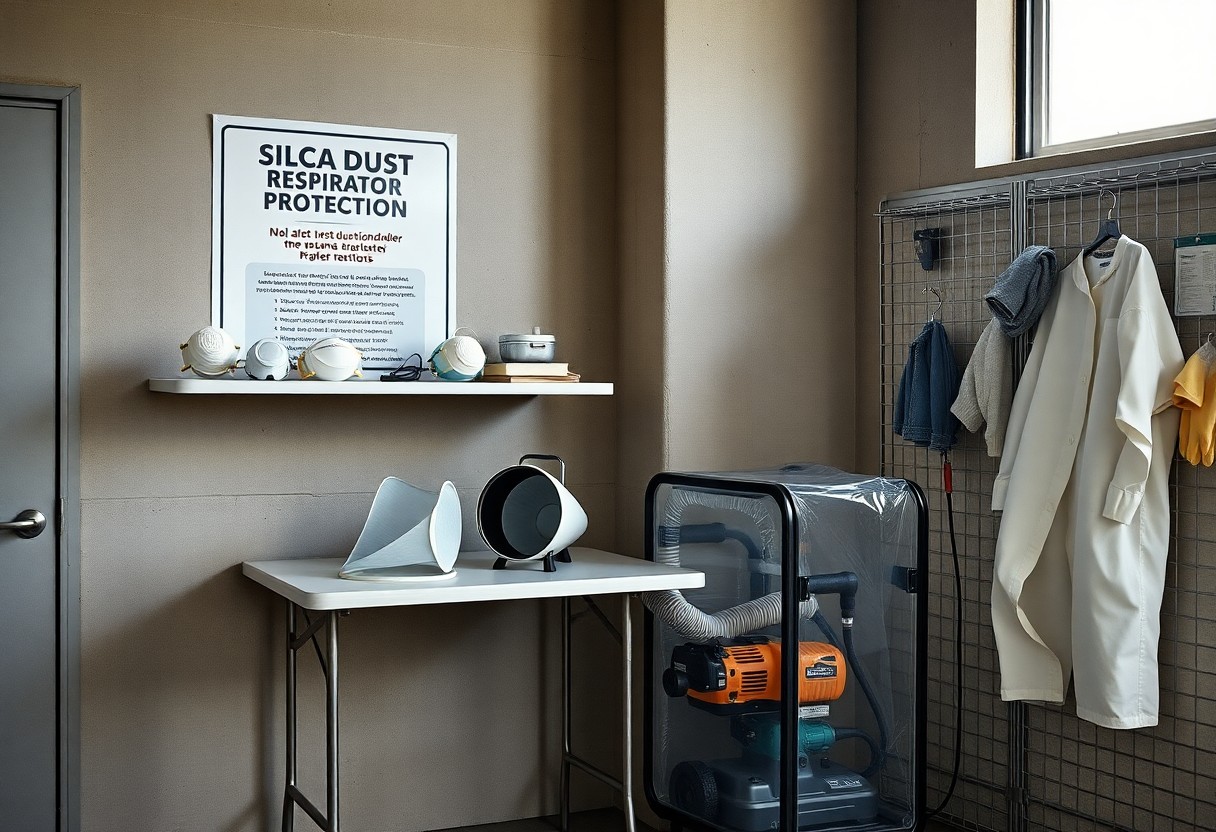
Respiratory Protection and PPE Requirements
Respirators and PPE must be selected and used so you are protected from silica dust; follow manufacturer guidance and the OSHA-based ToolBox – TALK for on-site checks.
Selecting Proper Respiratory Equipment
Choose respirators rated for silica exposure, replace cartridges per schedule, and prefer NIOSH-certified models when required.
Mandatory Fit Testing and Seal Checks
Perform annual fit testing and daily seal checks so you keep a tight facepiece seal; an improper fit lets hazardous silica through.
During fit testing you will undergo qualitative (taste/smell) or quantitative (instrument) procedures to confirm the respirator’s seal. You must be retested after significant facial changes, weight fluctuation, or switching models. Always perform user seal checks before each use and keep documented test records to demonstrate compliance.
Administrative Controls and Safety Training
You should enforce administrative controls like job rotation, shift limits, exclusion zones and written procedures to reduce exposure; combine with engineering controls and PPE to cut silica exposure and lower long-term disease risk.
Developing a Written Exposure Control Plan
Document a written exposure control plan that lists tasks, controls, monitoring, and responsibilities; include action limits, review schedules, and employee access so you can enforce exposure limits.
Medical Surveillance and Employee Education
Provide regular medical surveillance, baseline and periodic exams, and respiratory testing so you detect early disease; combine with training on controls, fit-testing, and reporting to maintain worker protection.
Ensure you keep confidential medical records, act on abnormal results by removing affected workers from exposure, and schedule annual training covering silica hazards, equipment use, and respirator fit to prevent long-term harm.
Conclusion
The safety talk instructs you to identify silica dust sources, implement wet cutting, local exhaust ventilation, HEPA vacuums, and proper respirators, and to enforce training, monitoring, and work practices to protect workers from silicosis and other illnesses.
FAQ
Q: What is silica dust and what health risks does it pose?
A: Silica (respirable crystalline silica) is a fine dust formed when materials such as concrete, brick, tile, stone, or sand are cut, ground, drilled, or crushed. Inhaled respirable particles reach the deep lung and can cause silicosis, lung cancer, chronic obstructive pulmonary disease (COPD), and kidney disease. Symptoms often develop slowly and can include persistent cough, shortness of breath, chest tightness, and unexplained weight loss. Jobs with high potential exposure include masonry, concrete cutting and grinding, sandblasting, demolition, tunneling, and cutting or drilling engineered stone; workers in these tasks should be treated as at-risk until exposure controls are verified.
Q: What control measures should be used on worksites to reduce silica exposure?
A: Use the hierarchy of controls to reduce exposure: eliminate or substitute tasks when possible, apply engineering controls, adopt safer work practices, and provide personal protective equipment when needed. Engineering controls include wet methods (water delivery on saws, drills, grinders), local exhaust ventilation with HEPA-filtered collection, on-tool dust collection systems, and enclosed operator cabs with filtered positive pressure. Work-practice controls include sequencing dusty tasks to limit the number of workers exposed, minimizing breakups of material, keeping distance from dust sources, using HEPA vacuuming for cleanup instead of dry sweeping, and isolating the work area with barriers or negative-pressure containment. Respiratory protection selection must follow exposure assessment results and regulations; provide appropriate NIOSH-approved respirators, fit testing, and training when engineering and work-practice controls cannot reduce exposures below the permissible exposure limit.
Q: What are employer responsibilities, monitoring requirements, and worker actions for compliance and safety?
A: OSHA’s permissible exposure limit (PEL) for respirable crystalline silica in construction is 50 µg/m3 as an eight-hour time-weighted average, and the standard establishes an action level of 25 µg/m3 that triggers monitoring and medical surveillance requirements. Employers must assess worker exposures, implement the required controls, provide and maintain PPE, conduct fit testing, offer medical examinations where indicated, and maintain exposure and medical records per the standard. Employers must also provide hazard communication and task-specific training on silica risks, control methods, and correct respirator use. Workers must follow established controls and work practices, wear and care for provided PPE, participate in fit testing and medical exams when required, report control failures or excessive dust, and follow hygiene measures such as washing hands and face and changing out of contaminated clothing before leaving the worksite. Regular air monitoring and periodic review of controls are recommended to confirm effectiveness and maintain compliance.