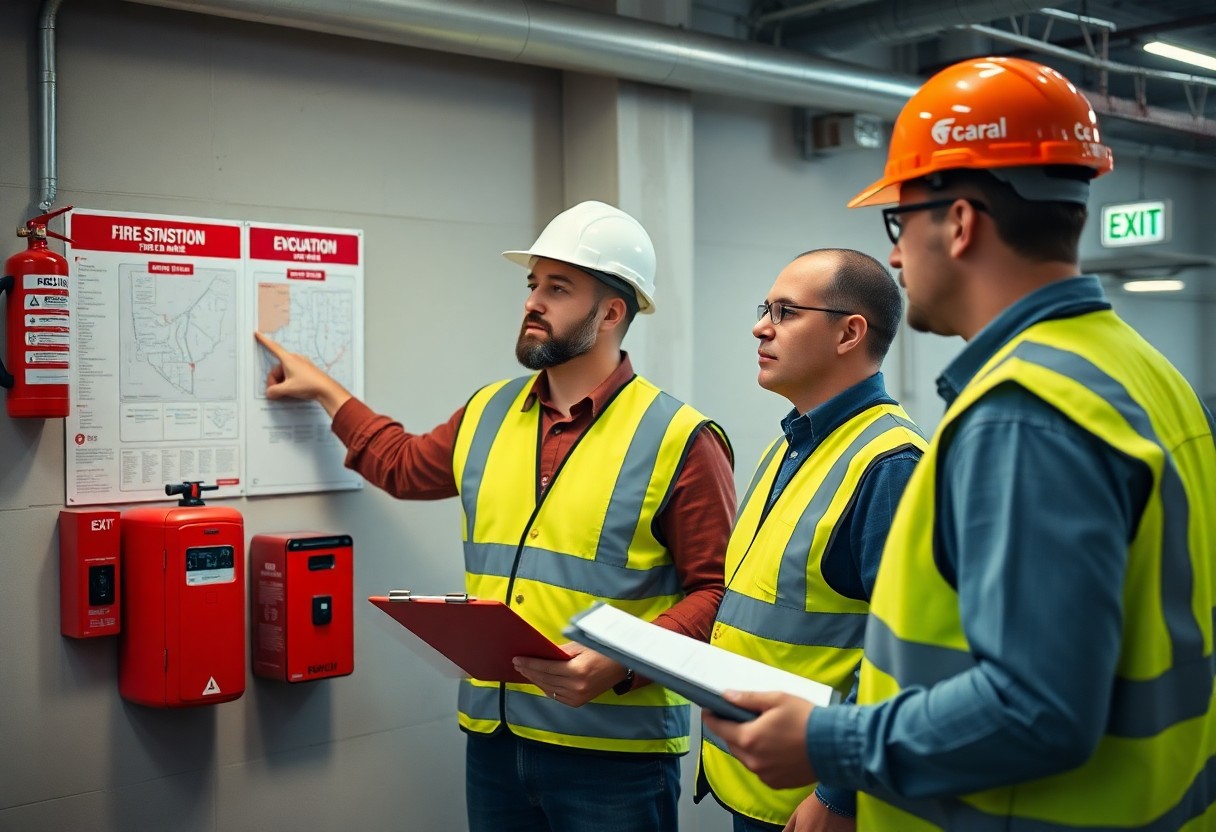
Fire safety requires you to maintain clear evacuation routes, inspect fire extinguishers, control flammable hazards, and practice regular drills so you can reduce risk of smoke inhalation and rapid fire spread.
Key Takeaways:
- Store and handle flammable materials safely, keep exits and escape routes clear, and enforce no-smoking and hot-work controls to reduce fire risks.
- Establish clear evacuation procedures with assigned roles, posted escape maps, audible alarms, and conduct regular drills so employees evacuate quickly and reach designated assembly points.
- Maintain and inspect fire extinguishers, alarm and sprinkler systems, and emergency lighting regularly; provide hands-on extinguisher training and a simple reporting process for hazards or defects.

Identifying Fire Hazards in the Workplace
Inspect your workspace for cluttered storage, overloaded outlets, and poor housekeeping that increase fire likelihood; tag and remove combustible materials and repair faulty wiring to lower risk.
Common Ignition Sources and Fuel Loads
Identify ignition sources like hot work, electrical faults, and smoking; separate them from high fuel loads such as packaging, dust, and stored liquids to prevent rapid fire spread.
Risks Associated with Hazardous Materials
Assess chemical storage and labeling; incompatible or improperly stored substances can trigger fires or explosions, so you keep SDS accessible and maintain ventilated, segregated storage.
Manage inventory by limiting quantities, segregating incompatible substances, enforcing grounded dispensing for flammable liquids, and equipping staff with appropriate PPE and spill kits; you must label containers, keep updated SDS sheets, and rehearse emergency procedures to minimize fire, explosion, and toxic-release hazards.
Fire Prevention and Risk Mitigation Strategies
Fire prevention measures should focus on eliminating ignition sources, controlling combustibles, and enforcing no-smoking zones; you must maintain clear evacuation routes and install functional detectors and extinguishers to reduce fire risk.
Implementation of Proactive Housekeeping
Keep aisles and exits free of debris, store flammables in approved containers, and ensure waste is removed daily; your team should perform documented inspections to prevent accidental ignition and maintain safe egress.
Electrical Equipment Maintenance Protocols
Inspect cords, plugs and panels regularly, tag defective items out of service, and avoid daisy-chaining power strips; you must address overloads and exposed wiring immediately to prevent electrical fires.
Schedule formal preventive maintenance with infrared thermography and calibrated breaker testing, enforce lockout-tagout, and keep a centralized repair log so you can spot recurring faults and prioritize replacement of aging transformers and overloaded panels.
Emergency Response and Evacuation Planning
Plan regular drills, maintain clear evacuation maps, and consult the Fire Prevention toolbox talk to refine procedures; you must remove blocked exits and train staff to reduce panic and injury.
Designing Efficient Escape Routes and Signage
Design escape routes with unobstructed widths, visible signage, and emergency lighting so you can exit calmly; you should post maps at key points and test visibility in low light to prevent confusion during a fire.
Establishing Assembly Points and Headcount Procedures
Establish well-marked assembly points away from hazards so you can gather staff quickly; assign headcount roles and use checklists to confirm everyone is safe, flagging any missing persons to emergency teams immediately.
Assign deputies for each zone, keep up-to-date staff lists, and train your team on rapid roll-call methods; pick assembly points that are clearly visible, safe, and outside smoke paths, provide radios or mobile check-ins, and coordinate with emergency services for immediate follow-up on any absent person.
Regulatory Standards and Compliance
Compliance with federal and local fire codes keeps your workplace legal and safe; follow OSHA mandates, local building codes, and required training schedules to reduce fire risk and liability.
Adherence to OSHA and National Fire Codes
Adherence to OSHA and NFPA requirements ensures your emergency plans, extinguisher placements, and egress routes meet standards; maintain regular training and visible signage to protect staff and limit fines.
Documentation of Inspections and Safety Audits
Documentation of inspections shows you fulfilled duties; keep clear logs of tests, repairs, and audit results and flag unresolved hazards for prompt correction to reduce risk and liability.
Records should include date, inspector name, component tested, condition, corrective actions, and completion dates; you must archive electronic copies and maintain retention schedules for audits. Highlight any failed suppression systems, blocked exits, or fuel/chemical hazards and assign immediate corrective timelines. Use photo evidence, work orders, and status tracking so you can demonstrate compliance and reduce repeat failures.
Summing up
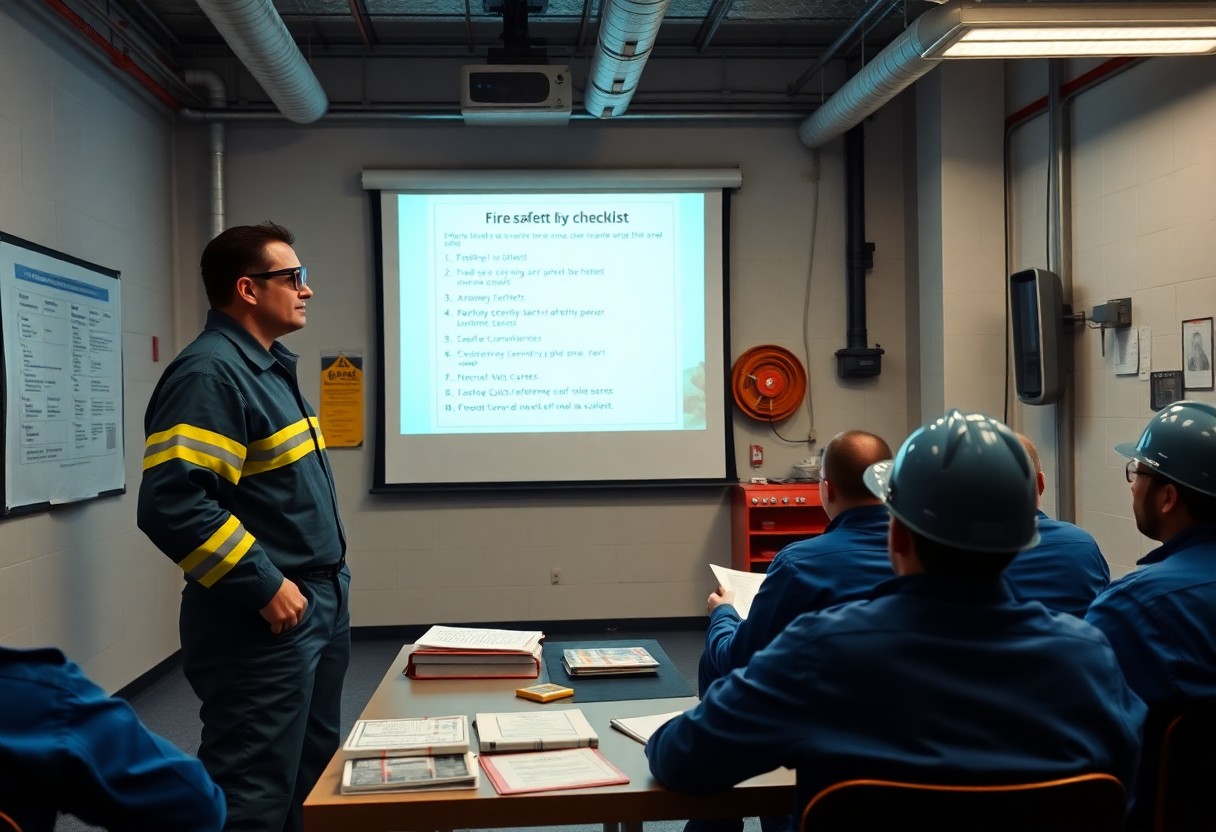
Summing up, you must follow fire prevention procedures, learn escape routes, use extinguishers correctly, and report hazards; regular safety talks keep you informed and lower workplace fire risk.
FAQ
Q: What topics should be included in a workplace fire safety talk?
A: A safety talk should cover identification of common fire hazards specific to the workplace, procedures for preventing ignition and limiting fuel and oxygen sources, and proper storage and handling of flammable materials. Explain the facility’s alarm systems, emergency shutdown procedures for machinery and utilities, evacuation routes, exits and designated assembly points. Describe roles and responsibilities for employees, floor wardens and emergency coordinators, plus procedures for assisting people with disabilities. Demonstrate correct use of portable fire extinguishers and emphasize when attempting to fight a fire is appropriate. Provide guidance on reporting fires, emergency contact numbers, and records of past incidents and corrective actions.
Q: How should a fire drill be run during a safety talk and how often should drills occur?
A: Plan and schedule drills at least annually, with increased frequency for high-risk operations or after major changes to layout or processes. Brief employees beforehand on the purpose of the drill and any specific objectives, then activate the alarm and time the full evacuation from alarm to assembly. Use realistic scenarios that include blocked routes, simulated injuries, and interrupted power where safe to do so. Assign observers to record evacuation times, door and stairwell congestion, communication effectiveness, and accountability at the assembly point. Conduct a structured debrief that lists what worked, what failed, corrective actions, and owners and timelines for fixes.
Q: When is it safe to use a fire extinguisher and what technique should employees be taught?
A: Use an extinguisher only on small, contained fires, when the correct extinguisher type is available, when a clear escape route exists behind the operator, and when the operator has been trained and feels confident. Prioritize sounding the alarm and evacuating others before attempting to fight any fire. Teach the PASS technique: Pull the pin, Aim low at the base of the fire, Squeeze the handle, Sweep the nozzle side to side. Train employees to back away if the fire grows, to stop using an extinguisher if visibility drops or heat becomes intense, and to report the incident and any equipment used so extinguishers are recharged or replaced.