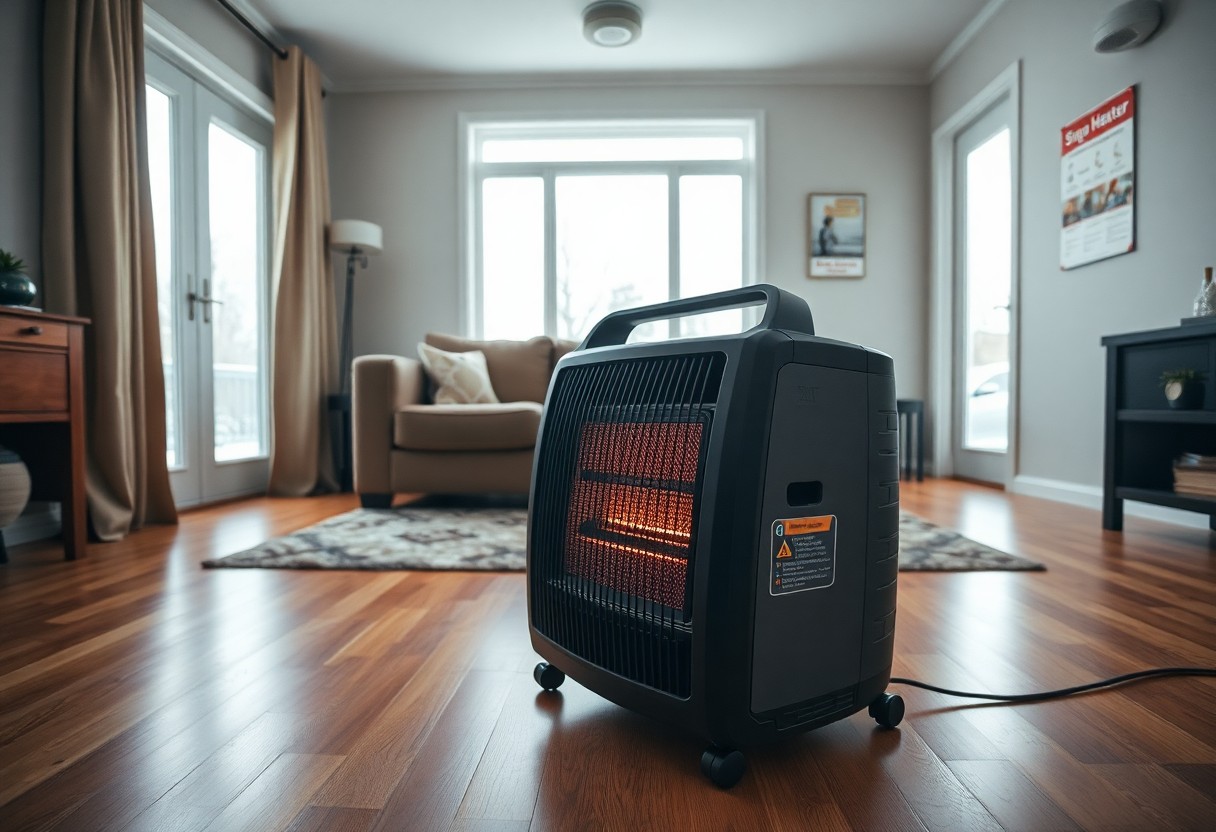
Safety should guide your use of space heaters this winter: you must keep heaters at least 3 feet from combustibles, never leave them unattended, and never use extension cords, which can overheat and spark. Use models with tip‑over and overheat protection, plug directly into grounded outlets, turn them off when you sleep or leave, keep them away from water, and follow manufacturer instructions to reduce fire and burn risk.
Key Takeaways:
- Keep the heater on a stable, level surface with at least 3 feet of clearance from curtains, furniture, paper, and other combustibles; never place on beds or sofas.
- Plug the heater directly into a wall outlet-do not use extension cords or power strips-and inspect the cord for damage before each use.
- Do not leave a space heater unattended or run it while sleeping; use models with tip-over and overheat shutoffs and ensure proper ventilation and a working CO detector for fuel-burning units.
Understanding Space Heaters
Types of Space Heaters
You’ll encounter compact fan-forced units for rapid spot heating, oil-filled radiators for longer, silent warmth, and infrared or halogen models that heat objects directly. Many run between 500-1500W, with 1500W common for whole-room use. Some designs include thermostats and safety cutoffs; others are basic and cheap. Recognizing the differences helps you choose the right balance of power, runtime, and built-in safety features.
- Ceramic – fast, fan-assisted convection
- Oil-filled – slow, consistent radiant heat
- Infrared – heats people/objects directly
- Fan-forced – widespread, quick room circulation
- Halogen/Quartz – intense, focused radiant heat
| Ceramic | Good for small rooms; often 1500W; use on hard floors away from combustibles. |
| Oil-filled | Silent, maintains heat after shutoff; low surface temps, safe near children but heavy to move. |
| Infrared | Directly warms people/objects; effective outdoors or drafty areas; avoid aiming at fabrics. |
| Fan-forced | Heats quickly; fans can spread dust; keep clear 3 feet from obstructions. |
| Halogen/Quartz | High surface temps and fast radiant heat; keep away from flammable materials. |
How Space Heaters Work
Many heaters convert electricity to heat via resistive elements or lamps; resistive coils and ceramic plates warm air, while infrared lamps emit radiation that heats surfaces directly. Typical portable units are 1500W, drawing about 12.5A on a 120V circuit and effectively warming ~150 sq ft in 10-20 minutes. You should use thermostats and timers to limit runtime and reduce energy waste.
Internal safety components like tip-over switches and overheat cutoffs shut units off if they fall or exceed safe temperatures, yet elements can reach several hundred degrees Celsius so placement matters. Avoid extension cords and never run multiple 1500W heaters on one standard 15A circuit (two would demand ~25A); running a 1500W heater for 8 hours uses about 12 kWh, roughly $1-$2 per day depending on rates.
Risks Associated with Space Heaters
You face multiple hazards when using space heaters: fire, burns, electrical overload and carbon monoxide (CO). Portable units can ignite nearby fabrics or overload circuits within minutes; the CPSC highlights these dangers in its campaign There’s a Chill in the Air – Stay Warm Safely – Be Cautious …. Keep devices supervised, maintain clearance, and use alarms to lower your risk.
Fire Hazards
Heaters tip over, short out, or ignite nearby combustibles; keep at least 3 feet of clearance from curtains, bedding, paper and furniture. Plug directly into a wall outlet-avoid extension cords and power strips-and inspect cords for fraying. Choose models with tip-over and overheat shutoffs, and never leave a heater running unattended while you sleep or leave the house; many winter fires start this way.
Carbon Monoxide Poisoning
Fuel-burning heaters (kerosene, propane, natural gas) can emit CO, a colorless, odorless gas that causes headache, nausea, dizziness and can be deadly. You should never use non-vented fuel heaters in enclosed spaces; instead follow manufacturer ventilation instructions and keep a working CO alarm on every level and outside sleeping areas to warn you early.
You should have fuel-burning heaters serviced annually by a qualified technician; CO causes about 400 unintentional deaths annually in the U.S.. Also avoid using outdoor-rated heaters indoors, never run a vehicle or generator in an attached garage, and test CO alarms monthly-replace units per manufacturer guidance-to ensure you get timely warning if concentrations rise.
Guidelines for Safe Use
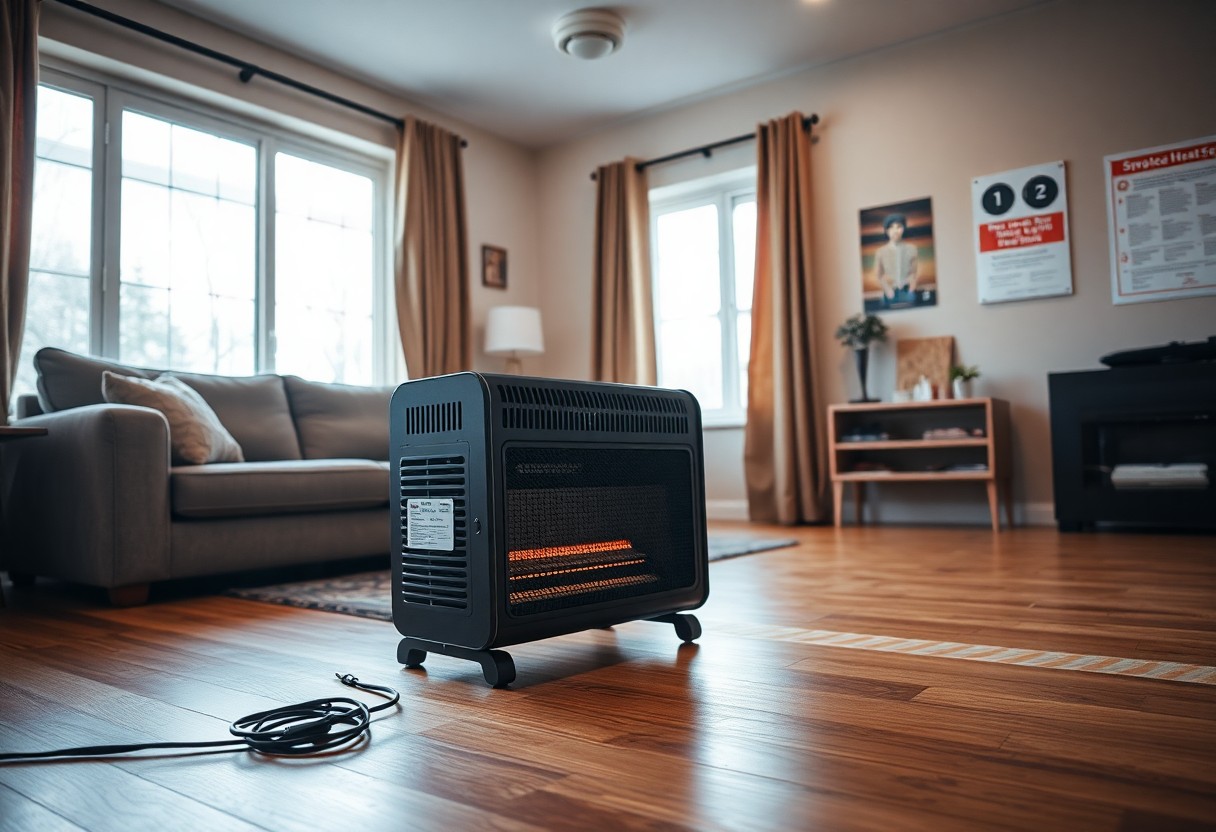
Follow clear rules to lower risk: keep the heater on a stable, level surface and plug it directly into a grounded wall outlet, not an extension cord or power strip. Place it where you can see and reach controls, turn it off and unplug when you leave the room, and choose models with tip-over and overheat protection. Check cords monthly for damage and follow the manufacturer’s instructions for wattage and circuit load to avoid tripped breakers or fire.
Placement and Clearance
Place the heater at least 3 feet (0.9 m) from curtains, bedding, furniture, papers and toys; avoid corners where heat can build up. Do not position it on soft surfaces like rugs or beds that can block airflow, and keep it away from water sources-unless the unit is specifically rated for bathroom use. If you have pets or children, use barriers or guards to prevent accidental contact with the hot surface.
Maintenance and Care
Inspect the plug and cord every month for frays, melting or loose connections and replace the unit if you find damage. Clean grills and air intakes of dust and lint each heating season using a vacuum or compressed air, and test safety features like the tip-over switch regularly. Only use replacement parts approved by the manufacturer to preserve safety certifications.
When servicing, always unplug and let the heater cool first; then remove dust from vents with a vacuum brush or soft cloth and check internal fans for obstructions. Note that a typical 1500W heater draws about 12.5A on 120V
If you pick a heater that matches room size, insulation, and circuit capacity, you’ll reduce runtime and hazards; aim for models with automatic shutoff, tip‑over protection, and UL/ETL listing. For enclosed bedrooms prefer electric oil‑filled or ceramic convection units with thermostats, while larger open areas benefit from infrared or fan‑assisted models. Also check fuel type-portable propane requires ventilation and CO monitoring. Use the rule of thumb of about 10 watts per square foot: a 1500W heater typically warms ~150 sq ft. For poorly insulated rooms or ceilings over 8 ft, double the wattage or combine units. If your breaker is 15 amps at 120V, avoid running more than one 1500W heater on that circuit to prevent tripped breakers or wiring overload. Electric resistance heaters convert nearly 100% of electricity to heat at the unit, but heat pumps deliver 200-300% effective efficiency (COP 2-3) by moving heat. Check for a programmable thermostat and low‑wattage modes; those features cut runtime. Also verify wattage so you don’t exceed your circuit’s capacity and risk overload. Consider operating cost examples: running a 1500W heater 8 hours uses 12 kWh; at $0.15/kWh that’s about $1.80 per day. Choosing a model with a precise thermostat or ECO mode can reduce run time by 20-40%, lowering bills and fire risk. Look for adjustable heat settings, timers, and validated lab ratings; those practical specs often matter more than marketing claims when you compare long‑term efficiency and safety. You should operate space heaters on a level, non-combustible surface and never run them from an extension cord; many portable units are 1,500-watt and can overload a household circuit. Maintain a minimum 3-foot (0.9 m) clearance from curtains, furniture and linens to reduce fire risk. After you inspect the unit and surrounding area before each use. You must follow the manufacturer’s instructions for model-specific warnings, electrical requirements and maintenance intervals-some units recommend annual checks while others advise filter cleaning every 3 months. Verify features like tip-over and overheat protection are listed and tested. After you log the model number and safety checks and store the manual for reference. You should set thermostats to about 68°F (20°C) and use built-in timers or plug-in timers to limit run time; many heaters draw 1,500 watts so staggering other loads prevents tripped breakers. Use fans to distribute heat evenly and avoid running the heater unattended in bedrooms. After you test the auto-shutoff and timer before leaving it operating for long periods. You can reduce risk by pairing the heater with a working smoke alarm and placing carbon-monoxide-free units in occupied rooms; many incidents begin when heaters contact fabrics, so keep clearances and never dry clothing on a heater. If you travel frequently, choose models with auto-shutoff and overheat sensors and test them monthly. After you rehearse placement and operation so emergency steps become routine. Watch for persistent burning smells, visible smoke, sparks, or scorched flooring and fabrics within 3 feet (0.9 m) of the heater. You may also see repeated circuit trips, flickering lights, or sudden increases in your electric bill-each can signal a failing heater or overloaded wiring. Inspect cords for melting, outlets for discoloration, and the heater’s case for warping; catching these signs early reduces the risk of fire or shock. If the heater feels excessively hot to the touch, emits a strong chemical or burning odor, or its grille glows, shut it down immediately. Frequent automatic shutdowns, fans that run non‑stop after power cycles, or melted plastic and blistered paint on nearby surfaces point to internal failure or blocked airflow. You should also look for singed carpet or fabric and any visible smoke-those are direct warnings of imminent danger. When you notice buzzing outlets, sparking, a warm wall plate, or a breaker that trips as soon as the heater runs, treat it as an electrical hazard. A typical portable heater is 1,500 watts, which draws about 12.5 amps on a 120 V circuit and leaves little margin on a standard 15 A breaker. Using extension cords or sharing a circuit with other high‑load devices increases the chance of overload, arcing, and fire. For example, running a 1,500‑watt heater (≈12.5 A) alongside a 900‑watt microwave (≈7.5 A) on the same 120 V circuit can pull roughly 20 A, exceeding a 15 A breaker and causing trips or overheating. If an outlet is warm, has scorch marks, or emits a burning smell, unplug the heater immediately and call an electrician. Always plug heaters directly into a wall outlet, avoid power strips, and have damaged cords replaced before reuse. Ultimately you must treat space heaters as potential hazards: place them on level noncombustible surfaces, keep flammable items at least three feet away, use thermostats and timers, plug directly into outlets (no extension cords), inspect cords and turn heaters off when unattended to protect your home and those in it. A: Position the heater on a level, hard, nonflammable surface at least 3 feet (36 inches) away from curtains, bedding, furniture, papers and any other combustibles. Never place a heater on soft surfaces such as beds, sofas or rugs that can block airflow or overheat. Keep it away from high-traffic areas and doorways to prevent tipping. Plug the heater directly into a properly rated wall outlet; avoid extension cords and power strips because they can overheat and cause a fire. Use units with tip-over and overheat shutoff features and set thermostats/timers to prevent continuous overheating. Keep cords flat and unrestricted; do not run them under rugs or furniture. Supervise children and pets around heaters and turn the unit off whenever you leave the room or go to sleep. A: Avoid running portable space heaters unattended or overnight whenever possible. Unattended operation increases the chance of clothes or nearby items coming into contact with hot surfaces, electrical failures, or tip-overs that can start fires. If overnight use is necessary, choose a heater specifically rated for continuous operation with certified safety features (tip-over switch, thermal cutoff, programmable thermostat and timer), place it on a stable surface with required clearances, ensure the plug and outlet are in good condition, and never use fuel-burning heaters (kerosene, propane, natural gas) indoors without proper ventilation and carbon monoxide (CO) monitoring. Always have working smoke alarms and, if any combustion heater is used, a functioning CO detector installed at recommended locations. A: Inspect the heater and cord before each season and periodically during use. Look for frayed or cracked cords, loose plugs, damaged housing, unusual odors or visible overheating signs; if any problem appears, stop using the unit and have it repaired by an authorized service center or replace it. Clean dust and debris from grills and vents with the power off and unplugged to maintain airflow and prevent overheating. Verify that safety features (tip-over switch, thermostat, thermal cutoff) operate properly. Use only manufacturer-recommended replacement parts and fuels. For fuel-fired heaters, follow safe refueling practices: cool the unit completely, refuel outdoors, use the correct fuel type and store fuel safely. Also verify that room wiring can handle the heater’s wattage-avoid connecting multiple large appliances to the same circuit-and test smoke alarms and carbon monoxide detectors monthly.Choosing the Right Space Heater
Heating Capacity
Energy Efficiency Ratings
Best Practices for Operation
User Manual Adherence
Smart Usage Tips
Recognizing Signs of Trouble
Overheating Indicators
Electrical Issues
Final Words
FAQ
Q: How should I place and operate a space heater indoors to minimize fire risk?
Q: Can I run a space heater overnight or leave it unattended?
Q: What maintenance and inspection steps reduce hazards and extend safe use?