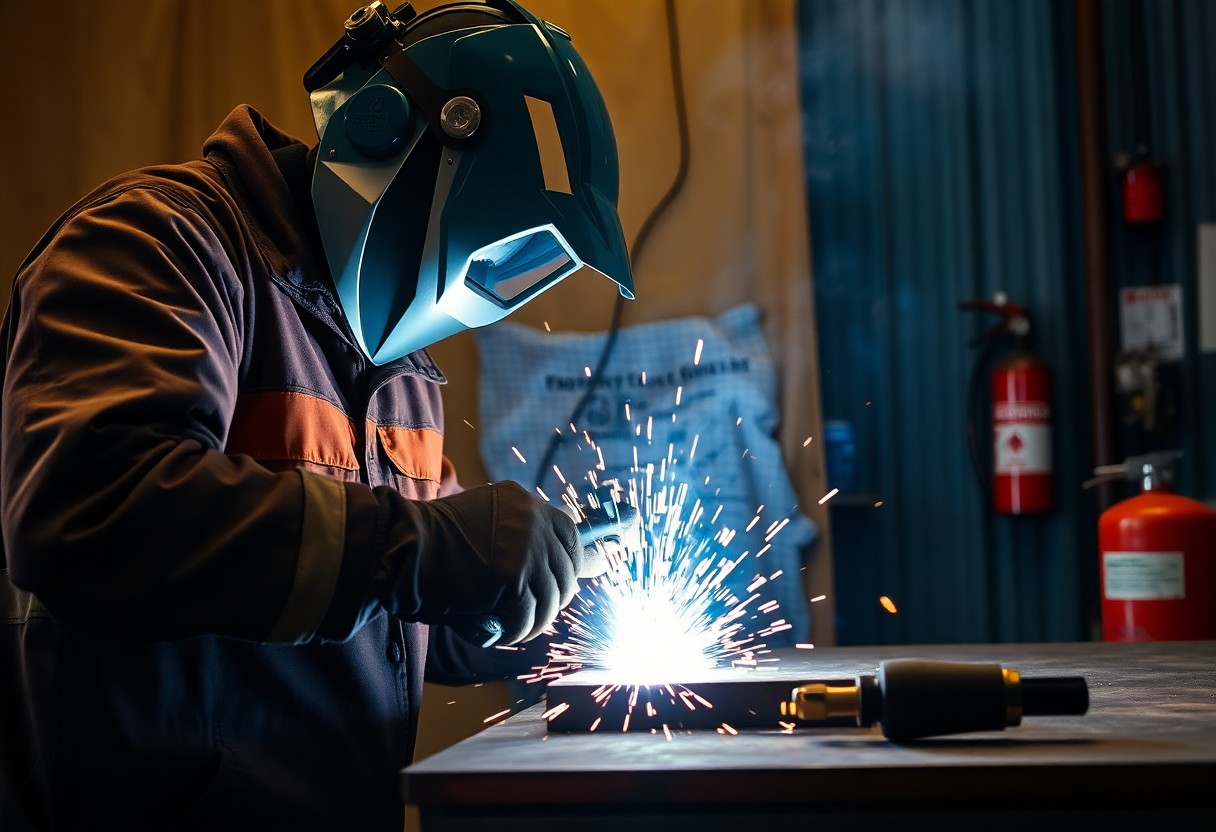
It’s necessary that you protect your eyes from intense UV/IR radiation and flying sparks by wearing a properly rated welding helmet and side shields, and that you prevent fires by clearing flammable materials, keeping a fire extinguisher nearby and maintaining a designated fire watch; these measures reduce burns, arc eye, and workplace fires, keeping you and your team safe and productive.
Key Takeaways:
- Wear appropriate eye protection: a welding helmet with the correct filter shade for the process, plus safety goggles or face shields for grinding and chipping.
- Prevent fires by removing or shielding combustibles, using fire-resistant curtains or blankets, and keeping a suitable fire extinguisher and trained fire watch available during and after hot work.
- Inspect and maintain equipment, ensure proper grounding and cable condition, and provide adequate ventilation to reduce sparks, hot embers, and hazardous fumes.
Understanding Welding Hazards
You deal with concentrated energy, molten metal, and airborne contaminants every time you weld; arcs can exceed 6,000°C, molten droplets often top 1,500°C, and fumes may contain manganese or hexavalent chromium. In practice this means immediate risks to your eyes and skin plus delayed respiratory or neurological impacts if controls lapse, so match controls to task intensity and workspace configuration.
Types of Welding Processes
You commonly encounter MIG (GMAW), TIG (GTAW), Stick (SMAW), Flux‑cored, and Oxy‑fuel methods; MIG is fast for automotive bodies, TIG gives precision for stainless and aerospace, stick suits outdoor repairs, flux‑cored handles thick sections and dirty metals, and oxy‑fuel is used for cutting and brazing. After you select the process, verify PPE, ventilation, and fire controls match its specific hazards.
- MIG (GMAW)
- TIG (GTAW)
- Stick (SMAW)
- Flux‑cored
- Oxy‑fuel
| MIG (GMAW) | High deposition rate, common in automotive and fabrication; produces visible spatter and moderate fumes. |
| TIG (GTAW) | Low spatter, high precision for thin/stainless/aluminum; generates intense UV radiation. |
| Stick (SMAW) | Rugged for field work and heavy sections; tolerant of contaminated surfaces but creates significant smoke. |
| Flux‑cored | Good for thick, dirty metal and outdoor welding; higher fume levels and strong spatter. |
| Oxy‑fuel | Used for cutting and brazing; flame contact and hot slag present clear fire and burn hazards. |
Common Risks Involved
You face UV/IR radiation that can cause flash burns to your eyes in seconds, toxic fumes containing metals and oxides, hot spatter and sparks that can ignite nearby combustibles, and the danger of electrical shock from faulty leads or damp conditions; sparks and slag readily contaminate clothing and surfaces.
You must treat ventilation and PPE as non‑optional controls: use local exhaust or powered respirators when fume concentrations approach exposure limits, fit auto‑darkening helmets to block UV, keep a fire watch during hot work and for at least 30 minutes afterward, and isolate electrical sources before maintenance to reduce shock risk.
Eye Protection in Welding
You face intense UV/IR radiation, sparks, and spatter every time you strike an arc; even a brief exposure can cause painful photokeratitis within hours. Choose gear rated for welding tasks, inspect lenses for cracks or pitting before each shift, and replace damaged parts immediately to prevent permanent injury. ANSI Z87.1 compliance and correct shade (10-14) are measurable controls you must follow. Thou must verify your equipment meets those standards before welding.
- UV/IR radiation
- ANSI Z87.1
- shade 10-14
- auto‑darkening filters
| Hazard | Control |
|---|---|
| Sparks/spatter | Weld helmet + face shield |
| Arc flash (UV/IR) | Shade 10-14 lenses |
| Flying debris | Safety glasses with side shields |
| Infrared exposure | IR-rated filters in helmets |
Importance of Proper Eyewear
You reduce the risk of burns, long-term cataract formation, and immediate injuries by using purpose-built welding eyewear; standard safety glasses won’t stop arc radiation. Industry studies show that correct lens shade selection and tight seals cut exposure dramatically during operations like TIG and MIG. Inspecting optical clarity and checking sensors on auto‑darkening units should be part of your pre-shift routine. Thou must replace lenses that fail inspection or slow darkening response.
Types of Protective Eyewear
You select from passive helmets, auto‑darkening helmets, goggles, or safety glasses depending on the process and duty cycle; for overhead work choose helmets with a 180° face shield, and for short tack welds prefer quick-response auto‑darkening filters. Auto‑darkening units typically switch within 1/25,000 second and offer variable shade, while passive lenses are simple and reliable for occasional welding. Thou should match the device to task duration and arc intensity.
- Passive welding helmet
- Auto‑darkening helmet
- Safety goggles
- Side‑shield glasses
| Type | Use/Notes |
|---|---|
| Passive helmet | Simple, low maintenance; fixed shade |
| Auto‑darkening | Variable shade; good for repetitive tasks |
| Goggles | Seals against spatter and dust |
| Safety glasses | Supplemental protection with side shields |
You can prioritize auto‑darkening filters for productivity and reduced neck strain, but maintain batteries and sensors; test switching speed and sensitivity weekly, and log failures to equipment records. For high‑heat or overhead welding, choose helmets with >90% IR attenuation and replace cotton sweatbands every 30 days in heavy use. Thou must document checks and replace any unit that fails performance limits.
- Switching speed 1/25,000s
- Battery/sensor checks
- IR attenuation >90%
- Maintenance log
| Check | Frequency |
|---|---|
| Lens clarity | Daily |
| Auto‑darkening response | Weekly |
| Battery status | Before each shift |
| Headgear fit | Monthly |
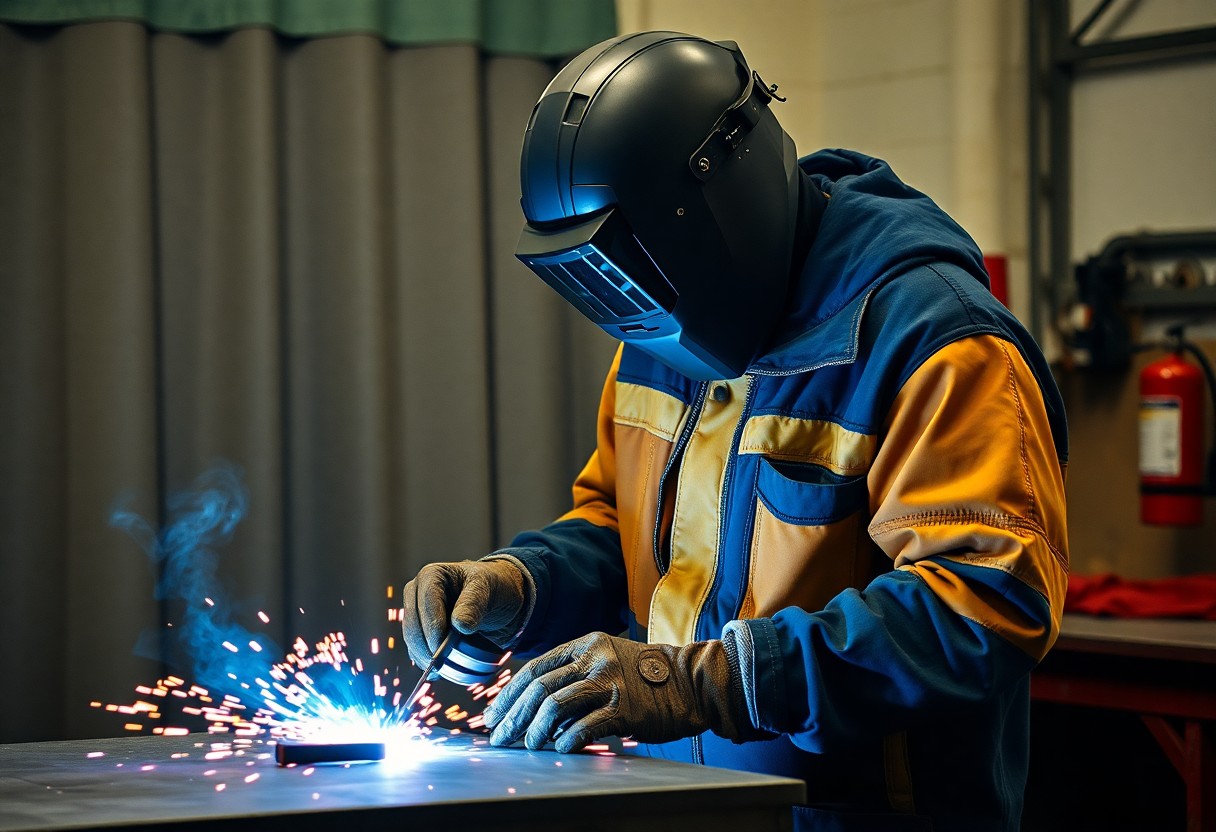
Fire Prevention Strategies
When you prepare for hot work, clear a 35 feet (10.7 m) radius of combustibles and wear certified PPE – see Welding – Personal Protective Equipment and Clothing for standards. You should ground workpieces, use welding curtains, and keep a charged Class ABC extinguisher within arm’s reach; sparks can travel several meters and ignite hidden materials if controls are lax.
Identifying Fire Hazards
You must inspect for obvious and hidden risks: flammable liquids, solvent-soaked rags, dust buildup, insulation, and open floor or wall penetrations that let sparks reach lower levels. Check for nearby compressed gas cylinders, temporary heaters, and electrical junctions; a gap or 1 cm hole can channel hot slag into concealed spaces, so seal or shield before welding.
Best Practices for Fire Prevention
Start a hot-work permit, assign a trained fire watch, and maintain a 30-minute post-weld watch per NFPA 51B. Keep cylinders at least 20 ft (6 m) from the work or separated by a fire-resistant barrier, use fire-resistant blankets over combustibles, and document inspections and extinguisher checks so you can prove compliance.
For added protection, you should log the permit, record the fire-watch person, and run a quick smoke/char inspection 10 and 30 minutes after stopping. Use temporary shields to redirect sparks, ventilate to disperse flammable vapors, and test extinguishers monthly; these steps reduce ignition probability and give you an auditable trail if an incident occurs.
Personal Protective Equipment (PPE)
You rely on PPE to stop molten metal, UV radiation and sparks from injuring you; a welding helmet and proper eye filter block intense arcs, while leather gloves, sleeves, and boots prevent burns and hot-spatter injuries. Inspect gear every shift, store it dry, and replace damaged items immediately to keep exposure below hazardous levels-welding arcs can exceed 6,000°F, so degraded PPE is a serious risk.
Essential PPE for Welders
Your baseline kit should include a welding helmet with the correct shade (generally shade 10-13 for arc welding and 5-8 for gas), ANSI/ASTM-rated safety glasses for side protection, P100 or NIOSH-certified respirators (filters remove 99.97% of particulates), heat-resistant leather gloves, flame-resistant jacket or apron, and steel-toe boots meeting ASTM F2413 standards.
Maintenance and Care of PPE
You must inspect PPE before each use: check helmet lenses for scratches, test auto-darkening response (speeds can be as fast as 1/25,000 second), look for stitching failures or burn-through in gloves, and verify respirator seals. Clean per manufacturer instructions, remove contaminated garments from service, and replace filters or damaged components immediately to maintain certified protection levels.
Implement a simple log: record inspections daily and tag defective items out of service for repair or replacement within 24 hours. Rotate spare lenses and cartridges so replacements are on hand; for heavy fume exposure plan cartridge changes after roughly 8 hours of continuous use or sooner if you detect odor or increased breathing resistance. Training everyone to spot wear prevents small defects from becoming injuries.
Training and Awareness
Importance of Safety Training
You need hands-on welding training tailored to each process-MIG, TIG, SMAW and oxy-fuel cutting-with emphasis on PPE fit checks, filter shade selection (e.g., shade 10-14) and respirator fit testing. Blend classroom instruction, live demonstrations and practical competency tests, document results, and require retraining after incidents. Align training to ANSI Z87.1 and OSHA 1910.252, mandate annual refreshers, and hold monthly toolbox talks to keep skills and awareness sharp.
Regular Safety Assessments
You should schedule formal safety assessments quarterly and before any hot work using checklists tied to NFPA 51B and site hazards. Inspect fire watches, combustible removal, compressed gas storage, welding screens, and verify extinguishers are charged and within 75 ft. Require documented hot work permits and assign corrective actions with deadlines to reduce overall fire risk.
Include concrete checklist items-clearance distances, spark containment, PPE condition-and employ tools like thermal imagers, smoke/CO detectors and combustible gas meters during inspections. Log results digitally, track repeat issues, and involve welders in peer reviews. When you close corrective actions within 48-72 hours, assessments shift from paperwork to an effective prevention system.
Emergency Response Procedures
Immediately stop welding, shut off power and fuel supply, and move away from the hazard while keeping others back; if a fire is small, use a Class ABC extinguisher and a fire blanket, but for magnesium or titanium use a Class D extinguisher. If burns or smoke inhalation occur or the fire spreads, call 911 and pull the alarm. Maintain a 30-minute fire watch after hot work in areas with combustibles per NFPA 51B to catch smoldering hazards.
Preparing for Welding Accidents
You must position an ANSI-compliant eyewash within a 10-second walk and ensure it can flush for 15 minutes, keep portable first-aid and burn kits stocked, and place appropriate extinguishers within 35 feet (10 m) of the work. Assign a trained fire watch, issue hot-work permits, verify shielding and ventilation, and log gas cylinder pressures and PPE checks before you begin to minimize response time and exposure.
Reporting and Managing Incidents
When an incident happens, secure the area, notify your supervisor immediately, obtain witness names, photograph the scene, and file an incident report; if there is a fatality you must report to OSHA within 8 hours, and for inpatient hospitalization, amputation, or loss of an eye report within 24 hours. Maintain chain-of-custody for damaged equipment and tag out affected tools.
For effective follow-up, you should document welding method (SMAW/GMAW/GTAW), shield type, gas pressures, electrode size, PPE used, and environmental readings, then conduct a root-cause analysis within 48 hours and implement corrective actions with deadlines. Track corrective completion, retrain affected workers, and update your TRIR and near-miss logs to prevent recurrence and to show measurable safety improvements.
Final Words
Drawing together, you must prioritize eye protection and fire prevention by using a properly shaded welding helmet and goggles, maintaining good ventilation, keeping flammables clear, securing cylinders, and conducting pre- and post-weld fire watches. You should inspect gear, follow safe grounding and hot work procedures, and ensure accessible extinguishers so you can weld with confidence and control risk.
FAQ
Q: What eye protection is required for welding and how do I choose and maintain it?
A: Use a welding helmet with the correct filter lens and secondary eye protection. Helmets should meet ANSI Z87.1 and have either a fixed shade or an auto‑darkening filter with working sensors. Select the shade based on the welding process and amperage (general guidance: oxyfuel cutting/welding shades 3-6; low‑amp TIG/MIG 8-10; stick and higher‑amp MIG/TIG 10-14) or follow the manufacturer’s/ANSI chart. Wear safety glasses with side shields under the helmet for impact protection and when grinding. Keep lenses clean and scratch‑free, inspect and replace damaged filters, check batteries/sensors in auto‑darkening helmets, and store headgear away from heat and sunlight to preserve coatings.
Q: What steps prevent fires and sparking hazards while welding?
A: Remove or protect combustibles within the work area (NFPA guidance commonly recommends clearing or shielding up to 35 feet where practical). Use welding curtains, fire blankets, and noncombustible barriers to stop sparks and slag. Maintain good housekeeping: clean up flammable residues, empty metal dust from pockets, and remove oily rags. Keep a properly charged, rated fire extinguisher (Class ABC) within reach and use a dedicated fire watch during and for at least 30 minutes after hot work in exposed areas. Inspect hoses, regulators, and cylinders for leaks; use flashback arrestors; ensure proper gas shutoff procedures; and avoid welding in atmospheres with flammable vapors unless area has been tested and purged or appropriate respirators/extraction are in use.
Q: What should I do if someone gets an eye injury from welding or a fire starts?
A: For suspected arc‑eye, stop exposure immediately, do not rub the eyes, irrigate with clean water or saline for at least 15 minutes if possible, cover both eyes with sterile dressing to prevent further light exposure, and seek medical attention promptly-corneal burns and UV damage require professional care. For foreign bodies or chemical splashes, flush continuously and get medical help. For burns, cool with running water, remove constricting clothing/jewelry, cover with sterile dressing, and seek medical care for anything beyond minor first‑degree burns. If a fire starts and is small and safe to fight, use the nearest extinguisher; if not safe, evacuate, activate alarms, shut off gas/electric supplies if it can be done without risk, and call emergency services. After any incident, secure the area, document what happened, and inspect equipment and work practices before resuming welding.